Step-by-Step Growing Guide
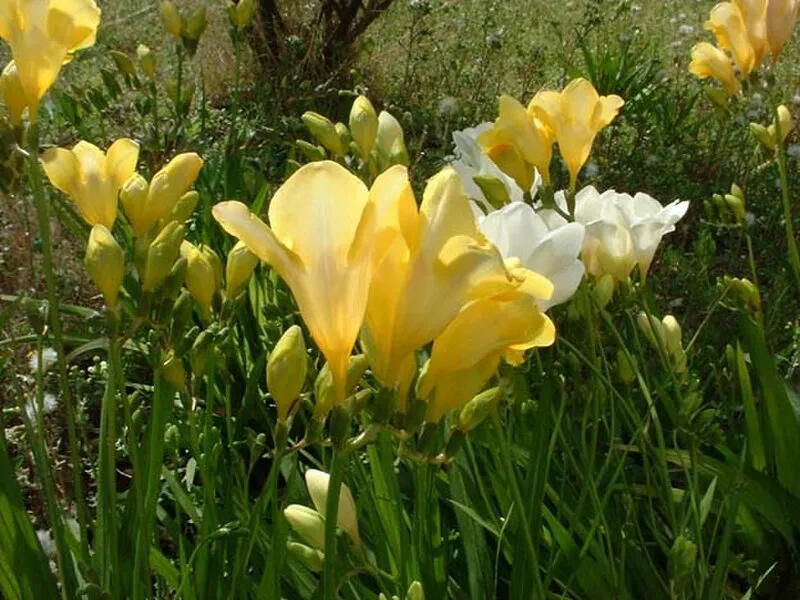
Freesias thrive in well-drained, slightly acidic to neutral soil (pH 6.0–7.0) amended with coarse sand or grit to prevent corm rot. Prepare beds by working in aged compost to a depth of 20 cm. Plant corms pointed-end up, 5 cm deep and 8–10 cm apart in groups for visual impact. In mild climates (USDA zones 9–10), plant corms in fall for spring blooms; in colder regions, plant in spring after frost risk passes. Freesias need cool temperatures (10–16°C) during active growth for the best flower quality — heat causes short stems and poor scent. Water moderately during growth, keeping soil evenly moist but never waterlogged, and reduce irrigation sharply as foliage yellows after bloom. Feed with a low-nitrogen, high-potassium fertilizer (like a tomato feed) every three weeks from emergence to flowering. Stake thin stems with twiggy supports. After flowering, allow foliage to die back naturally to replenish corms before lifting and storing in dry, cool conditions.