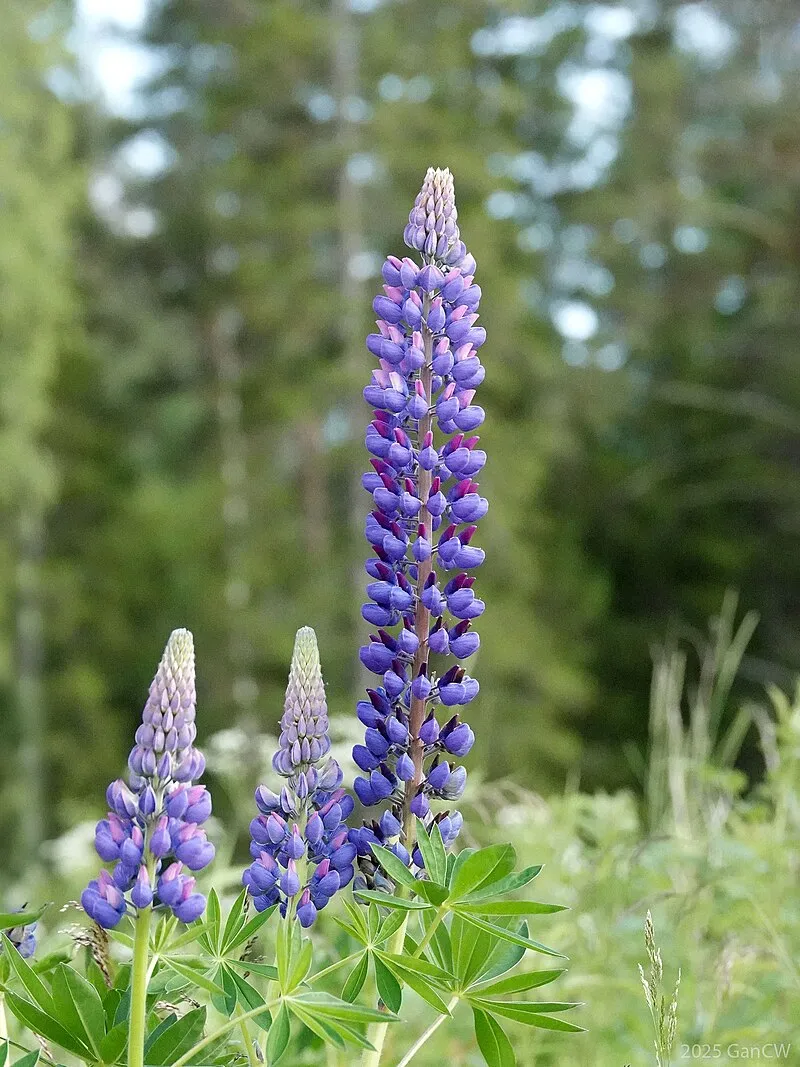
Step-by-Step Growing Guide
Lupines (Lupinus polyphyllus and hybrids) grow best in slightly acidic, well-drained, sandy-loam soil at pH 5.5–7.0 — they fix atmospheric nitrogen through root nodules and actually decline in overly rich, high-nitrogen soils. Avoid clay or waterlogged ground; lupines invariably fail in poorly drained conditions. Sow seeds directly where they are to grow in early spring or fall, or into biodegradable pots for careful transplanting (lupines have long taproots and hate disturbance). Nick each seed with sandpaper or soak in water for 24 hours to break hard seed coat and greatly improve germination. Space plants 30–45 cm apart. Water during establishment; established plants prefer drier conditions and need only moderate watering in dry spells. Do not fertilize with nitrogen — it suppresses flowering and nodule formation. After the first flush of bloom, cut flower spikes back to the lateral buds to encourage a second flowering in early summer.