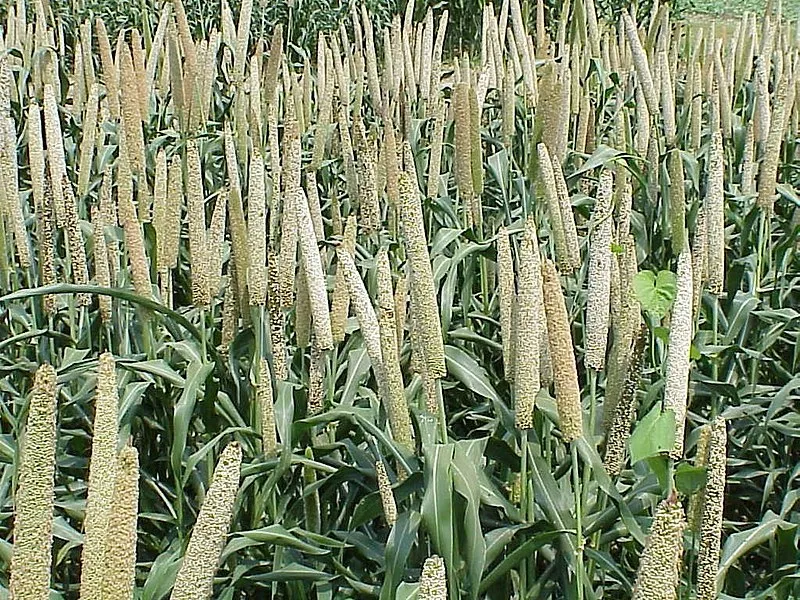
Step-by-Step Growing Guide
Millet encompasses several species (Panicum miliaceum, Setaria italica, Pennisetum glaucum) but all share a preference for warm, well-drained, fertile but not overly rich soil at pH 5.5–7.0. Direct sow after all frost risk has passed and soil has warmed to at least 18°C — cold soil prevents germination. Sow 1–2 cm deep and 5–8 cm apart in rows 30–45 cm wide, or broadcast for cover crop use. Thin to 10–15 cm spacing for grain production. Millet is remarkably drought-tolerant and grows in poor sandy soils where most crops would fail — excessive fertilization, particularly with nitrogen, causes lodging (stem collapse) without improving yield. A light pre-plant application of balanced fertilizer is sufficient. Water only during germination and in severe drought; once established, millet typically thrives on rainfall alone in warm climates. It matures in 60–90 days depending on species, making it one of the fastest grain crops.