Step-by-Step Growing Guide
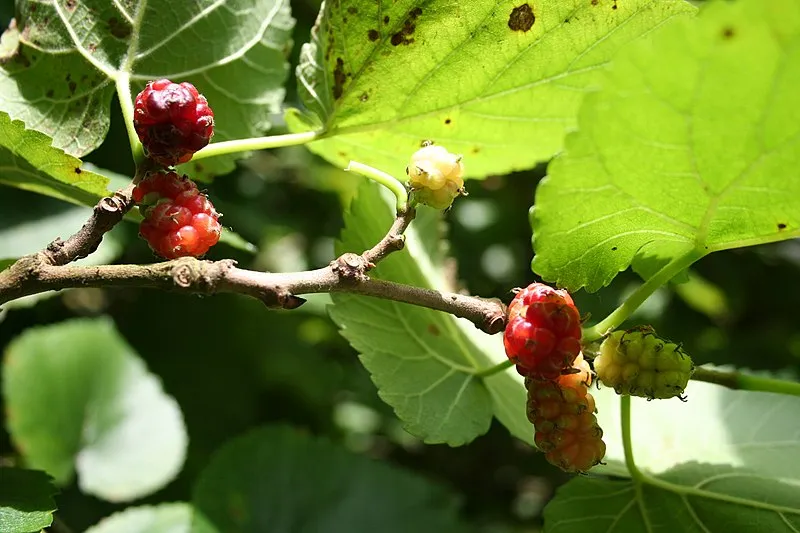
Mulberries (Morus nigra, M. rubra, M. alba) are exceptionally adaptable trees growing in a wide range of soils — from loamy to clay — at pH 5.5–7.0, though they perform best in rich, well-drained sites. Plant bare-root trees in late winter or container trees from spring through fall in a full sun position with shelter from strong winds that shake ripe berries off prematurely. Dig a generous planting hole and backfill with topsoil; mulberries establish readily without soil amendment in most conditions. Water during the first two seasons while roots establish; mature trees are surprisingly drought-tolerant. Fertilize sparingly — an annual dressing of balanced granular fertilizer in early spring is sufficient; excess nitrogen produces overly lush growth and fewer berries. Mulberries fruit on one-year-old and older wood; prune minimally in late summer (to avoid heavy sap bleeding typical of winter pruning), removing only dead or badly crossing branches. Allow 5–10 years for full production.