Step-by-Step Growing Guide
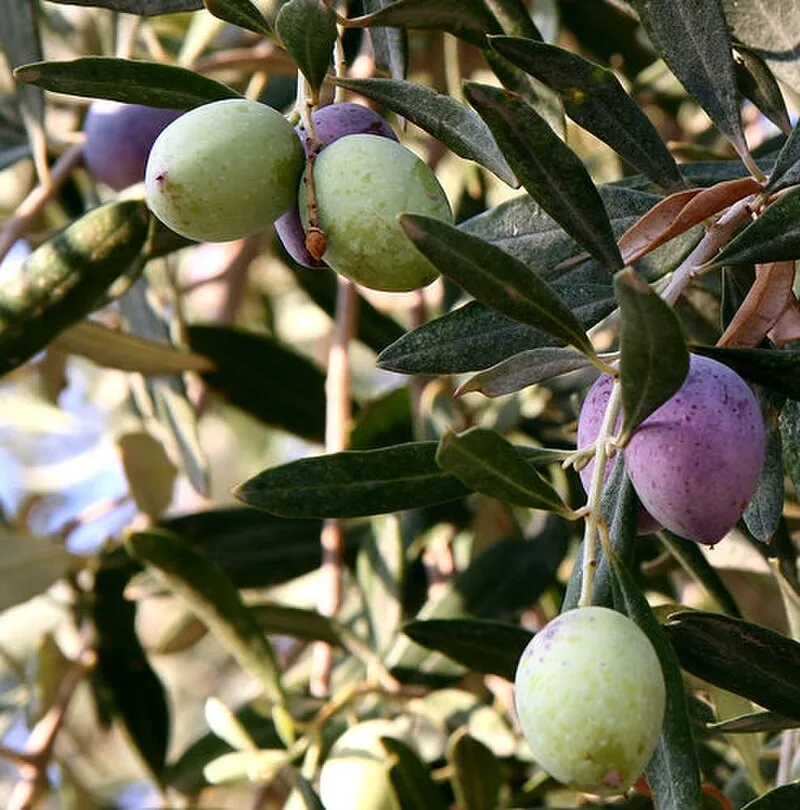
Olives (Olea europaea) are among the world's oldest cultivated trees, demanding full sun, extremely well-drained alkaline to neutral soil (pH 7.0–8.5), and minimal irrigation once established. They evolved in poor, rocky Mediterranean soils and actually suffer in rich, moist conditions — excessive fertility produces lush, disease-prone growth and poor fruiting. Plant in the warmest, most sheltered spot available; established trees tolerate brief frosts to -8°C but young trees are far more sensitive. Prepare holes only as deep as the root ball but wide; mix in grit if drainage is poor. Water only in the first growing season to establish roots — after that, Mediterranean-appropriate dryness is beneficial. Fertilize lightly with a balanced granular feed in early spring; avoid high nitrogen. Prune in late spring after frost risk, removing inward-growing branches to maintain an open vase form and promote fruiting wood. Olives bear fruit on previous year's growth. Allow 3–5 years before significant fruiting begins. Freshy-harvested olives are inedibly bitter and must be cured in brine, water, or lye before eating.