Step-by-Step Growing Guide
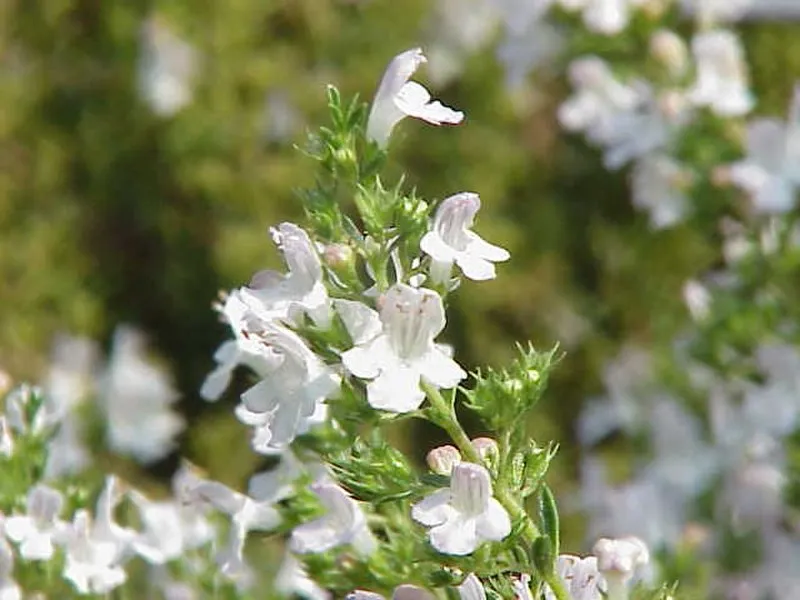
Summer savory (Satureja hortensis) is an annual; winter savory (S. montana) is a perennial subshrub. Both prefer very well-drained, lean, alkaline to neutral soil at pH 6.5–8.0 and full sun — conditions that concentrate the aromatic oils responsible for their peppery, thyme-like flavor. Summer savory germinates best from seed sown directly after frost risk passes, pressed lightly into the soil surface (it needs light to germinate) and thinned to 15–20 cm spacing. Winter savory is better propagated from cuttings taken in spring or purchased as a plant; seed germination is slow and erratic. Both species are drought-tolerant once established and need watering only in prolonged dry spells. Avoid nitrogen-rich fertilizers; a light balanced feed at planting is sufficient. Shear winter savory by half in early spring to encourage compact new growth. Both species are traditional companions to bean plants — in German cooking, savory is called Bohnenkraut ("bean herb") and is planted alongside beans to repel bean weevils.