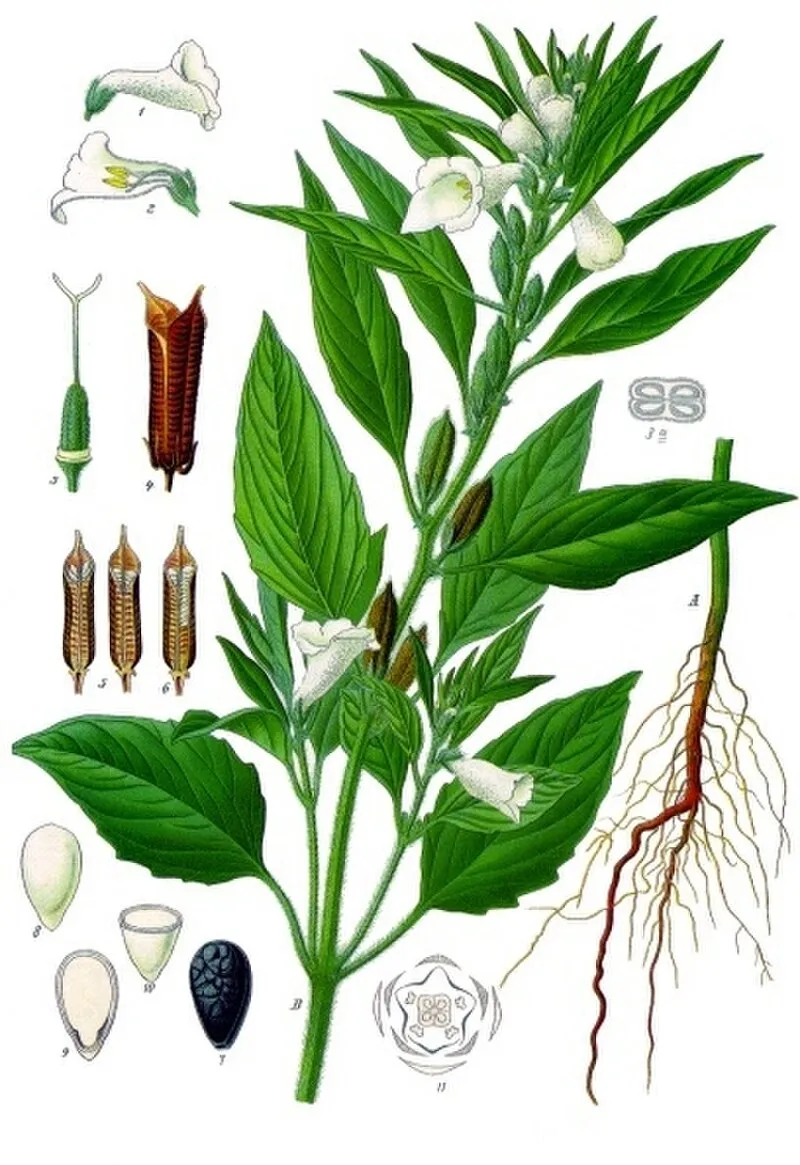
Step-by-Step Growing Guide
Sesame (Sesamum indicum) is a tropical annual oilseed crop requiring a long, hot growing season of 90–120 frost-free days with temperatures consistently above 20°C. It thrives in light, well-drained sandy loam to clay-loam soil at pH 5.5–7.0 — heavy clay causes waterlogging and root rot. Direct sow after all frost risk and when soil has warmed to at least 20°C; germination is best at 25–30°C. Sow seeds 1–2 cm deep, 10 cm apart in rows 45–60 cm wide and thin to 20–30 cm when seedlings are 10 cm tall. Sesame is exceptionally drought-tolerant once established — it was one of the earliest crops cultivated precisely because it can produce an oilseed crop in semi-arid conditions where other crops fail. Avoid excessive irrigation; overwatering is the most common cause of failure. Apply a phosphorus-rich fertilizer at planting to encourage root development. The beautiful trumpet-shaped flowers (white, pink, or purple) are visited by bees — sesame is an important pollinator-support crop.