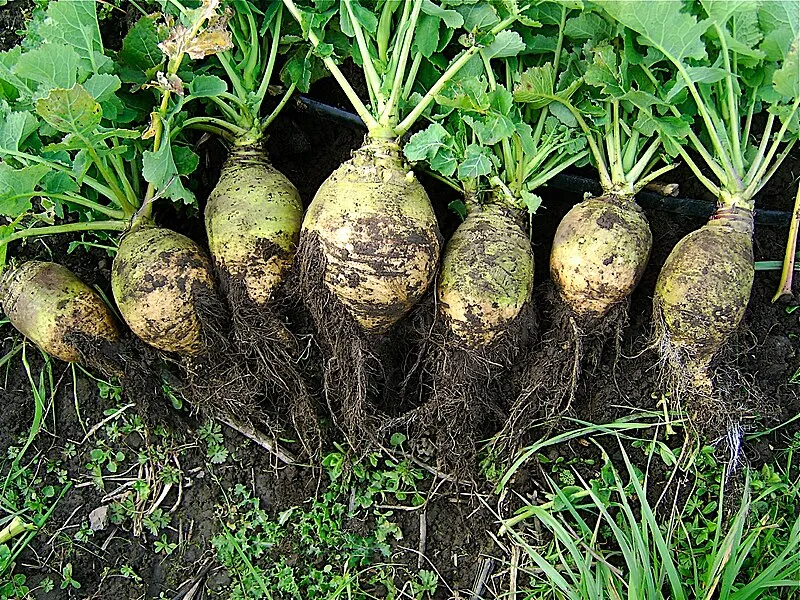
Step-by-Step Growing Guide
Rutabaga (Brassica napus var. napobrassica) is a biennial root vegetable grown as an annual, preferring cool temperatures and deep, well-drained, fertile soil at pH 6.0–6.8. It requires boron for proper root development — if boron deficiency is common in your area, dissolve 7 g of household borax per 10 liters of water and apply before sowing. Direct sow seeds 1–2 cm deep in midsummer (June to July in northern hemisphere) to target a fall harvest when cooler temperatures improve flavor dramatically — spring-sown rutabagas are often pithy and bland. Thin seedlings progressively to 20–25 cm spacing in rows 45 cm apart. Roots need a long, cool growing season of 80–100 days; the cool fall weather causes the conversion of starches to sugars, producing the characteristic sweet, nutty flavor. Water consistently throughout the season; drought stress causes hard, woody roots. A dressing of sulfate of potash in mid-season improves root quality and storage capacity.