Step-by-Step Growing Guide
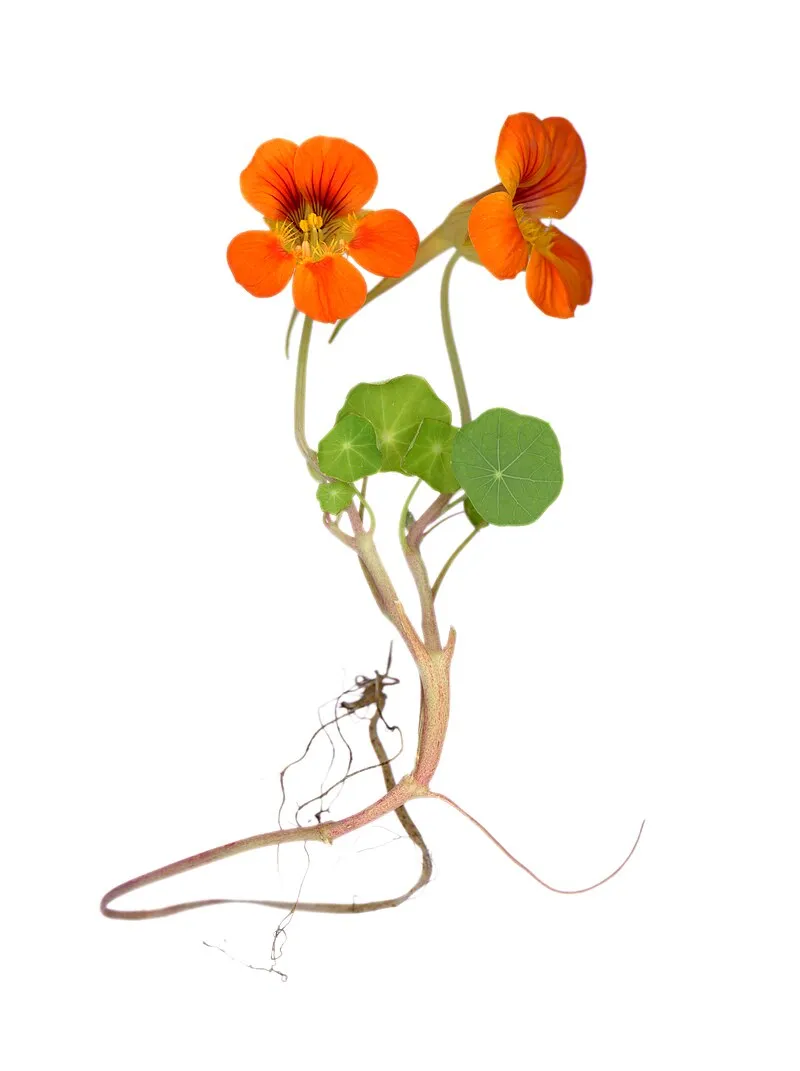
Nasturtiums (Tropaeolum majus) are uniquely suited to poor, low-fertility soils at pH 6.0–7.5 — in rich soil they produce masses of leaves with very few flowers. This makes them ideal for difficult spots where other plants struggle. Direct sow seeds 1.5–2 cm deep, 20–30 cm apart (or 40–50 cm for trailing types) after all frost risk passes; nasturtium seeds are large and germinate readily in 7–10 days. Alternatively, start indoors 2–3 weeks early in large cells, as roots resent disturbance in small pots. Full sun produces more flowers; partial shade produces more leaves (still edible, but the plant's performance as an ornamental declines). Water occasionally — nasturtiums need minimal water once established and even drought stress paradoxically increases flower production. Avoid fertilizing entirely once established. They are classic companion plants, acting as a trap crop: aphids strongly prefer nasturtiums over most vegetables and can be monitored and destroyed on nasturtium leaves rather than on crop plants.