Best Frost-Tolerant Plants
Don't let frost end your gardening season. These 117 cold-hardy plants survive freezing temperatures — many even taste better after a frost. Extend your harvest well into autumn and start again in early spring.
Cold-Weather Growing Tips
- Kale, Brussels sprouts, and parsnips taste sweeter after a frost — cold converts starches to sugar
- Use row cover fabric to protect plants during hard frosts — it can add 4-8°F of protection
- Mulch heavily around perennial herbs like thyme and rosemary to protect roots over winter
- Plant frost-tolerant crops 4-6 weeks before your first expected frost date for autumn harvests
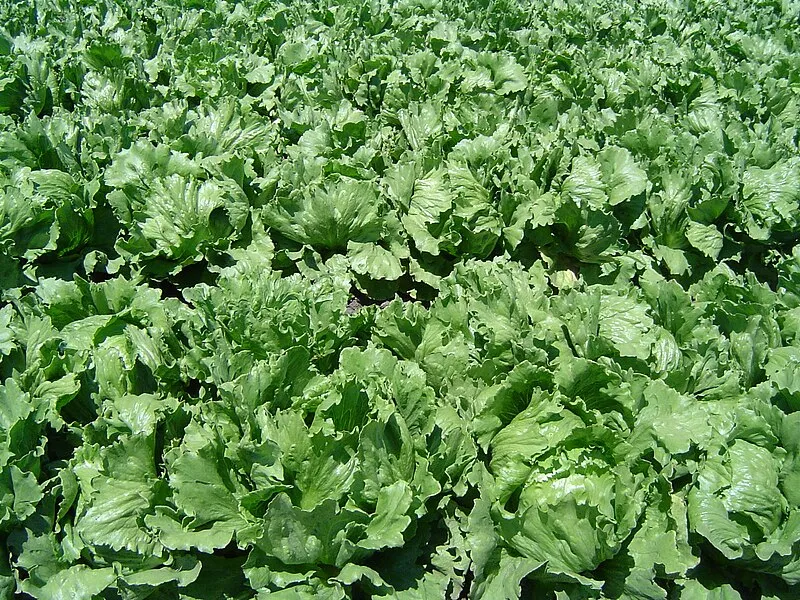
Lettuce
VegetableCool-season crop perfect for spring and fall. Hardy enough to withstand light frosts down to 2°C, lettuce performs best when daytime temperatures stay between 10°C and 20°C. Give it partial shade, though it appreciates some direct light and regular watering to keep soil consistently moist, and expect to harvest in roughly 30-60 days. Whether grown in raised beds, containers, or traditional plots, it produces well across a range of climates.
Sow successively every 2 weeks. Provide afternoon shade in warmer climates. Can be planted 2-3 weeks before the last expected frost, giving it a head start on the growing season. Aim for about 2.5 cm of water per week, adjusting for rainfall. Organic mulch around the base helps maintain even moisture.
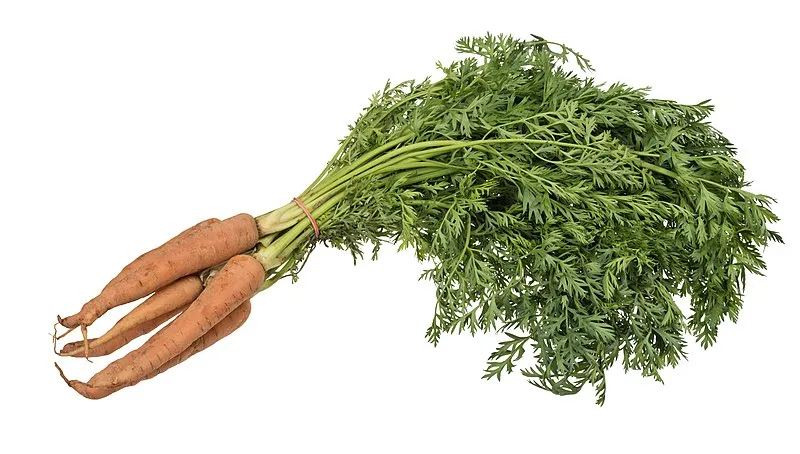
Carrot
VegetableRoot vegetable that sweetens after a light frost. Hardy enough to withstand light frosts down to 4°C, carrot performs best when daytime temperatures stay between 15°C and 24°C. Give it full sun (6-8 hours of direct light daily) and regular watering to keep soil consistently moist, and expect to harvest in roughly 70-80 days. An excellent choice for beginner and experienced gardeners alike, thanks to its forgiving growing habits.
Sow directly -- don't transplant. Thin to 5cm spacing. Can be planted 2-3 weeks before the last expected frost, giving it a head start on the growing season. Aim for about 2.5 cm of water per week, adjusting for rainfall. Organic mulch around the base helps maintain even moisture.
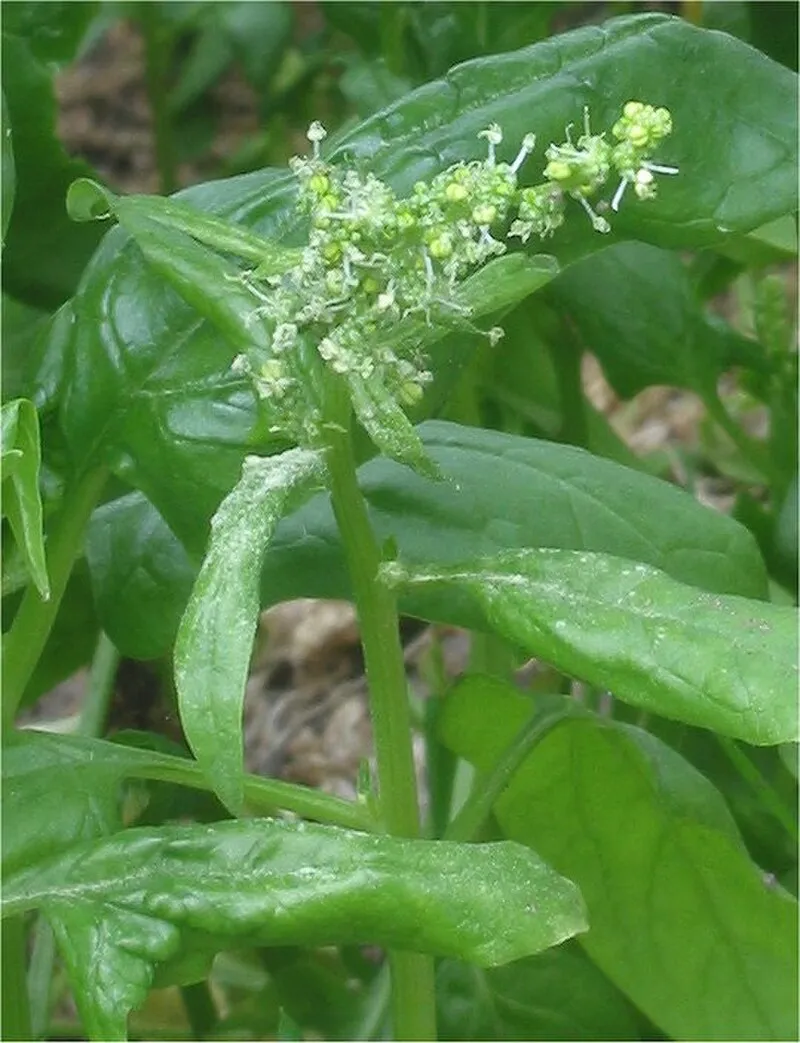
Spinach
VegetableNutrient-dense cool-season green. Hardy enough to withstand light frosts down to -5°C, spinach performs best when daytime temperatures stay between 5°C and 18°C. Give it partial shade, though it appreciates some direct light and regular watering to keep soil consistently moist, and expect to harvest in roughly 37-45 days. Whether grown in raised beds, containers, or traditional plots, it produces well across a range of climates.
Sow as soon as soil can be worked. Bolts quickly in heat -- grow in spring/fall. Can be planted 2-3 weeks before the last expected frost, giving it a head start on the growing season. Aim for about 2.5 cm of water per week, adjusting for rainfall. Organic mulch around the base helps maintain even moisture.
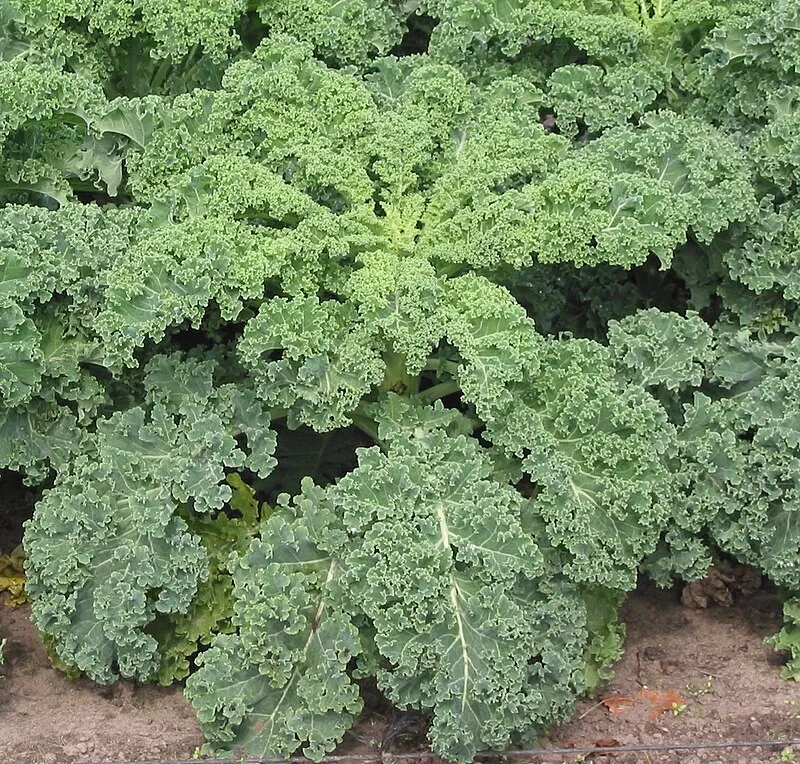
Kale
VegetableExtremely cold-hardy superfood. Hardy enough to withstand light frosts down to -10°C, kale performs best when daytime temperatures stay between 5°C and 20°C. Give it full sun to partial shade and regular watering to keep soil consistently moist, and expect to harvest in roughly 55-75 days. An excellent choice for beginner and experienced gardeners alike, thanks to its forgiving growing habits.
One of the hardiest garden crops. Can overwinter in many climates with mulch. Can be planted 2-3 weeks before the last expected frost, giving it a head start on the growing season. Aim for about 2.5 cm of water per week, adjusting for rainfall. Organic mulch around the base helps maintain even moisture.
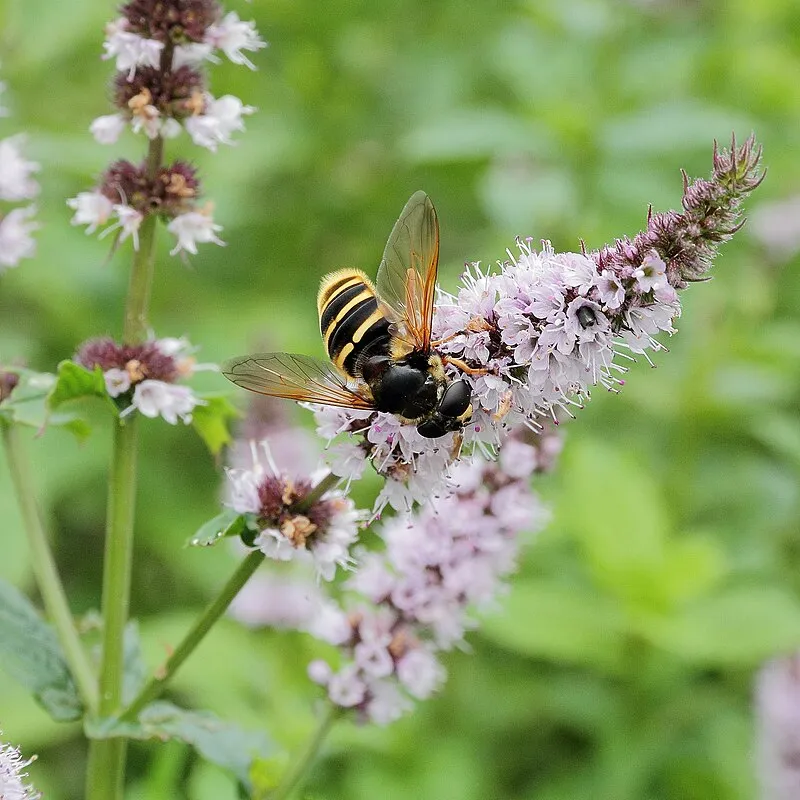
Mint
HerbVigorous herb that spreads aggressively. Remarkably adaptable, mint tolerates temperatures from -5°C to 30°C and thrives in both cool-temperate and tropical gardens. It needs partial shade, though it appreciates some direct light and regular watering to keep soil consistently moist — leaves are ready for picking in about 60-90 days. Fresh leaves from your own garden taste noticeably better than store-bought — and the plant practically grows itself.
Always grow in a pot -- it will take over your garden. Harvest often to control growth. Can be planted 2-3 weeks before the last expected frost, giving it a head start on the growing season. Aim for about 2.5 cm of water per week, adjusting for rainfall. Organic mulch around the base helps maintain even moisture.
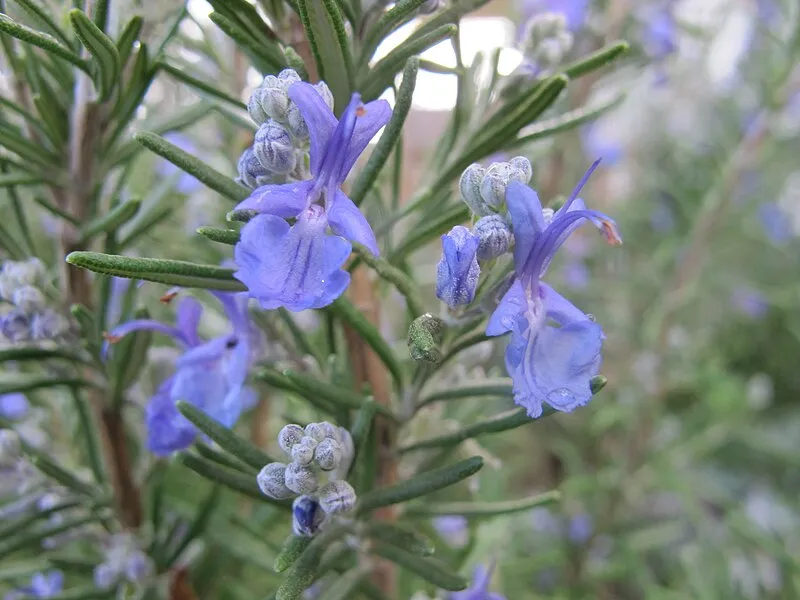
Rosemary
HerbMediterranean woody herb. Hardy enough to withstand light frosts down to -5°C, rosemary performs best when daytime temperatures stay between 15°C and 25°C. It needs full sun (6-8 hours of direct light daily) and minimal watering — it prefers dry conditions between drinks — leaves are ready for picking in about 80-120 days. A kitchen essential that grows equally well on a sunny windowsill, a balcony pot, or a dedicated herb bed.
Needs excellent drainage. Don't overwater. Can be planted 2-3 weeks before the last expected frost, giving it a head start on the growing season. Overwatering is the most common mistake. Let soil dry out between waterings and ensure drainage is excellent.
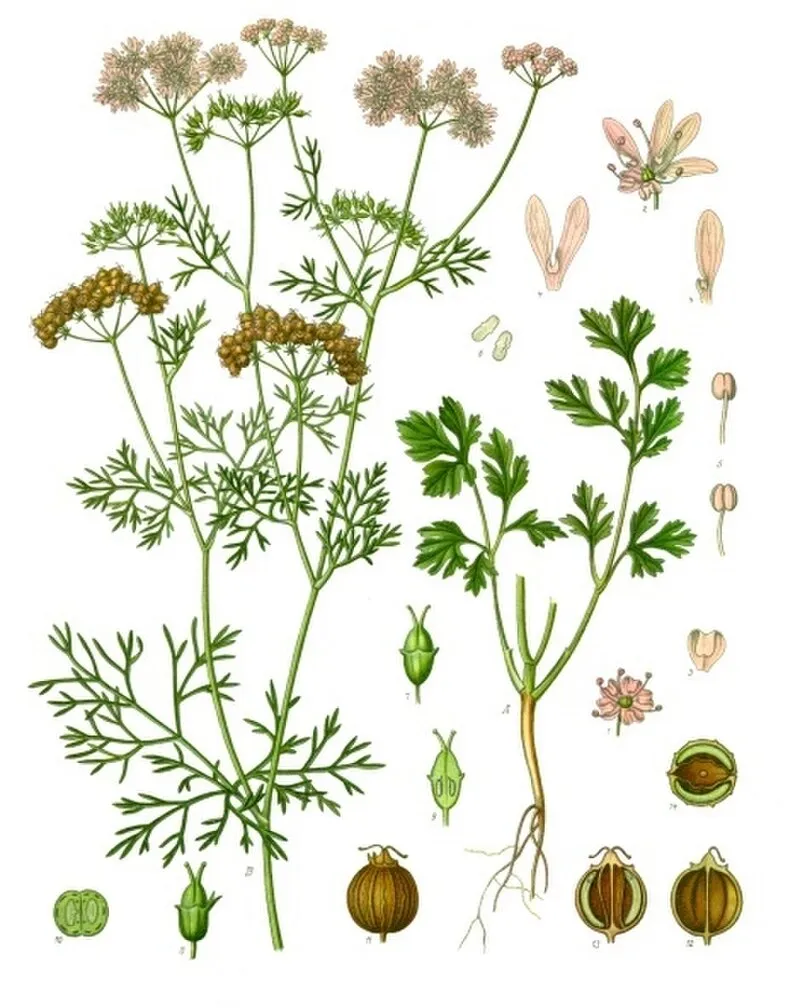
Cilantro
HerbCool-season herb essential in Mexican, Indian, and Thai cooking. Hardy enough to withstand light frosts down to 2°C, cilantro performs best when daytime temperatures stay between 10°C and 20°C. It needs full sun to partial shade and regular watering to keep soil consistently moist — leaves are ready for picking in about 45-70 days. Valued in cuisines worldwide, it is easy to grow and rewards regular harvesting with bushier, more productive plants.
Sow every 3 weeks for continuous harvest. In hot climates, grow in fall/winter only. Can be planted 2-3 weeks before the last expected frost, giving it a head start on the growing season. Aim for about 2.5 cm of water per week, adjusting for rainfall. Organic mulch around the base helps maintain even moisture.
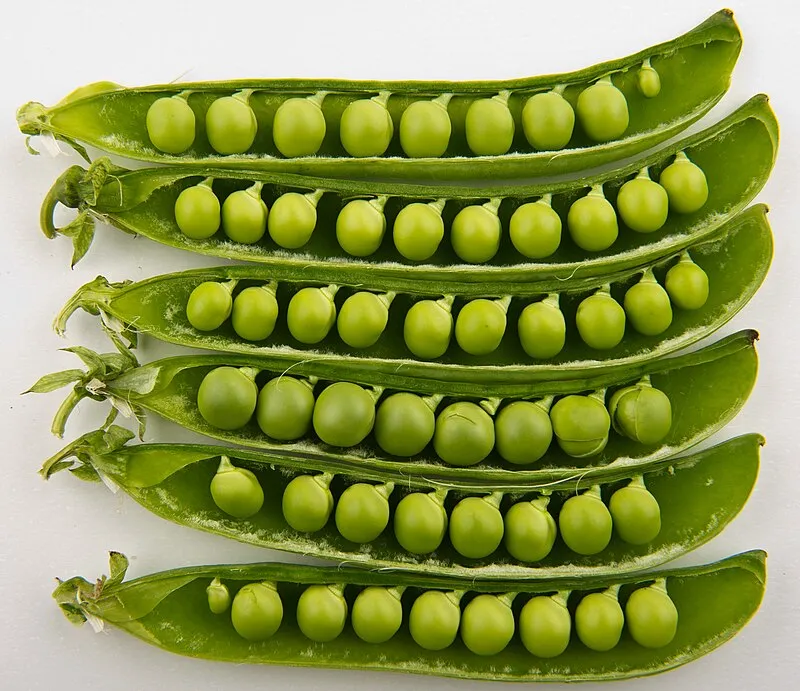
Pea
VegetableCool-season climber. Hardy enough to withstand light frosts down to -2°C, pea performs best when daytime temperatures stay between 8°C and 18°C. Give it full sun (6-8 hours of direct light daily) and regular watering to keep soil consistently moist, and expect to harvest in roughly 55-70 days. An excellent choice for beginner and experienced gardeners alike, thanks to its forgiving growing habits.
Inoculate seeds with nitrogen-fixing bacteria. Provide support for climbing varieties. Can be planted 2-3 weeks before the last expected frost, giving it a head start on the growing season. Aim for about 2.5 cm of water per week, adjusting for rainfall. Organic mulch around the base helps maintain even moisture.
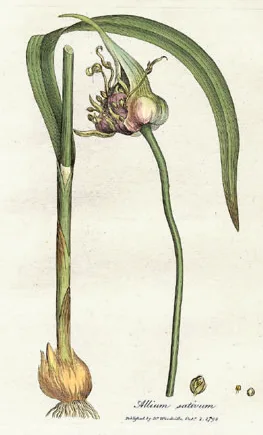
Garlic
VegetablePlant in fall, harvest in summer. Hardy enough to withstand light frosts down to -15°C, garlic performs best when daytime temperatures stay between 5°C and 20°C. Give it full sun (6-8 hours of direct light daily) and moderate, even watering throughout the growing season, and expect to harvest in roughly 240-270 days. A staple of kitchen gardens and allotments, it rewards even first-time growers with a generous harvest.
Plant individual cloves pointed end up, 5cm deep. Hardneck varieties for cold climates. Can be planted 2-3 weeks before the last expected frost, giving it a head start on the growing season. Water steadily but avoid soggy soil. A 5-cm layer of organic mulch helps balance moisture and suppress weeds.
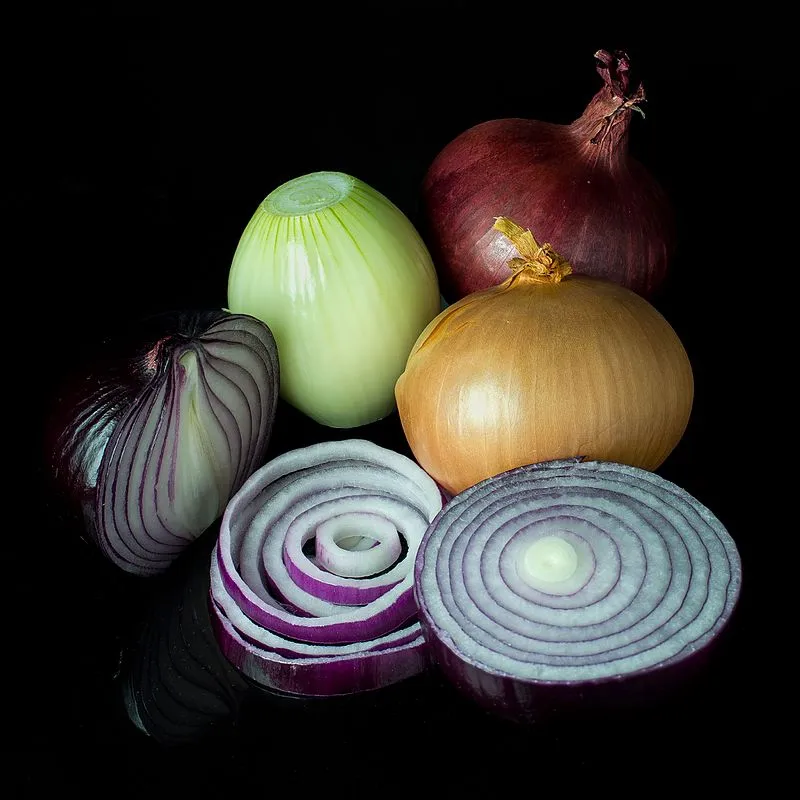
Onion
VegetableLong-season crop. Hardy enough to withstand light frosts down to -2°C, onion performs best when daytime temperatures stay between 12°C and 24°C. Give it full sun (6-8 hours of direct light daily) and regular watering to keep soil consistently moist, and expect to harvest in roughly 90-120 days. Popular with home gardeners for its reliable yields and straightforward growing requirements.
Day length triggers bulbing -- choose variety appropriate for your latitude. Can be planted 2-3 weeks before the last expected frost in your area, giving it a head start on the growing season. Can be planted 2-3 weeks before the last expected frost, giving it a head start on the growing season. Aim for about 2.5 cm of water per week, adjusting for rainfall. Organic mulch around the base helps maintain even moisture.
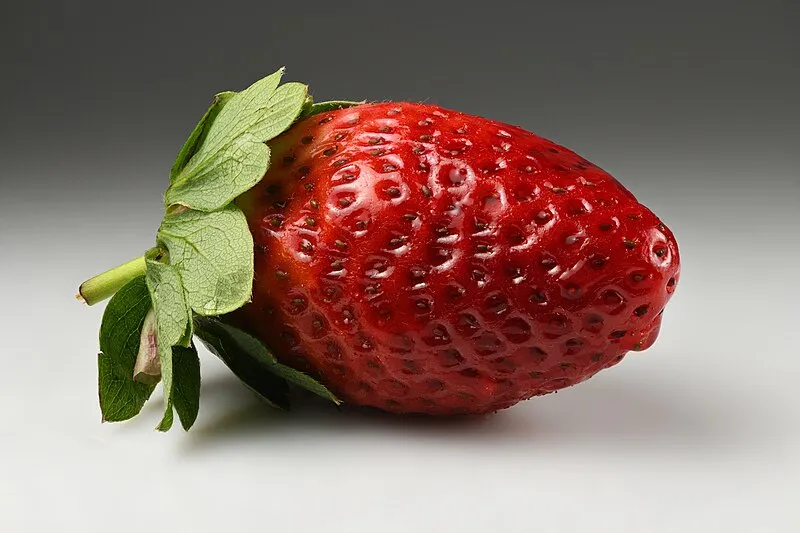
Strawberry
FruitPerennial fruit that produces for years. Hardy enough to withstand light frosts down to -10°C, strawberry performs best when daytime temperatures stay between 15°C and 25°C. Give it full sun (6-8 hours of direct light daily) and regular watering to keep soil consistently moist, and expect to harvest in roughly 60-90 days. A favourite of home orchardists and fruit gardeners, it can be trained, pruned, and shaped to fit most spaces.
Remove first-year flowers for stronger plants. Mulch with straw to prevent mud splash. Can be planted 2-3 weeks before the last expected frost, giving it a head start on the growing season. Aim for about 2.5 cm of water per week, adjusting for rainfall. Organic mulch around the base helps maintain even moisture.
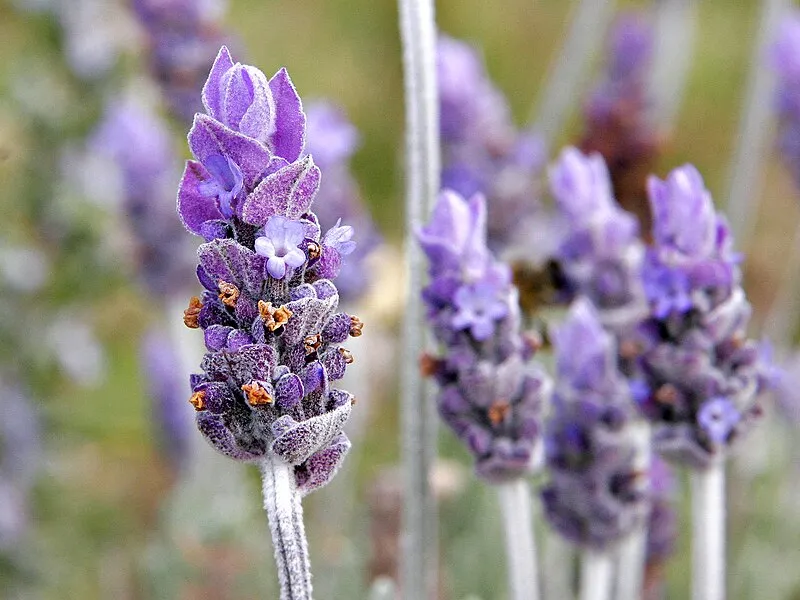
Lavender
HerbDrought-tolerant Mediterranean herb. Hardy enough to withstand light frosts down to -10°C, lavender performs best when daytime temperatures stay between 15°C and 28°C. It needs full sun (6-8 hours of direct light daily) and minimal watering — it prefers dry conditions between drinks — leaves are ready for picking in about 90-200 days. Fresh leaves from your own garden taste noticeably better than store-bought — and the plant practically grows itself.
Must have excellent drainage -- will rot in wet soil. Prune after flowering. Can be planted 2-3 weeks before the last expected frost, giving it a head start on the growing season. Overwatering is the most common mistake. Let soil dry out between waterings and ensure drainage is excellent.
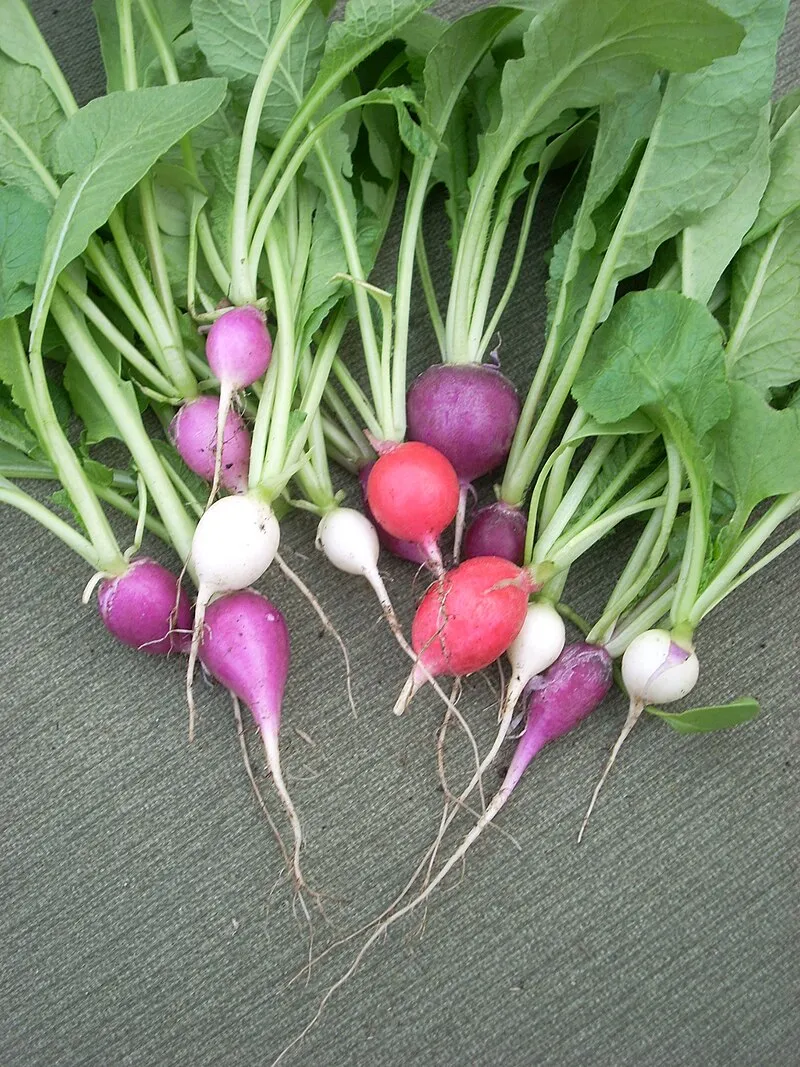
Radish
VegetableThe fastest vegetable -- harvest in as little as 3 weeks. Hardy enough to withstand light frosts down to 2°C, radish performs best when daytime temperatures stay between 10°C and 18°C. Give it full sun (6-8 hours of direct light daily) and regular watering to keep soil consistently moist, and expect to harvest in roughly 22-30 days. Popular with home gardeners for its reliable yields and straightforward growing requirements.
Sow directly. Don't let soil dry out or roots will be pithy. Can be planted 2-3 weeks before the last expected frost, giving it a head start on the growing season. Aim for about 2.5 cm of water per week, adjusting for rainfall. Organic mulch around the base helps maintain even moisture.
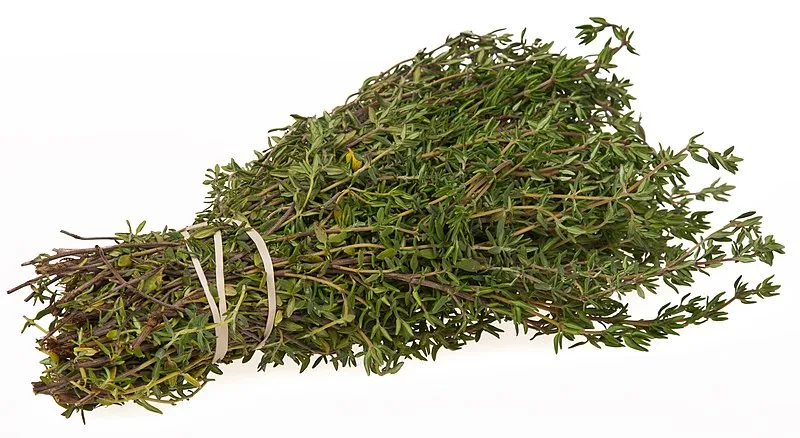
Thyme
HerbHardy Mediterranean herb. Hardy enough to withstand light frosts down to -10°C, thyme performs best when daytime temperatures stay between 12°C and 25°C. It needs full sun (6-8 hours of direct light daily) and minimal watering — it prefers dry conditions between drinks — leaves are ready for picking in about 70-90 days. An aromatic addition to any garden, it dries and freezes well for year-round use in the kitchen.
Needs well-drained soil. Trim after flowering to maintain shape. Can be planted 2-3 weeks before the last expected frost, giving it a head start on the growing season. Overwatering is the most common mistake. Let soil dry out between waterings and ensure drainage is excellent.
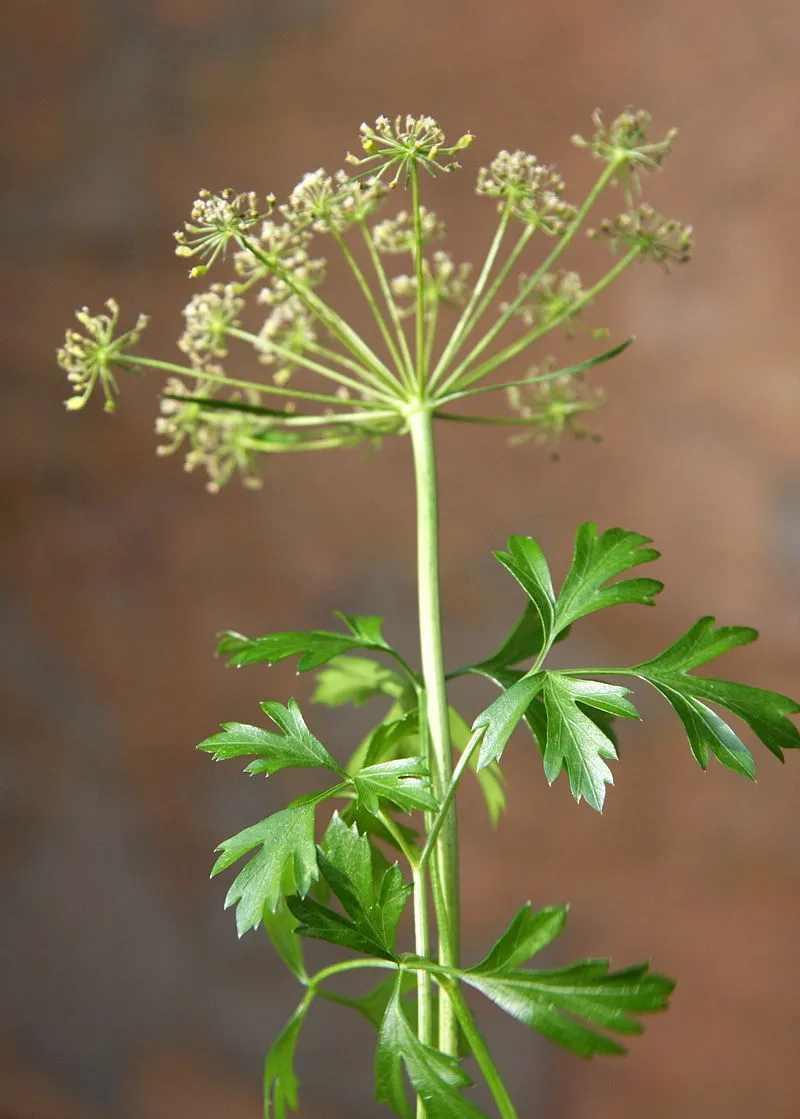
Parsley
HerbBiennial herb -- grows leaves year one, flowers year two. Hardy enough to withstand light frosts down to -5°C, parsley performs best when daytime temperatures stay between 10°C and 22°C. It needs full sun to partial shade and regular watering to keep soil consistently moist — leaves are ready for picking in about 70-90 days. Fresh leaves from your own garden taste noticeably better than store-bought — and the plant practically grows itself.
Slow to germinate (2-4 weeks). Soak seeds overnight to speed up. Can be planted 2-3 weeks before the last expected frost, giving it a head start on the growing season. Aim for about 2.5 cm of water per week, adjusting for rainfall. Organic mulch around the base helps maintain even moisture.
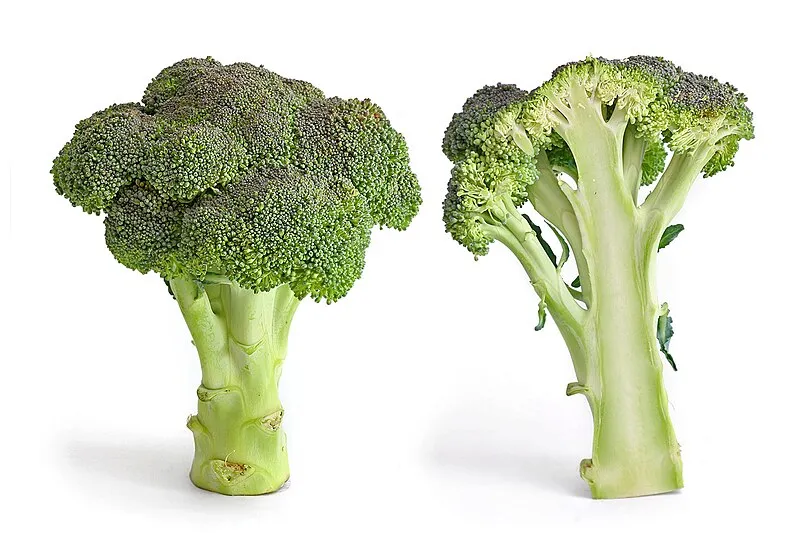
Broccoli
VegetableCool-season brassica. Hardy enough to withstand light frosts down to -2°C, broccoli performs best when daytime temperatures stay between 10°C and 20°C. Give it full sun (6-8 hours of direct light daily) and regular watering to keep soil consistently moist, and expect to harvest in roughly 55-80 days. Popular with home gardeners for its reliable yields and straightforward growing requirements.
Plant for spring or fall harvest. Heat causes bolting. Can be planted 2-3 weeks before the last expected frost, giving it a head start on the growing season. Aim for about 2.5 cm of water per week, adjusting for rainfall. Organic mulch around the base helps maintain even moisture.
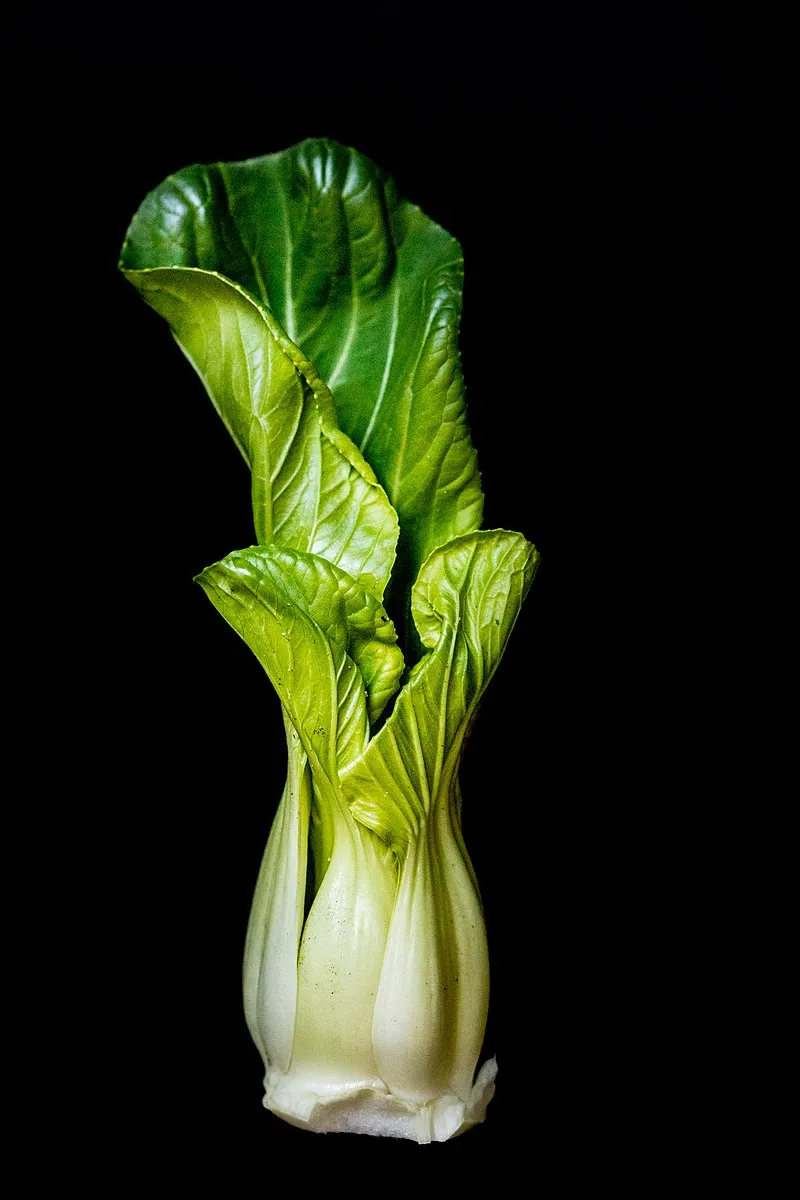
Bok Choy
VegetableFast-growing Asian green. Hardy enough to withstand light frosts down to 0°C, bok choy performs best when daytime temperatures stay between 10°C and 20°C. Give it partial shade, though it appreciates some direct light and regular watering to keep soil consistently moist, and expect to harvest in roughly 30-50 days. Widely grown in home gardens around the world, it adapts to a range of soil types and growing conditions.
Bolts in heat -- grow in spring/fall. Baby bok choy matures in 30 days. Can be planted 2-3 weeks before the last expected frost, giving it a head start on the growing season. Aim for about 2.5 cm of water per week, adjusting for rainfall. Organic mulch around the base helps maintain even moisture.
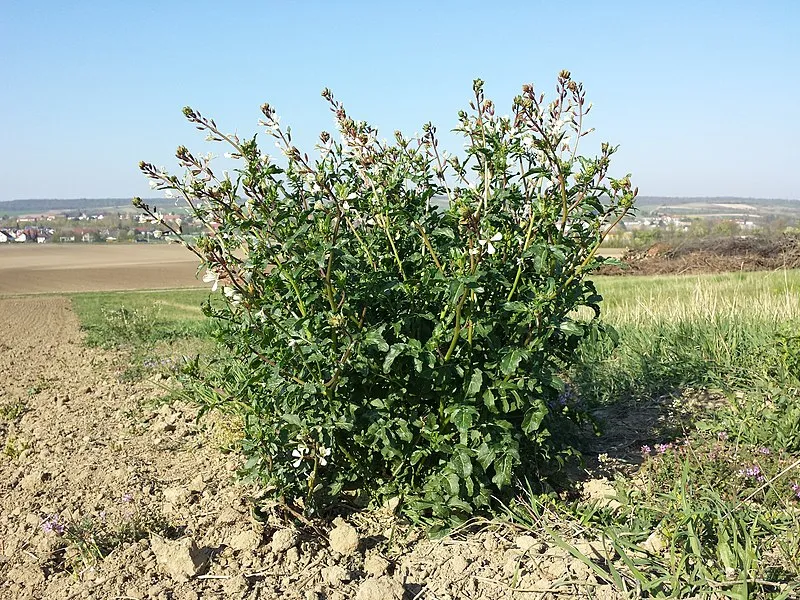
Arugula
VegetablePeppery salad green that grows fast in cool weather. Hardy enough to withstand light frosts down to 2°C, arugula performs best when daytime temperatures stay between 10°C and 18°C. Give it full sun to partial shade and regular watering to keep soil consistently moist, and expect to harvest in roughly 21-40 days. A staple of kitchen gardens and allotments, it rewards even first-time growers with a generous harvest.
Sow every 2-3 weeks for continuous harvest. Bolts quickly in heat. Can be planted 2-3 weeks before the last expected frost, giving it a head start on the growing season. Aim for about 2.5 cm of water per week, adjusting for rainfall. Organic mulch around the base helps maintain even moisture.
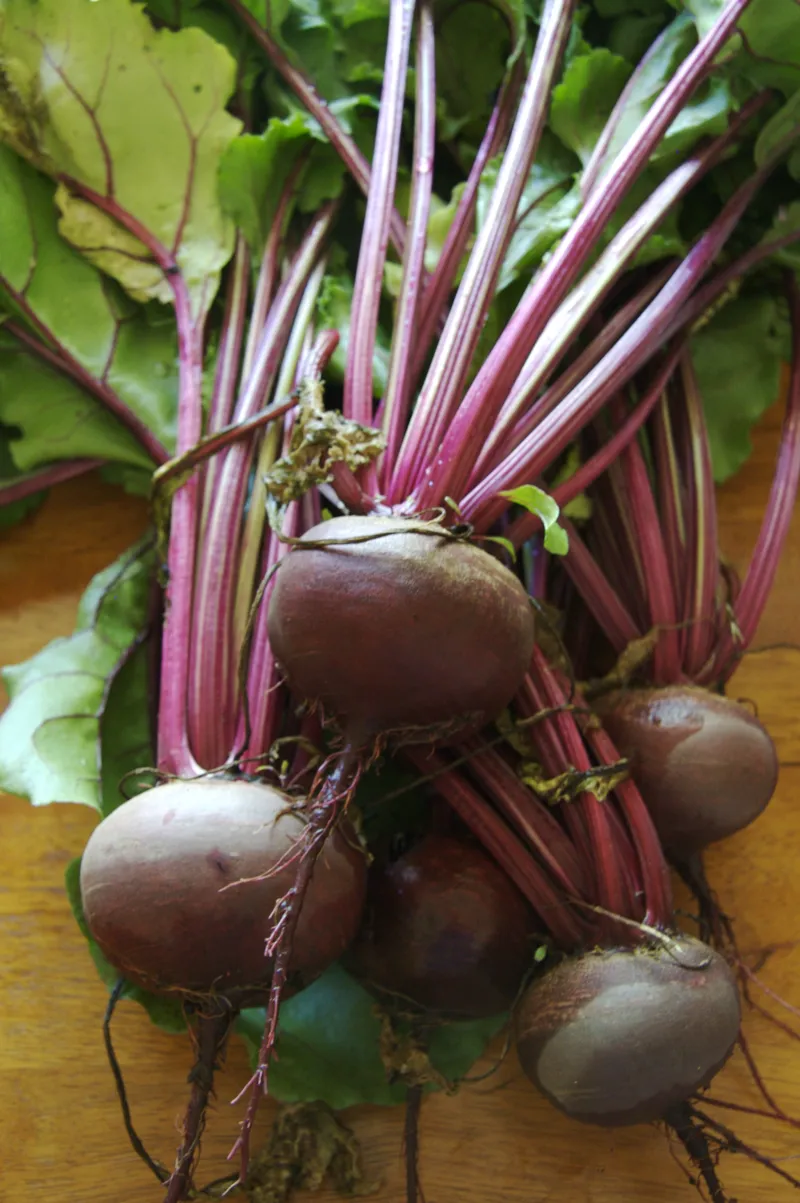
Beet
VegetableDual-purpose root vegetable -- eat both roots and nutritious greens. Hardy enough to withstand light frosts down to 2°C, beet performs best when daytime temperatures stay between 10°C and 22°C. Give it full sun (6-8 hours of direct light daily) and regular watering to keep soil consistently moist, and expect to harvest in roughly 50-70 days. Popular with home gardeners for its reliable yields and straightforward growing requirements.
Soak seeds overnight before planting. Thin seedlings to 8cm. Can be planted 2-3 weeks before the last expected frost, giving it a head start on the growing season. Aim for about 2.5 cm of water per week, adjusting for rainfall. Organic mulch around the base helps maintain even moisture.
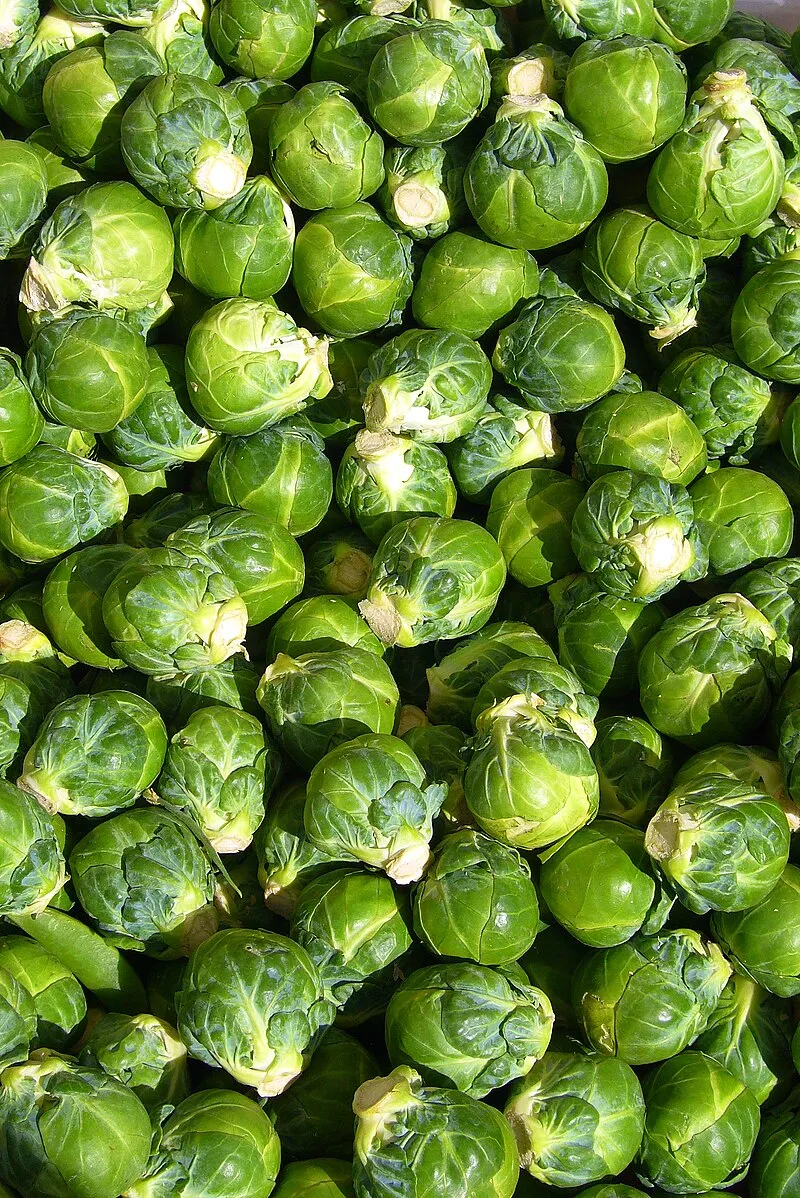
Brussels Sprouts
VegetableCold-hardy brassica that sweetens after frost. Hardy enough to withstand light frosts down to -5°C, brussels sprouts performs best when daytime temperatures stay between 7°C and 18°C. Give it full sun (6-8 hours of direct light daily) and regular watering to keep soil consistently moist, and expect to harvest in roughly 90-180 days. Whether grown in raised beds, containers, or traditional plots, it produces well across a range of climates.
Start indoors 4 months before first fall frost. Stake tall plants. Can be planted 2-3 weeks before the last expected frost, giving it a head start on the growing season. Aim for about 2.5 cm of water per week, adjusting for rainfall. Organic mulch around the base helps maintain even moisture.
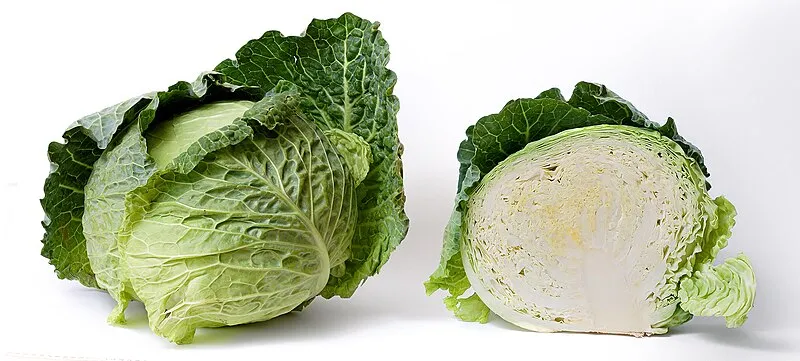
Cabbage
VegetableVersatile cool-season crop. Hardy enough to withstand light frosts down to -2°C, cabbage performs best when daytime temperatures stay between 10°C and 20°C. Give it full sun (6-8 hours of direct light daily) and regular watering to keep soil consistently moist, and expect to harvest in roughly 70-100 days. An excellent choice for beginner and experienced gardeners alike, thanks to its forgiving growing habits.
Start indoors 6 weeks before transplanting. Consistent watering prevents split heads. Can be planted 2-3 weeks before the last expected frost, giving it a head start on the growing season. Aim for about 2.5 cm of water per week, adjusting for rainfall. Organic mulch around the base helps maintain even moisture.
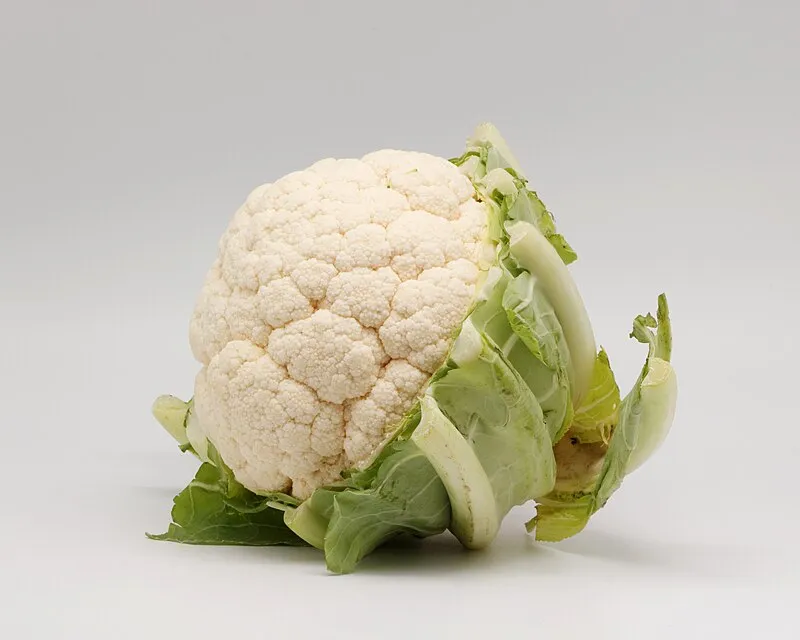
Cauliflower
VegetableDemanding but rewarding brassica. Hardy enough to withstand light frosts down to 0°C, cauliflower performs best when daytime temperatures stay between 10°C and 20°C. Give it full sun (6-8 hours of direct light daily) and regular watering to keep soil consistently moist, and expect to harvest in roughly 55-100 days. Widely grown in home gardens around the world, it adapts to a range of soil types and growing conditions.
Blanch curds by tying leaves over the head. Very sensitive to heat and inconsistent watering. Can be planted 2-3 weeks before the last expected frost, giving it a head start on the growing season. Aim for about 2.5 cm of water per week, adjusting for rainfall. Organic mulch around the base helps maintain even moisture.
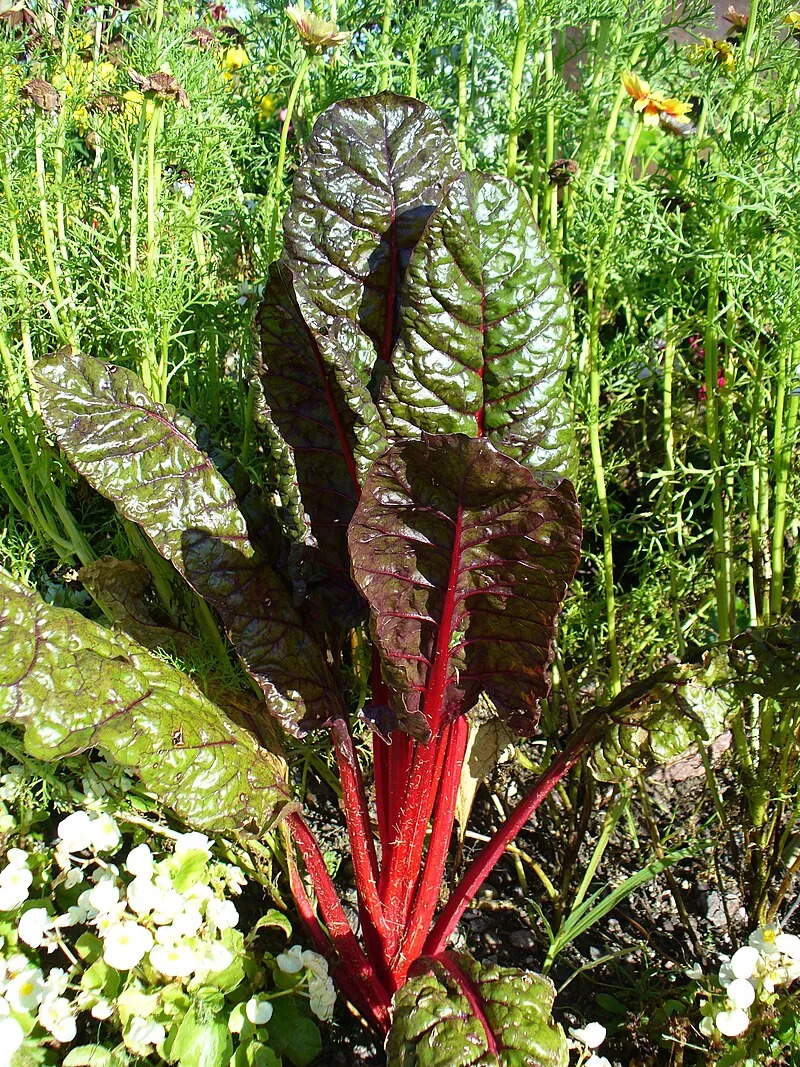
Swiss Chard
VegetableColorful, heat-tolerant green related to beets. Remarkably adaptable, swiss chard tolerates temperatures from -2°C to 30°C and thrives in both cool-temperate and tropical gardens. Give it full sun to partial shade and regular watering to keep soil consistently moist, and expect to harvest in roughly 50-60 days. Popular with home gardeners for its reliable yields and straightforward growing requirements.
Cut-and-come-again harvesting extends the season. More heat tolerant than spinach. Can be planted 2-3 weeks before the last expected frost, giving it a head start on the growing season. Aim for about 2.5 cm of water per week, adjusting for rainfall. Organic mulch around the base helps maintain even moisture.
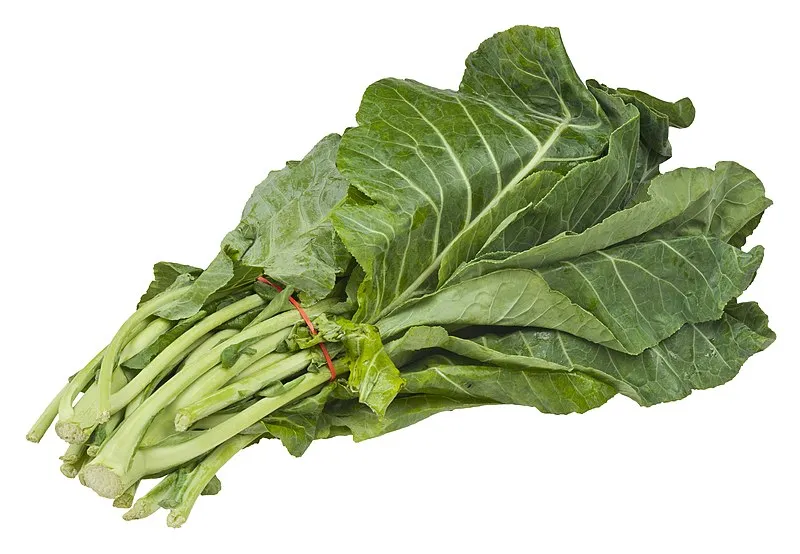
Collard Greens
VegetableSouthern staple green that handles both heat and cold better than most brassicas. Remarkably adaptable, collard greens tolerates temperatures from -5°C to 30°C and thrives in both cool-temperate and tropical gardens. Give it full sun (6-8 hours of direct light daily) and regular watering to keep soil consistently moist, and expect to harvest in roughly 55-75 days. Whether grown in raised beds, containers, or traditional plots, it produces well across a range of climates.
Harvest lower leaves first. Flavor improves after light frost. Can be planted 2-3 weeks before the last expected frost, giving it a head start on the growing season. Aim for about 2.5 cm of water per week, adjusting for rainfall. Organic mulch around the base helps maintain even moisture.
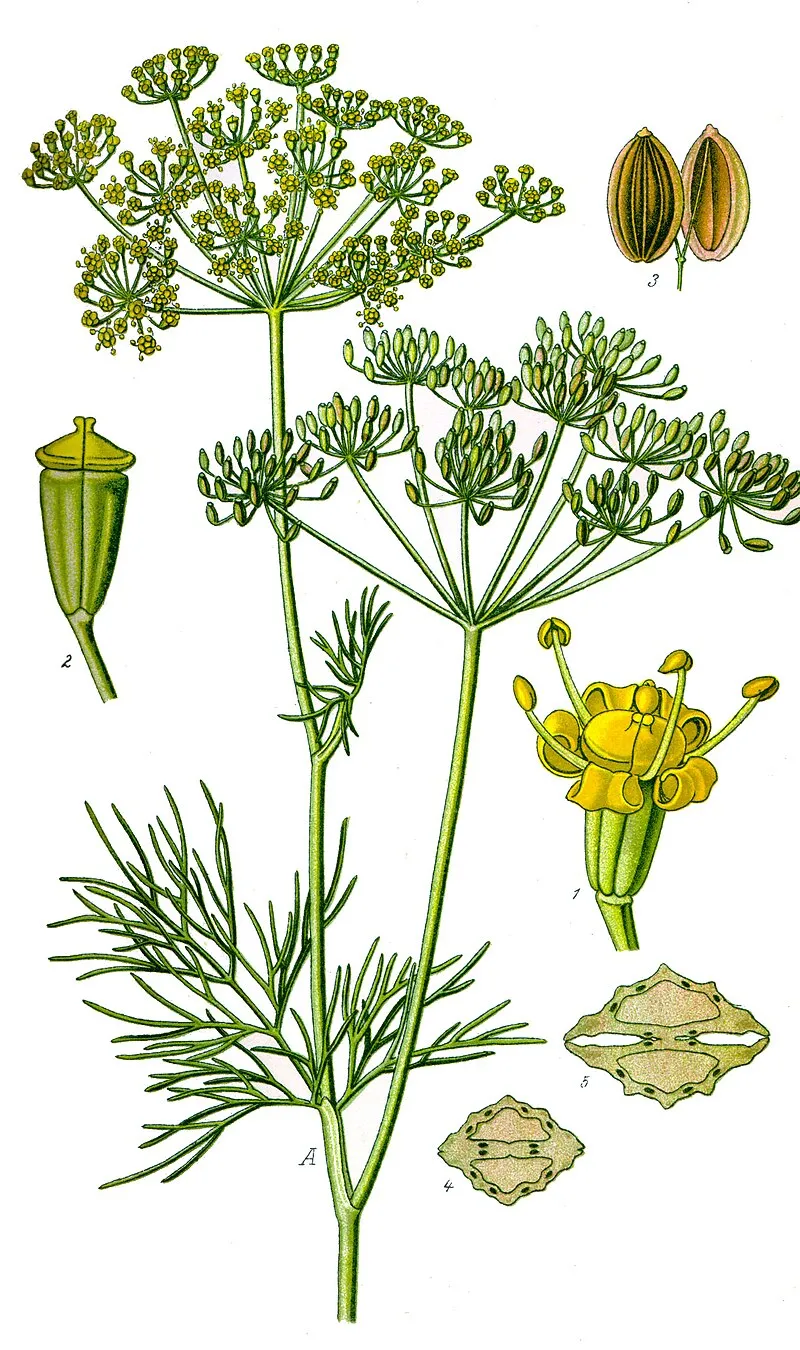
Dill
HerbFeathery herb essential for pickles, fish, and Scandinavian cooking. Hardy enough to withstand light frosts down to 2°C, dill performs best when daytime temperatures stay between 12°C and 22°C. It needs full sun (6-8 hours of direct light daily) and moderate, even watering throughout the growing season — leaves are ready for picking in about 40-60 days. An aromatic addition to any garden, it dries and freezes well for year-round use in the kitchen.
Sow directly -- doesn't transplant well. Self-seeds freely. Can be planted 2-3 weeks before the last expected frost, giving it a head start on the growing season. Water steadily but avoid soggy soil. A 5-cm layer of organic mulch helps balance moisture and suppress weeds.
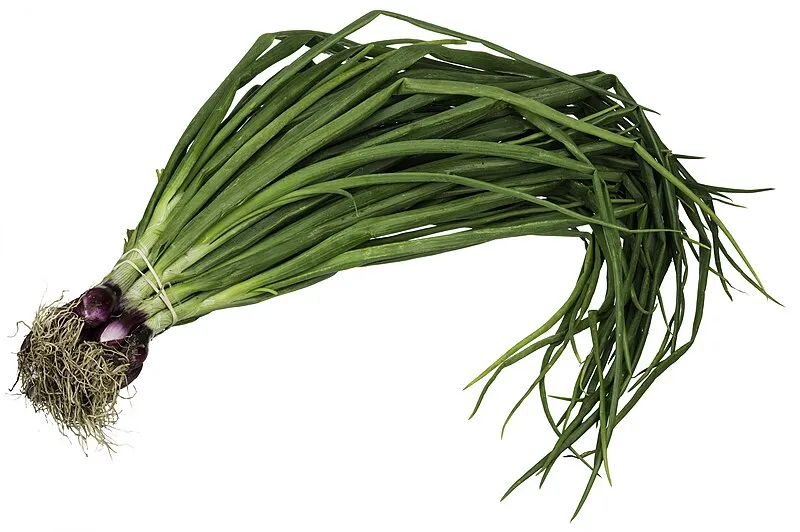
Green Onion
VegetableQuick-growing allium. Remarkably adaptable, green onion tolerates temperatures from -2°C to 28°C and thrives in both cool-temperate and tropical gardens. Give it full sun (6-8 hours of direct light daily) and regular watering to keep soil consistently moist, and expect to harvest in roughly 20-30 days. Popular with home gardeners for its reliable yields and straightforward growing requirements.
Can regrow from store-bought roots in water. Succession plant every 2 weeks. Can be planted 2-3 weeks before the last expected frost, giving it a head start on the growing season. Aim for about 2.5 cm of water per week, adjusting for rainfall. Organic mulch around the base helps maintain even moisture.
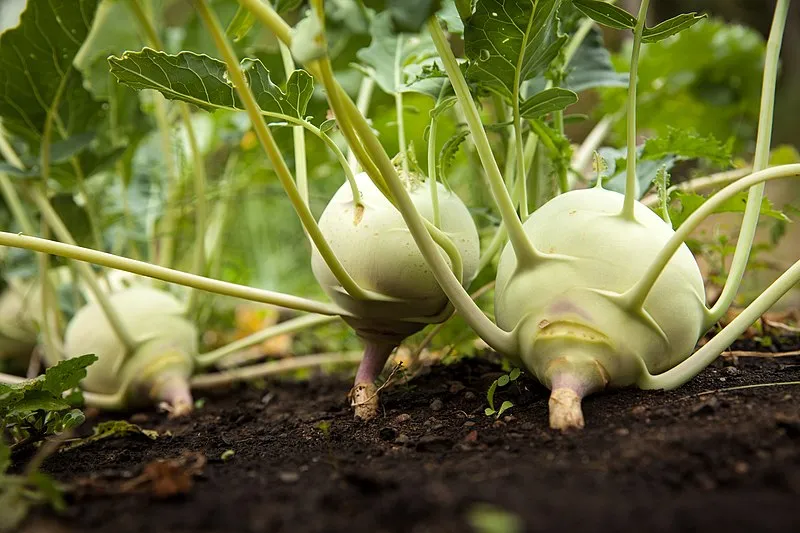
Kohlrabi
VegetableUnusual-looking brassica with sweet, crisp flesh. Hardy enough to withstand light frosts down to 0°C, kohlrabi performs best when daytime temperatures stay between 10°C and 20°C. Give it full sun (6-8 hours of direct light daily) and regular watering to keep soil consistently moist, and expect to harvest in roughly 45-60 days. An excellent choice for beginner and experienced gardeners alike, thanks to its forgiving growing habits.
Harvest when tennis-ball sized. Larger ones become woody. Can be planted 2-3 weeks before the last expected frost, giving it a head start on the growing season. Aim for about 2.5 cm of water per week, adjusting for rainfall. Organic mulch around the base helps maintain even moisture.
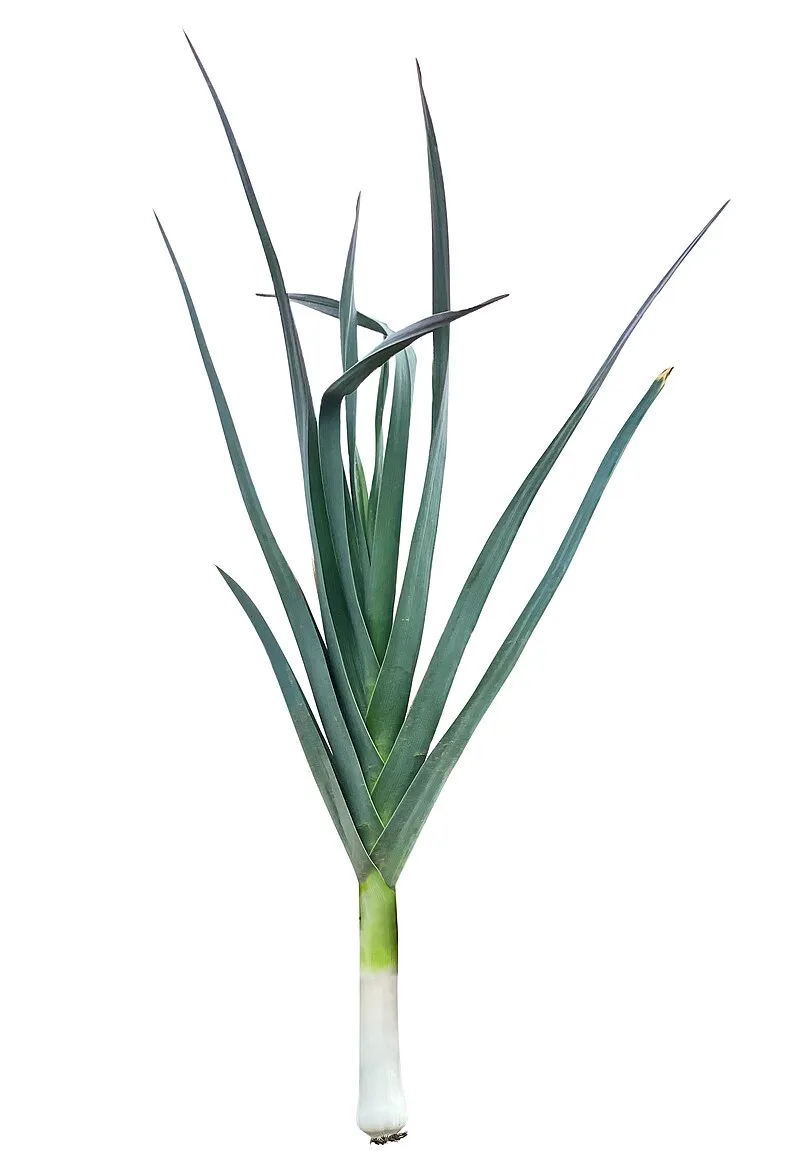
Leek
VegetableMild, sweet allium. Hardy enough to withstand light frosts down to -5°C, leek performs best when daytime temperatures stay between 10°C and 20°C. Give it full sun (6-8 hours of direct light daily) and regular watering to keep soil consistently moist, and expect to harvest in roughly 90-120 days. Widely grown in home gardens around the world, it adapts to a range of soil types and growing conditions.
Plant in trenches and hill soil as they grow to blanch stems. Very cold hardy. Can be planted 2-3 weeks before the last expected frost, giving it a head start on the growing season. Aim for about 2.5 cm of water per week, adjusting for rainfall. Organic mulch around the base helps maintain even moisture.
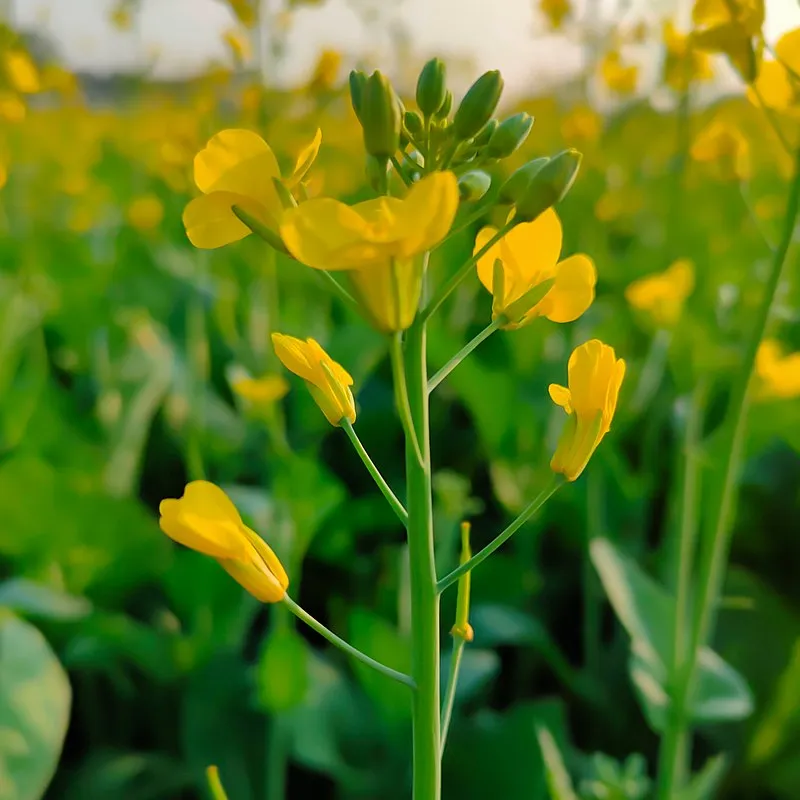
Mustard Greens
VegetableSpicy, peppery greens that grow fast in cool weather. Hardy enough to withstand light frosts down to 0°C, mustard greens performs best when daytime temperatures stay between 10°C and 20°C. Give it full sun to partial shade and regular watering to keep soil consistently moist, and expect to harvest in roughly 30-45 days. Whether grown in raised beds, containers, or traditional plots, it produces well across a range of climates.
Harvest young leaves for salads, mature leaves for cooking. Bolts in heat. Can be planted 2-3 weeks before the last expected frost, giving it a head start on the growing season. Aim for about 2.5 cm of water per week, adjusting for rainfall. Organic mulch around the base helps maintain even moisture.
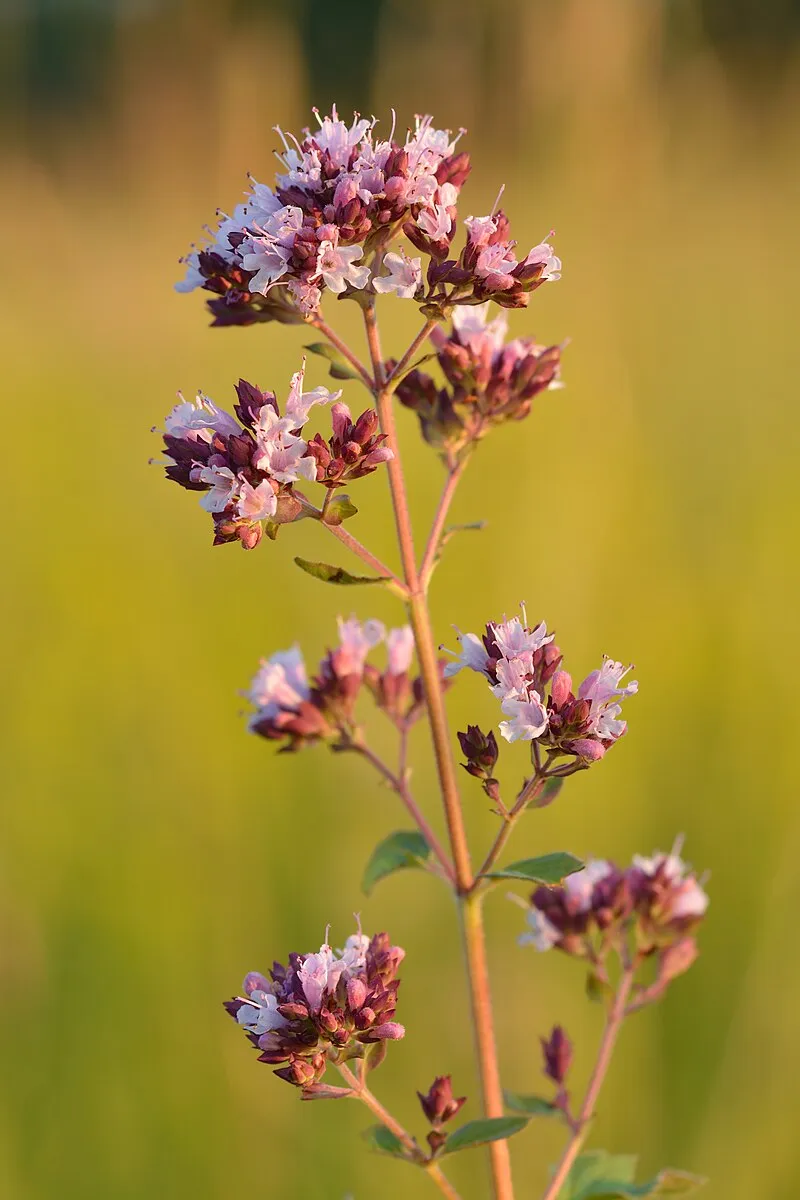
Oregano
HerbMediterranean perennial herb. Hardy enough to withstand light frosts down to -10°C, oregano performs best when daytime temperatures stay between 15°C and 25°C. It needs full sun (6-8 hours of direct light daily) and minimal watering — it prefers dry conditions between drinks — leaves are ready for picking in about 60-90 days. Fresh leaves from your own garden taste noticeably better than store-bought — and the plant practically grows itself.
Thrives in poor, dry soil. Cut back hard in spring. Can be planted 2-3 weeks before the last expected frost, giving it a head start on the growing season. Overwatering is the most common mistake. Let soil dry out between waterings and ensure drainage is excellent.
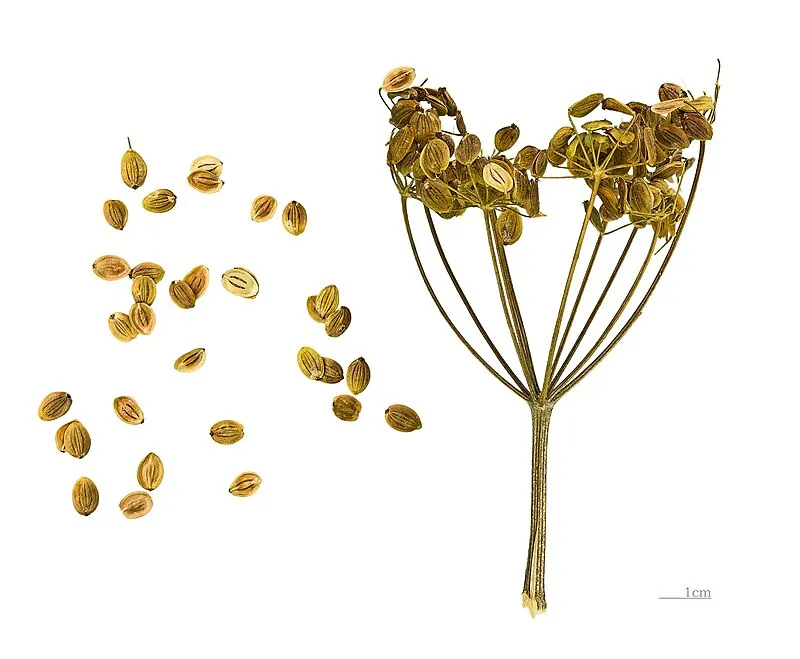
Parsnip
VegetableSweet root vegetable that needs cold to develop flavor. Hardy enough to withstand light frosts down to -5°C, parsnip performs best when daytime temperatures stay between 8°C and 18°C. Give it full sun (6-8 hours of direct light daily) and regular watering to keep soil consistently moist, and expect to harvest in roughly 100-130 days. A staple of kitchen gardens and allotments, it rewards even first-time growers with a generous harvest.
Use fresh seed each year. Sweetens dramatically after frost. Can be planted 2-3 weeks before the last expected frost, giving it a head start on the growing season. Aim for about 2.5 cm of water per week, adjusting for rainfall. Organic mulch around the base helps maintain even moisture.
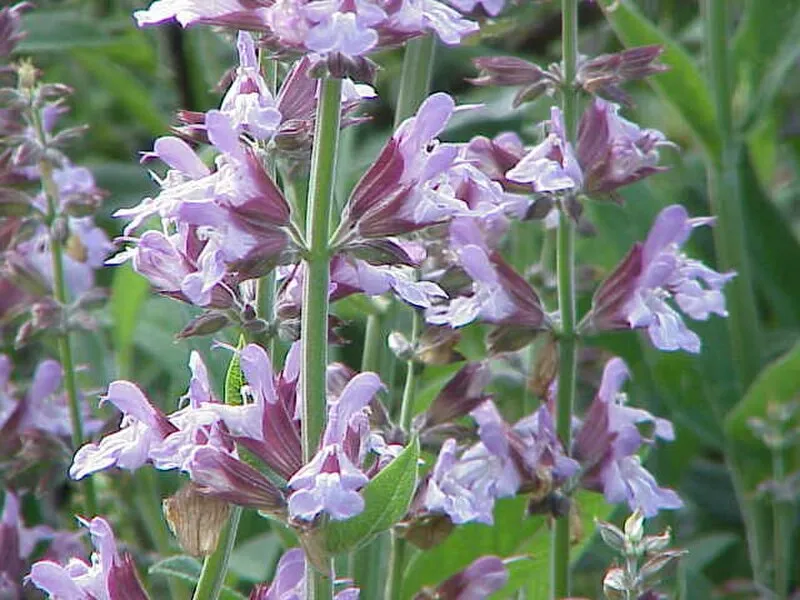
Sage
HerbWoody perennial herb. Hardy enough to withstand light frosts down to -10°C, sage performs best when daytime temperatures stay between 12°C and 22°C. It needs full sun (6-8 hours of direct light daily) and minimal watering — it prefers dry conditions between drinks — leaves are ready for picking in about 75-90 days. Perfect for container gardens and small spaces — just place it where it gets adequate light and harvest as needed.
Prune in spring to prevent woodiness. Needs good drainage. Can be planted 2-3 weeks before the last expected frost, giving it a head start on the growing season. Overwatering is the most common mistake. Let soil dry out between waterings and ensure drainage is excellent.
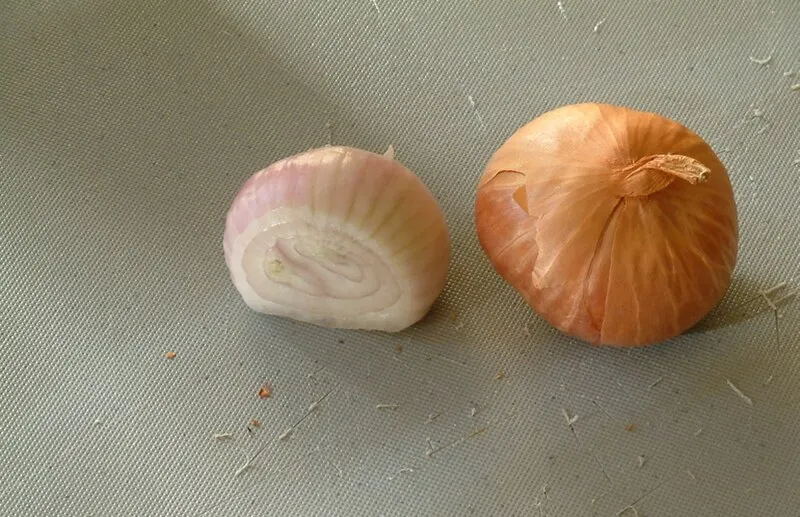
Shallot
VegetableGourmet allium with delicate, complex flavor. Hardy enough to withstand light frosts down to -5°C, shallot performs best when daytime temperatures stay between 10°C and 22°C. Give it full sun (6-8 hours of direct light daily) and moderate, even watering throughout the growing season, and expect to harvest in roughly 90-120 days. An excellent choice for beginner and experienced gardeners alike, thanks to its forgiving growing habits.
Plant sets in fall for spring harvest. Each bulb produces a cluster of 4-8 shallots. Can be planted 2-3 weeks before the last expected frost, giving it a head start on the growing season. Water steadily but avoid soggy soil. A 5-cm layer of organic mulch helps balance moisture and suppress weeds.
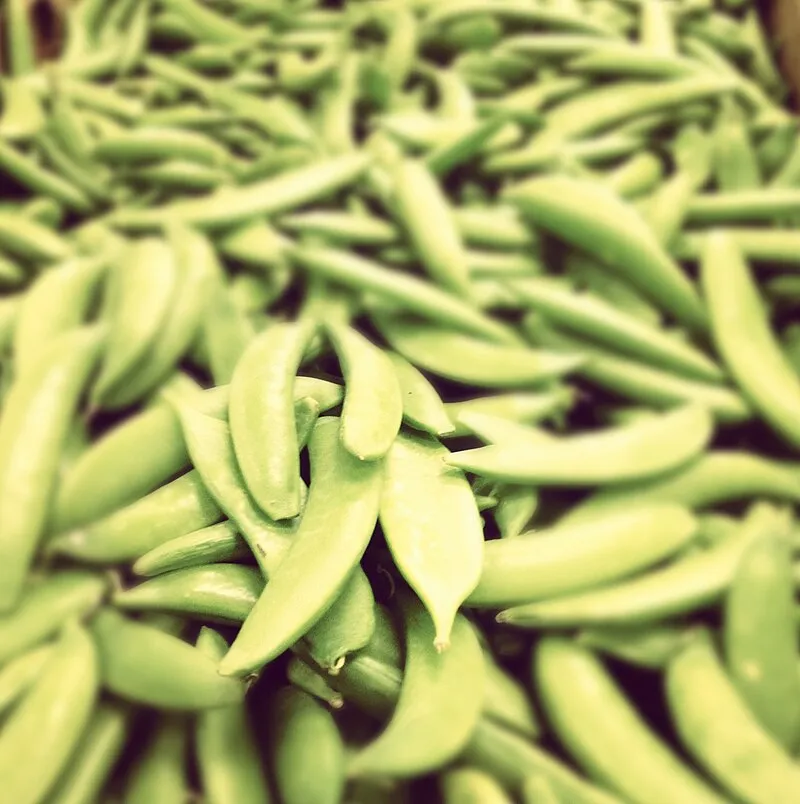
Snap Pea
VegetableSweet, crunchy pods eaten whole. Hardy enough to withstand light frosts down to -2°C, snap pea performs best when daytime temperatures stay between 8°C and 18°C. Give it full sun (6-8 hours of direct light daily) and regular watering to keep soil consistently moist, and expect to harvest in roughly 55-70 days. Widely grown in home gardens around the world, it adapts to a range of soil types and growing conditions.
Provide trellis or netting. Sow as early as soil can be worked. Can be planted 2-3 weeks before the last expected frost, giving it a head start on the growing season. Aim for about 2.5 cm of water per week, adjusting for rainfall. Organic mulch around the base helps maintain even moisture.
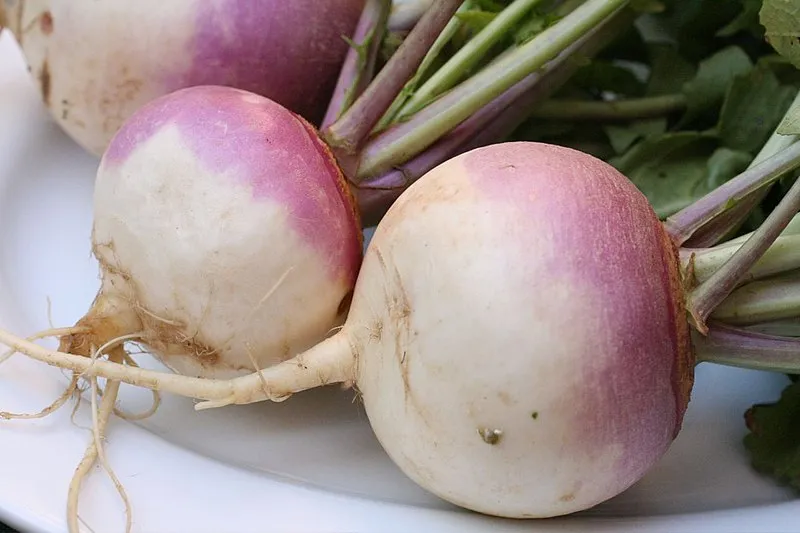
Turnip
VegetableFast-growing root vegetable. Hardy enough to withstand light frosts down to -2°C, turnip performs best when daytime temperatures stay between 8°C and 18°C. Give it full sun (6-8 hours of direct light daily) and regular watering to keep soil consistently moist, and expect to harvest in roughly 30-60 days. An excellent choice for beginner and experienced gardeners alike, thanks to its forgiving growing habits.
Direct sow. Spring and fall crops. Can be planted 2-3 weeks before the last expected frost, giving it a head start on the growing season. Aim for about 2.5 cm of water per week, adjusting for rainfall. Organic mulch around the base helps maintain even moisture.
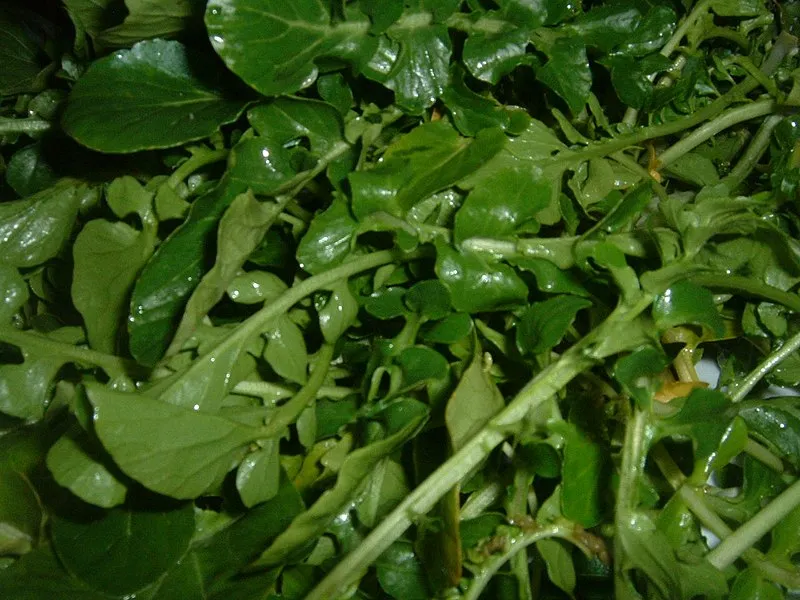
Watercress
VegetablePeppery aquatic green. Hardy enough to withstand light frosts down to 0°C, watercress performs best when daytime temperatures stay between 8°C and 16°C. Give it partial shade, though it appreciates some direct light and frequent watering — it is a thirsty plant that dislikes dry soil, and expect to harvest in roughly 30-50 days. Widely grown in home gardens around the world, it adapts to a range of soil types and growing conditions.
Keep soil constantly wet or grow in water. Excellent in containers with saucers of water. Can be planted 2-3 weeks before the last expected frost, giving it a head start on the growing season. Consistent moisture is critical. Mulch with straw or compost to retain soil moisture and keep roots cool during hot weather.
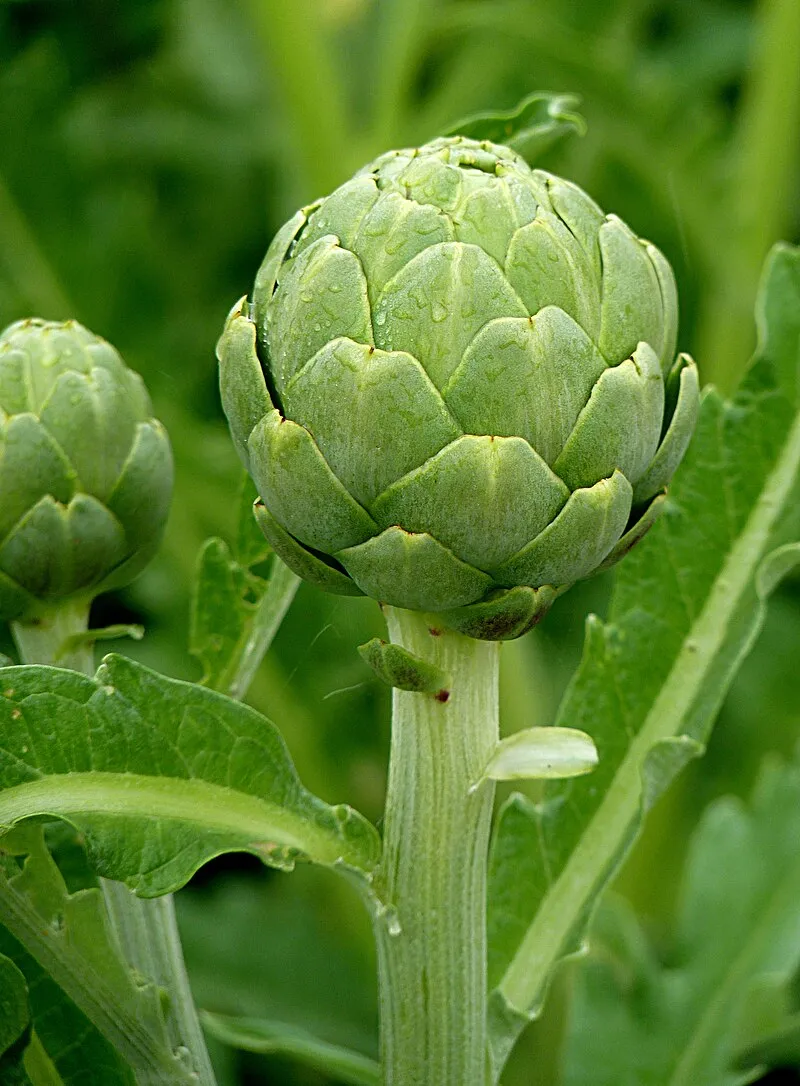
Artichoke
VegetableStunning architectural plant. Hardy enough to withstand light frosts down to -5°C, artichoke performs best when daytime temperatures stay between 12°C and 24°C. Give it full sun (6-8 hours of direct light daily) and regular watering to keep soil consistently moist, and expect to harvest in roughly 150-180 days. A staple of kitchen gardens and allotments, it rewards even first-time growers with a generous harvest.
Needs vernalization (cold period) to produce buds. Mulch crowns in winter. Can be planted 2-3 weeks before the last expected frost, giving it a head start on the growing season. Aim for about 2.5 cm of water per week, adjusting for rainfall. Organic mulch around the base helps maintain even moisture.
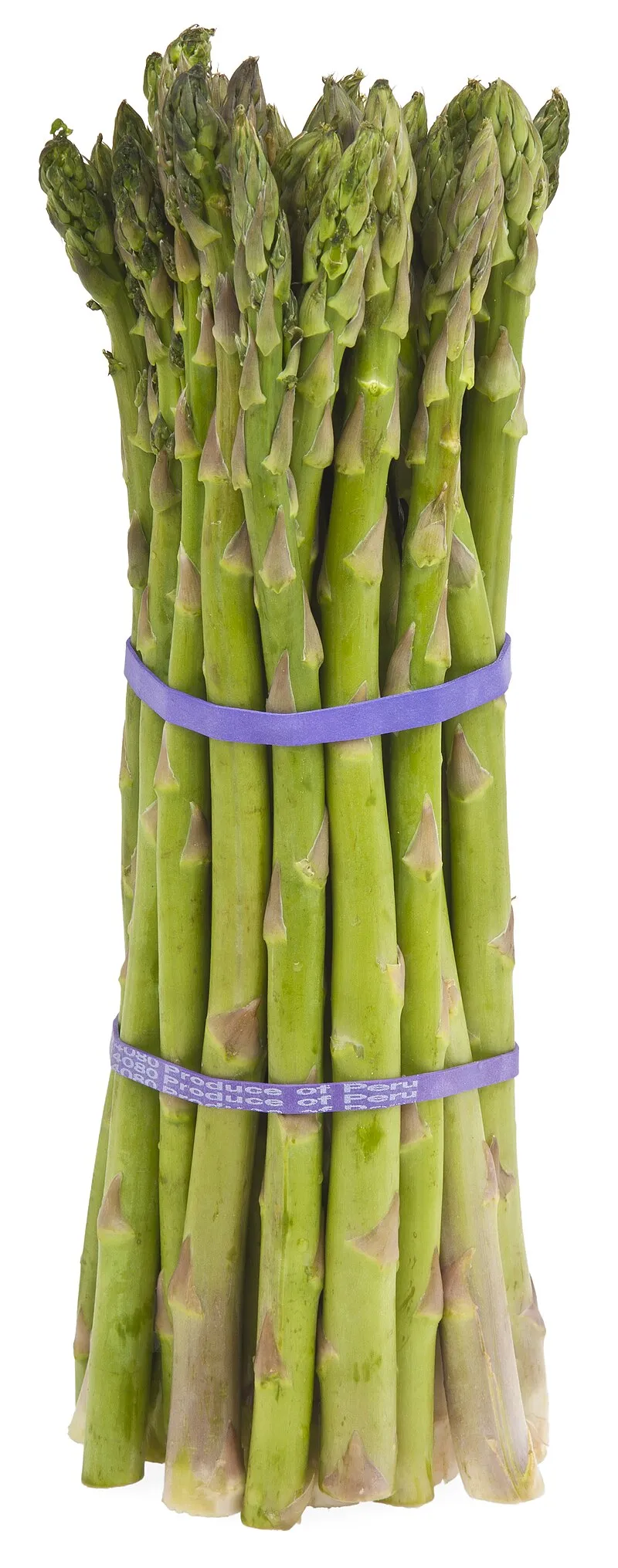
Asparagus
VegetablePerennial crop that produces for 20+ years. Hardy enough to withstand light frosts down to -20°C, asparagus performs best when daytime temperatures stay between 15°C and 24°C. Give it full sun (6-8 hours of direct light daily) and regular watering to keep soil consistently moist, and expect to harvest in roughly 730-1095 days. Popular with home gardeners for its reliable yields and straightforward growing requirements.
Plant crowns in deep trenches. Don't harvest first 2 years. Can be planted 2-3 weeks before the last expected frost, giving it a head start on the growing season. Aim for about 2.5 cm of water per week, adjusting for rainfall. Organic mulch around the base helps maintain even moisture.
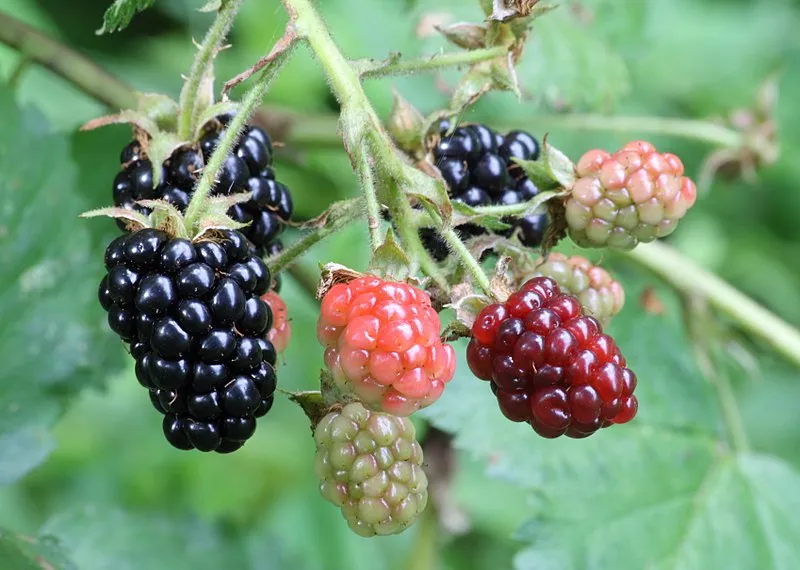
Blackberry
FruitVigorous bramble fruit. Hardy enough to withstand light frosts down to -15°C, blackberry performs best when daytime temperatures stay between 18°C and 28°C. Give it full sun (6-8 hours of direct light daily) and regular watering to keep soil consistently moist, and expect to harvest in roughly 365-730 days. A favourite of home orchardists and fruit gardeners, it can be trained, pruned, and shaped to fit most spaces.
Train on trellis or fence. Prune fruited canes after harvest. Can be planted 2-3 weeks before the last expected frost, giving it a head start on the growing season. Aim for about 2.5 cm of water per week, adjusting for rainfall. Organic mulch around the base helps maintain even moisture.
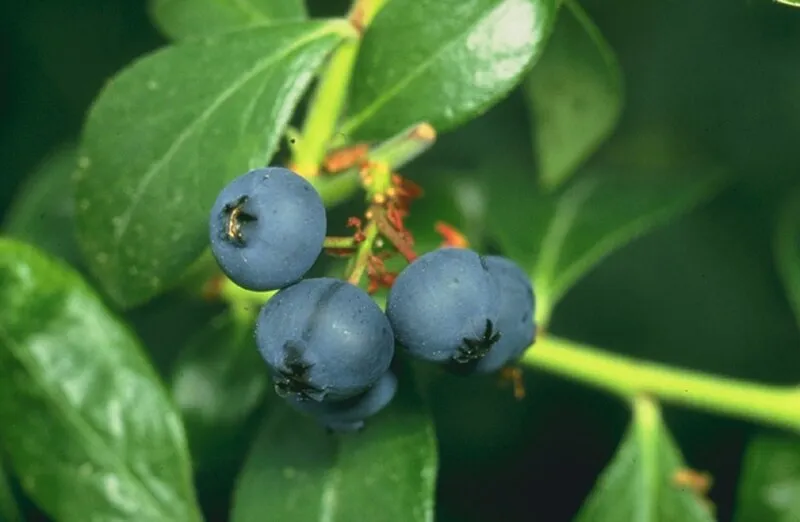
Blueberry
FruitAcid-loving berry bush. Hardy enough to withstand light frosts down to -20°C, blueberry performs best when daytime temperatures stay between 15°C and 25°C. Give it full sun (6-8 hours of direct light daily) and regular watering to keep soil consistently moist, and expect to harvest in roughly 365-730 days. Growing your own means harvesting at perfect ripeness, something commercial growers simply cannot match.
Must have acidic soil. Use pine needle mulch. Can be planted 2-3 weeks before the last expected frost, giving it a head start on the growing season. Aim for about 2.5 cm of water per week, adjusting for rainfall. Organic mulch around the base helps maintain even moisture.
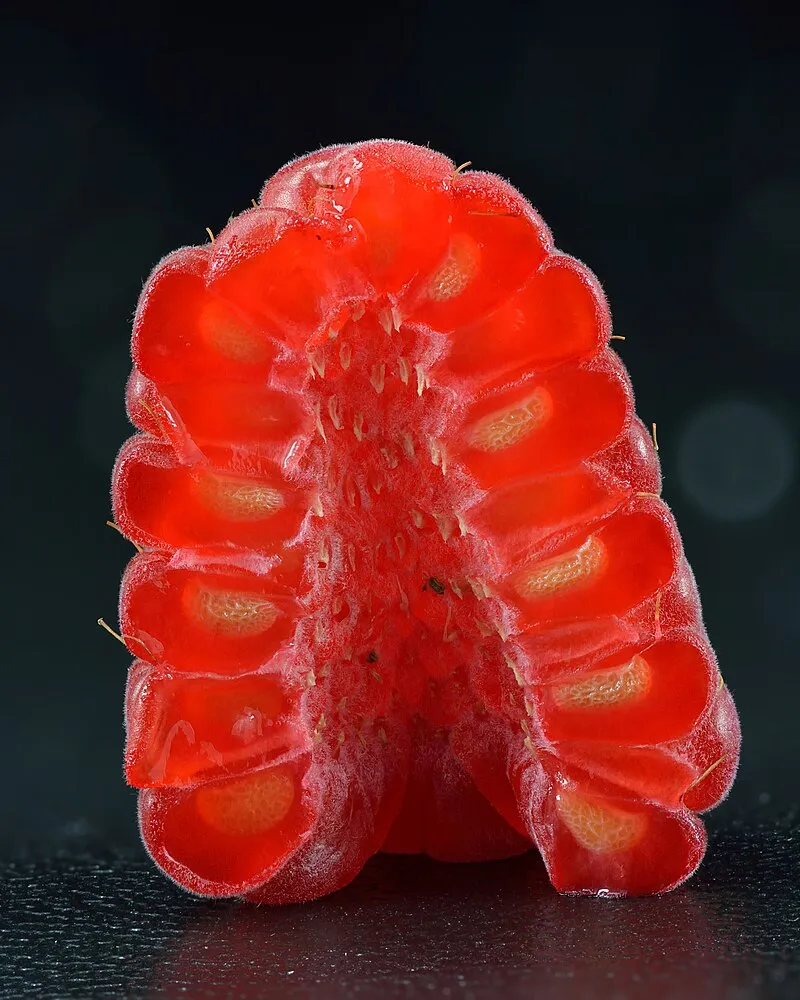
Raspberry
FruitDelicate, flavorful berry. Hardy enough to withstand light frosts down to -20°C, raspberry performs best when daytime temperatures stay between 15°C and 25°C. Give it full sun (6-8 hours of direct light daily) and regular watering to keep soil consistently moist, and expect to harvest in roughly 365-730 days. Well worth the space it takes — a single productive plant can supply a household through the season.
Support with trellis. Prune summer-bearing differently than everbearing. Can be planted 2-3 weeks before the last expected frost, giving it a head start on the growing season. Aim for about 2.5 cm of water per week, adjusting for rainfall. Organic mulch around the base helps maintain even moisture.
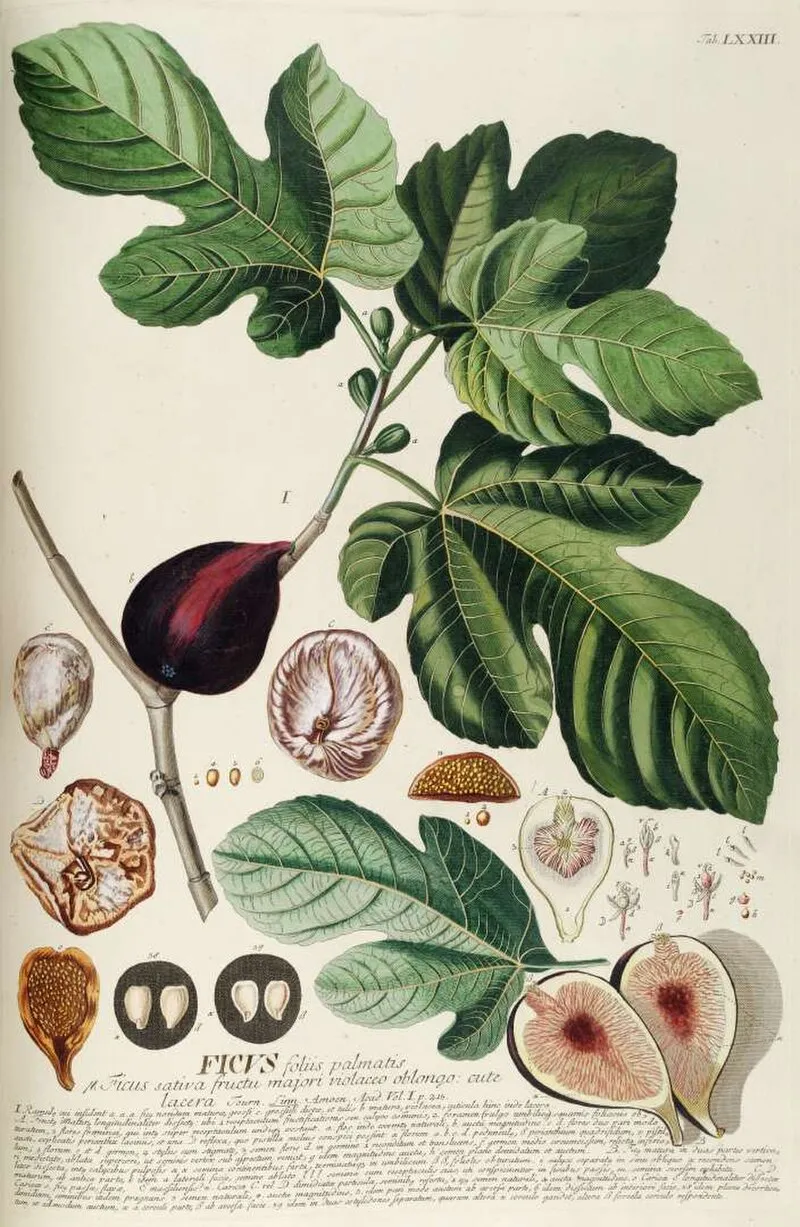
Fig
FruitAncient fruit tree. Remarkably adaptable, fig tolerates temperatures from -5°C to 38°C and thrives in both cool-temperate and tropical gardens. Give it full sun (6-8 hours of direct light daily) and moderate, even watering throughout the growing season, and expect to harvest in roughly 365-730 days. The flavour of home-grown fruit, picked at peak ripeness, is incomparably better than anything from a supermarket.
Protect from frost in cold climates. Restrict roots for more fruit. Can be planted 2-3 weeks before the last expected frost, giving it a head start on the growing season. Water steadily but avoid soggy soil. A 5-cm layer of organic mulch helps balance moisture and suppress weeds.
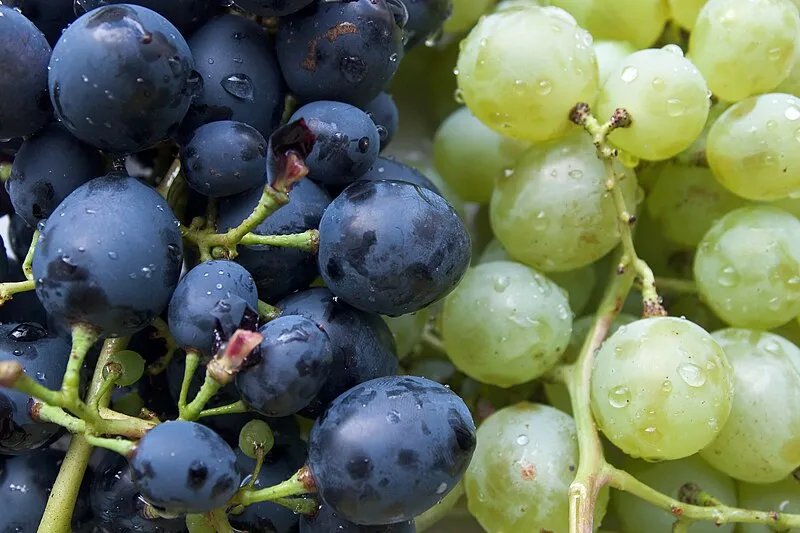
Grape
FruitVigorous climbing vine. Hardy enough to withstand light frosts down to -15°C, grape performs best when daytime temperatures stay between 18°C and 30°C. Give it full sun (6-8 hours of direct light daily) and moderate, even watering throughout the growing season, and expect to harvest in roughly 365-1095 days. Patience pays off — once established, it produces reliably season after season with proper care.
Needs strong trellis or arbor. Prune heavily in winter. Can be planted 2-3 weeks before the last expected frost, giving it a head start on the growing season. Water steadily but avoid soggy soil. A 5-cm layer of organic mulch helps balance moisture and suppress weeds.
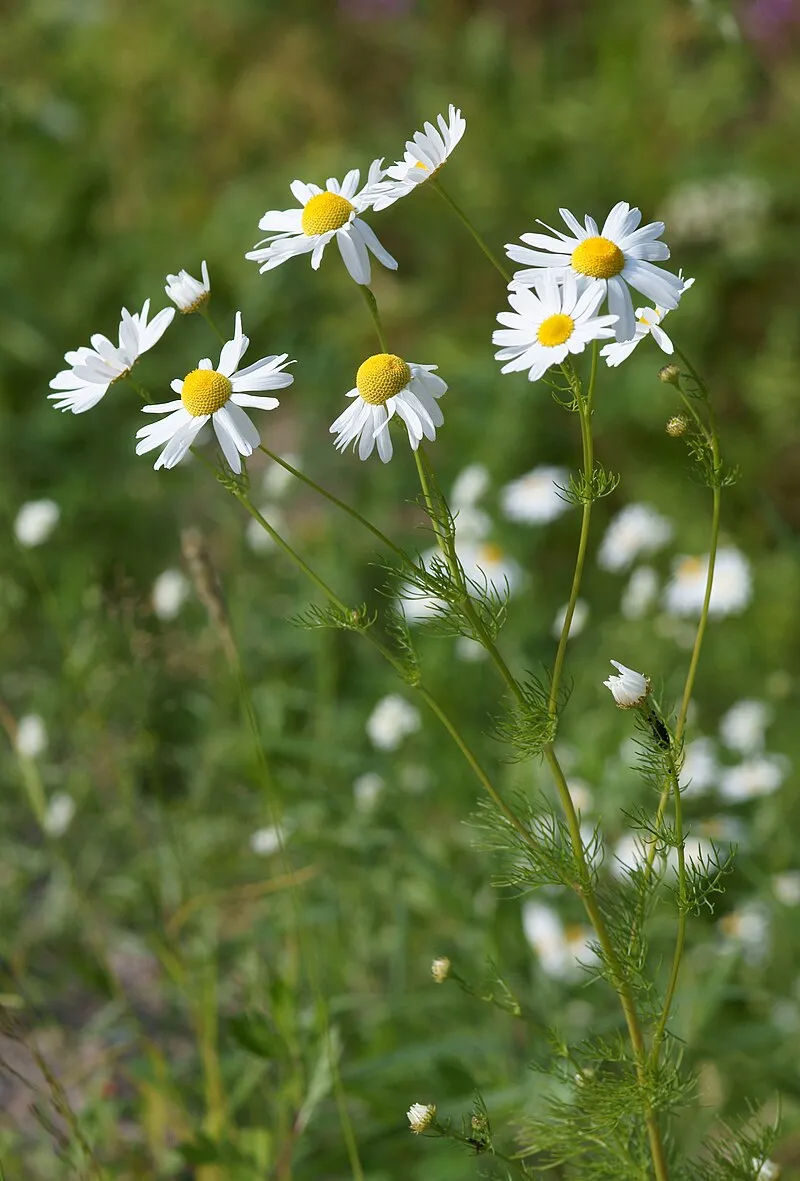
Chamomile
FlowerDaisy-like flowers used for soothing tea. Hardy enough to withstand light frosts down to -5°C, chamomile performs best when daytime temperatures stay between 10°C and 22°C. Plant in a spot with full sun (6-8 hours of direct light daily) and provide minimal watering — it prefers dry conditions between drinks. Expect blooms in approximately 60-90 days. An easy way to add dramatic colour to any garden, with minimal maintenance once established.
Self-seeds readily. Harvest flowers when fully open. Can be planted 2-3 weeks before the last expected frost, giving it a head start on the growing season. Overwatering is the most common mistake. Let soil dry out between waterings and ensure drainage is excellent.
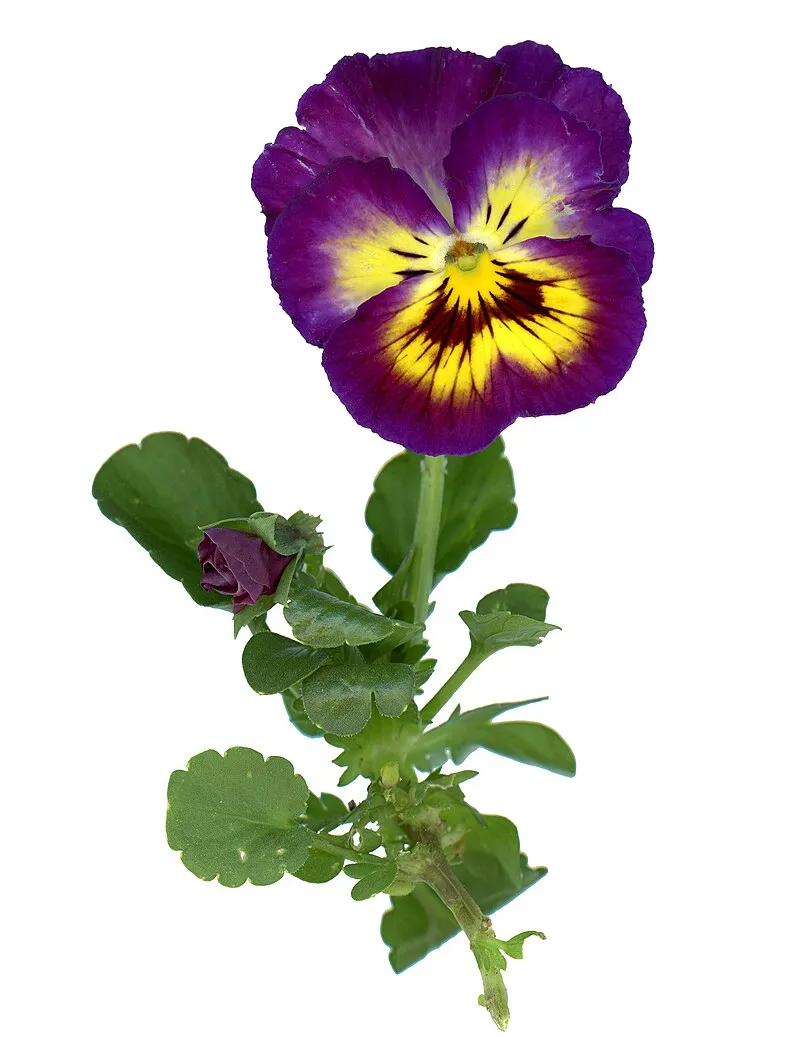
Pansy
FlowerCheerful cool-season flower with face-like markings. Hardy enough to withstand light frosts down to -10°C, pansy performs best when daytime temperatures stay between 5°C and 18°C. Plant in a spot with full sun to partial shade and provide regular watering to keep soil consistently moist. Expect blooms in approximately 55-80 days. An easy way to add dramatic colour to any garden, with minimal maintenance once established.
Plant in fall for winter/spring color. Deadhead for continuous blooms. Can be planted 2-3 weeks before the last expected frost, giving it a head start on the growing season. Aim for about 2.5 cm of water per week, adjusting for rainfall. Organic mulch around the base helps maintain even moisture.
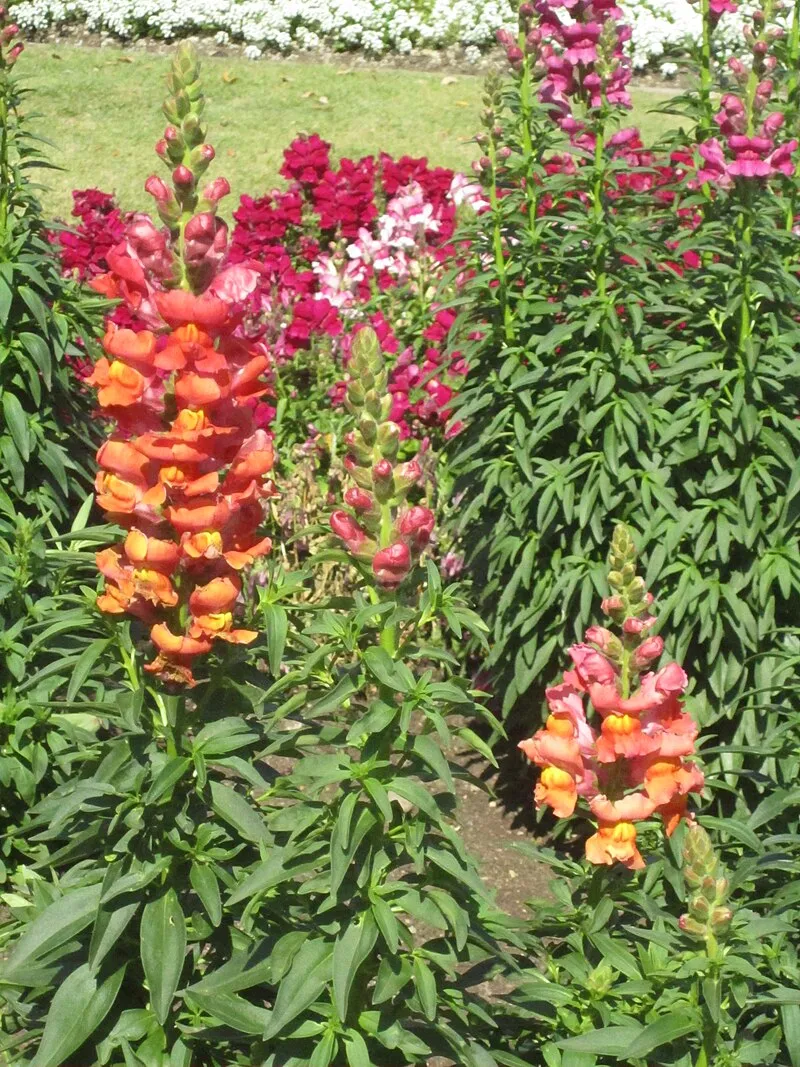
Snapdragon
FlowerTall, colorful spikes. Hardy enough to withstand light frosts down to -5°C, snapdragon performs best when daytime temperatures stay between 10°C and 22°C. Plant in a spot with full sun (6-8 hours of direct light daily) and provide regular watering to keep soil consistently moist. Expect blooms in approximately 70-90 days. Adds colour and life to borders, beds, and containers from spring through autumn.
Pinch seedlings for branching. Great cool-season cut flower. Can be planted 2-3 weeks before the last expected frost, giving it a head start on the growing season. Aim for about 2.5 cm of water per week, adjusting for rainfall. Organic mulch around the base helps maintain even moisture.
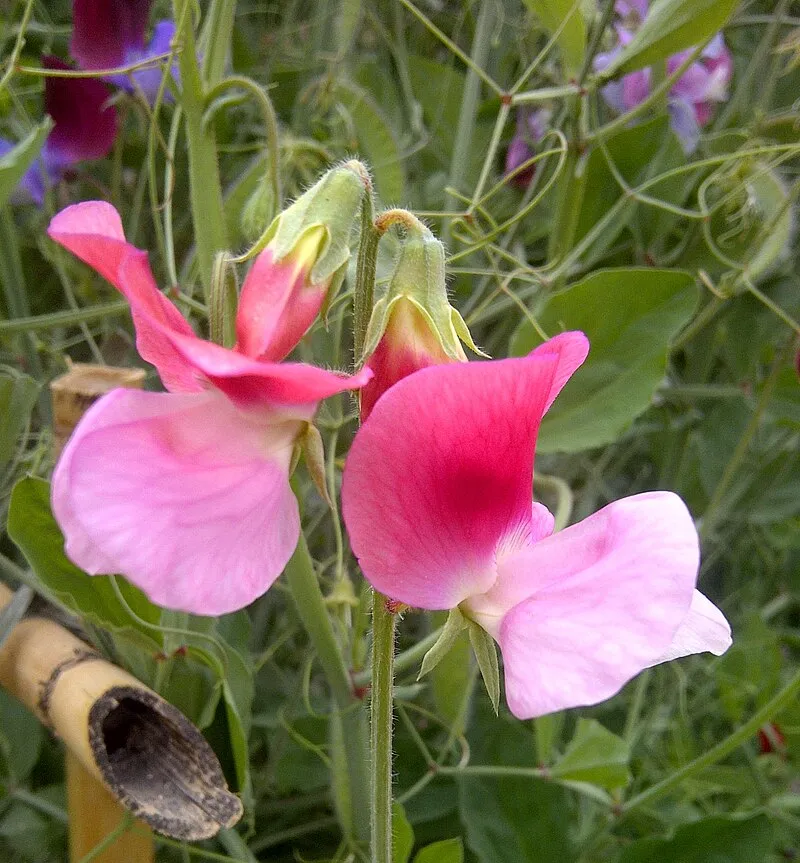
Sweet Pea Flower
FlowerIntensely fragrant climbing flower. Hardy enough to withstand light frosts down to -2°C, sweet pea flower performs best when daytime temperatures stay between 10°C and 20°C. Plant in a spot with full sun (6-8 hours of direct light daily) and provide regular watering to keep soil consistently moist. Expect blooms in approximately 55-70 days. Works beautifully in mixed borders, cottage gardens, or standalone containers on patios and balconies.
Soak seeds overnight. Plant early -- they love cool weather. Can be planted 2-3 weeks before the last expected frost, giving it a head start on the growing season. Aim for about 2.5 cm of water per week, adjusting for rainfall. Organic mulch around the base helps maintain even moisture.
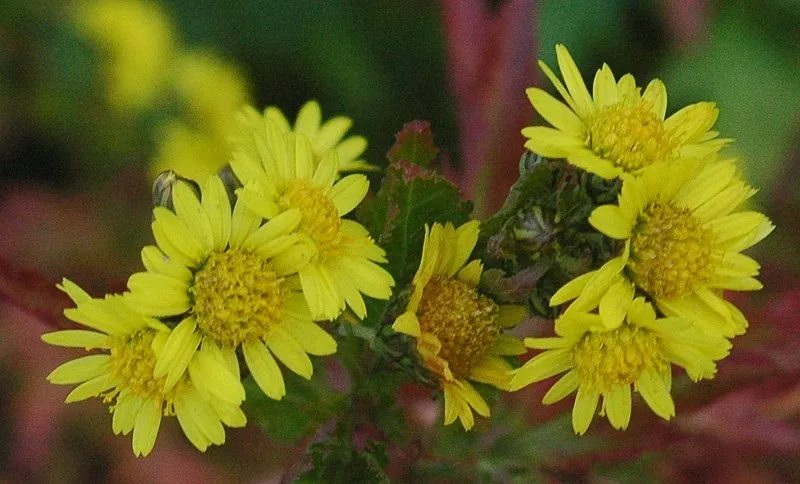
Chrysanthemum
FlowerFall-blooming perennial in every color. Hardy enough to withstand light frosts down to -10°C, chrysanthemum performs best when daytime temperatures stay between 12°C and 22°C. Plant in a spot with full sun (6-8 hours of direct light daily) and provide regular watering to keep soil consistently moist. Expect blooms in approximately 70-100 days. An easy way to add dramatic colour to any garden, with minimal maintenance once established.
Pinch tips until midsummer for bushy plants. Divide every 2-3 years. Can be planted 2-3 weeks before the last expected frost, giving it a head start on the growing season. Aim for about 2.5 cm of water per week, adjusting for rainfall. Organic mulch around the base helps maintain even moisture.
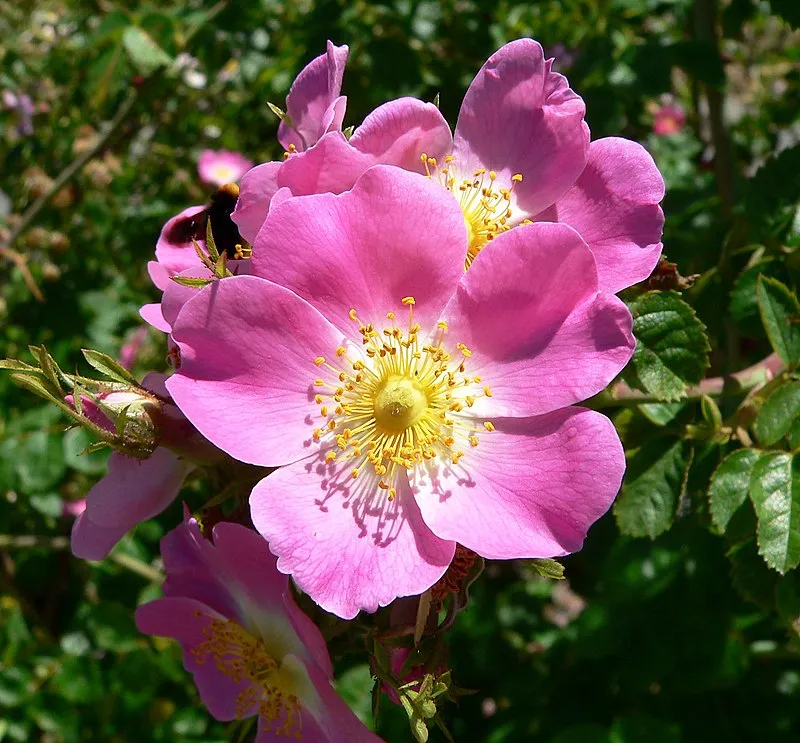
Rose
FlowerThe queen of flowers. Hardy enough to withstand light frosts down to -15°C, rose performs best when daytime temperatures stay between 15°C and 27°C. Plant in a spot with full sun (6-8 hours of direct light daily) and provide regular watering to keep soil consistently moist. Expect blooms in approximately 60-90 days. Adds colour and life to borders, beds, and containers from spring through autumn.
Plant in rich, well-drained soil. Prune in late winter. Can be planted 2-3 weeks before the last expected frost, giving it a head start on the growing season. Aim for about 2.5 cm of water per week, adjusting for rainfall. Organic mulch around the base helps maintain even moisture.

Bamboo
HerbFastest-growing plant on earth. Remarkably adaptable, bamboo tolerates temperatures from -15°C to 38°C and thrives in both cool-temperate and tropical gardens. It needs full sun to partial shade and regular watering to keep soil consistently moist — leaves are ready for picking in about 365-1095 days. A kitchen essential that grows equally well on a sunny windowsill, a balcony pot, or a dedicated herb bed.
USE CLUMPING varieties only -- running bamboo is extremely invasive. Can be planted 2-3 weeks before the last expected frost in your area, giving it a head start on the growing season. Can be planted 2-3 weeks before the last expected frost, giving it a head start on the growing season. Aim for about 2.5 cm of water per week, adjusting for rainfall. Organic mulch around the base helps maintain even moisture.
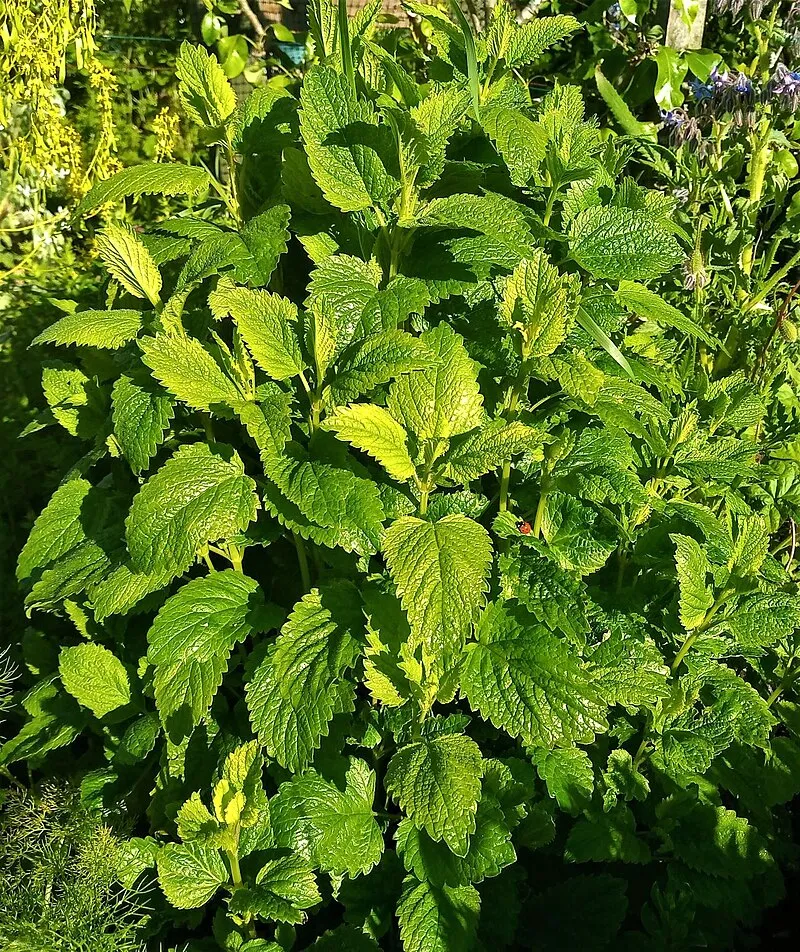
Lemon Balm
HerbLemony mint-family herb for teas and cooking. Hardy enough to withstand light frosts down to -10°C, lemon balm performs best when daytime temperatures stay between 12°C and 22°C. It needs full sun to partial shade and regular watering to keep soil consistently moist — leaves are ready for picking in about 60-70 days. Valued in cuisines worldwide, it is easy to grow and rewards regular harvesting with bushier, more productive plants.
Spreads like mint -- grow in containers. Cut back hard mid-season. Can be planted 2-3 weeks before the last expected frost, giving it a head start on the growing season. Aim for about 2.5 cm of water per week, adjusting for rainfall. Organic mulch around the base helps maintain even moisture.
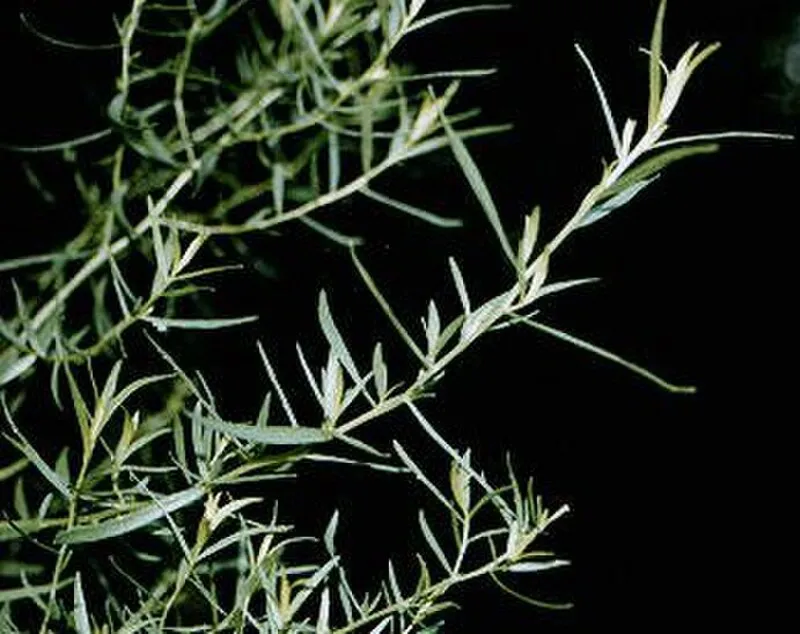
Tarragon
HerbFrench tarragon has anise flavor essential to French cuisine. Hardy enough to withstand light frosts down to -10°C, tarragon performs best when daytime temperatures stay between 12°C and 22°C. It needs full sun (6-8 hours of direct light daily) and moderate, even watering throughout the growing season — leaves are ready for picking in about 60-90 days. An aromatic addition to any garden, it dries and freezes well for year-round use in the kitchen.
French tarragon can't be grown from seed -- buy plants. Can be planted 2-3 weeks before the last expected frost in your area, giving it a head start on the growing season. Can be planted 2-3 weeks before the last expected frost, giving it a head start on the growing season. Water steadily but avoid soggy soil. A 5-cm layer of organic mulch helps balance moisture and suppress weeds.
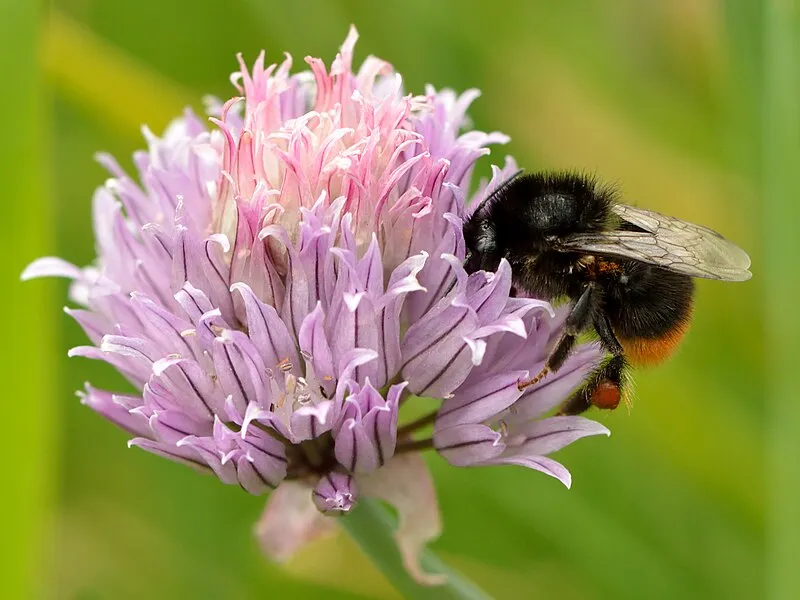
Chive
HerbHardy perennial allium. Hardy enough to withstand light frosts down to -15°C, chive performs best when daytime temperatures stay between 10°C and 22°C. It needs full sun to partial shade and regular watering to keep soil consistently moist — leaves are ready for picking in about 60-90 days. Fresh leaves from your own garden taste noticeably better than store-bought — and the plant practically grows itself.
Cut to 5cm above ground for regrowth. Divide clumps every 3 years. Can be planted 2-3 weeks before the last expected frost, giving it a head start on the growing season. Aim for about 2.5 cm of water per week, adjusting for rainfall. Organic mulch around the base helps maintain even moisture.
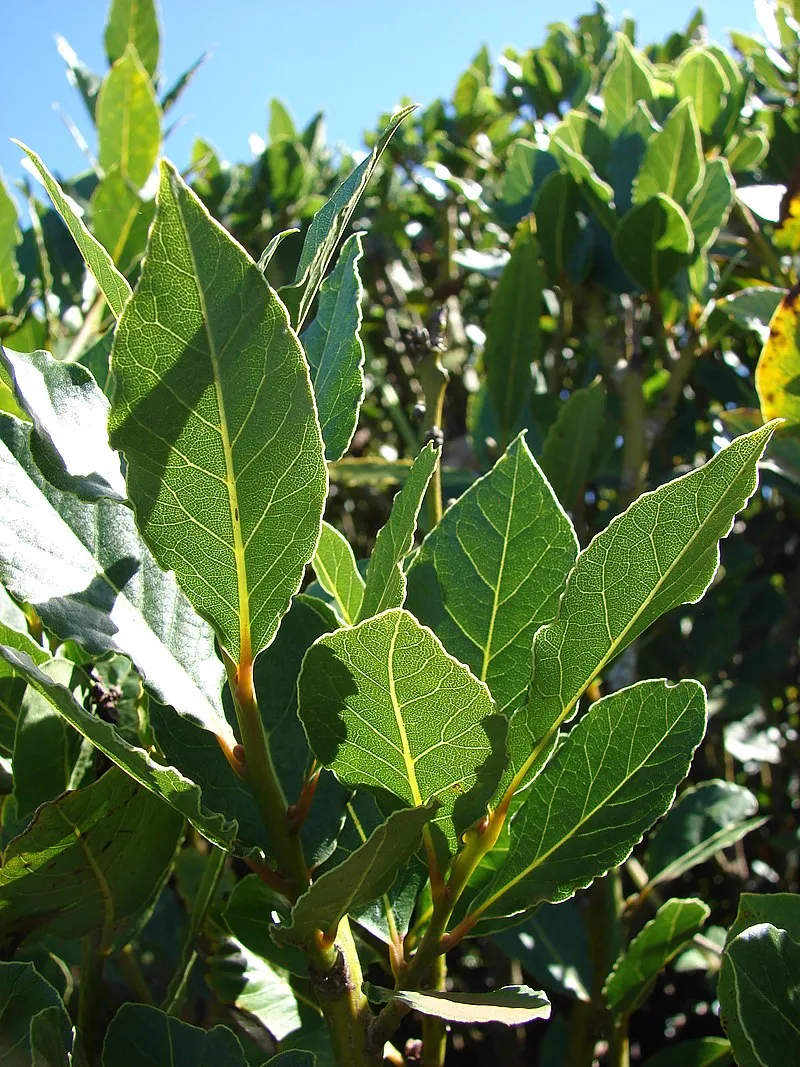
Bay Laurel
HerbEvergreen tree producing aromatic bay leaves essential in soups and stews. Remarkably adaptable, bay laurel tolerates temperatures from -5°C to 35°C and thrives in both cool-temperate and tropical gardens. It needs full sun to partial shade and moderate, even watering throughout the growing season — leaves are ready for picking in about 365-730 days. Perfect for container gardens and small spaces — just place it where it gets adequate light and harvest as needed.
Slow-growing -- excellent container plant. Harvest leaves year-round. Can be planted 2-3 weeks before the last expected frost, giving it a head start on the growing season. Water steadily but avoid soggy soil. A 5-cm layer of organic mulch helps balance moisture and suppress weeds.
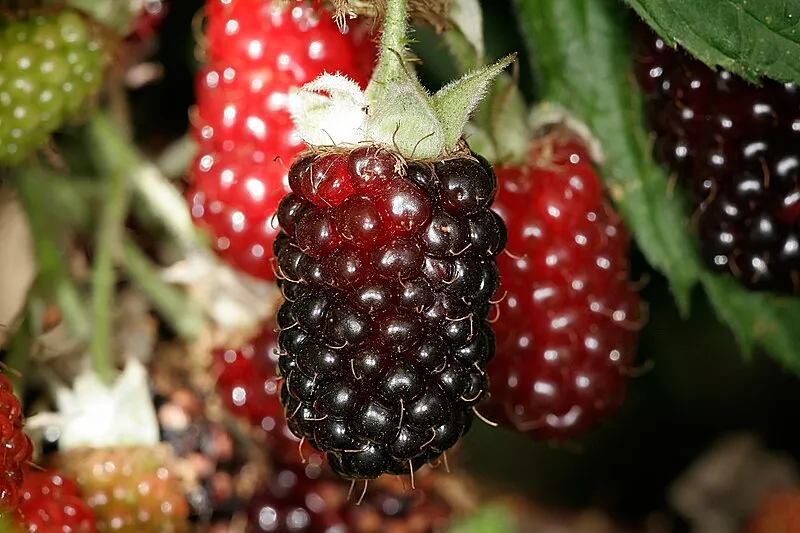
Boysenberry
FruitLarge, dark berry -- a cross of raspberry, blackberry, and loganberry. Hardy enough to withstand light frosts down to -10°C, boysenberry performs best when daytime temperatures stay between 15°C and 25°C. Give it full sun (6-8 hours of direct light daily) and regular watering to keep soil consistently moist, and expect to harvest in roughly 365-545 days. Well worth the space it takes — a single productive plant can supply a household through the season.
Train on trellis. Prune spent canes after harvest. Can be planted 2-3 weeks before the last expected frost, giving it a head start on the growing season. Aim for about 2.5 cm of water per week, adjusting for rainfall. Organic mulch around the base helps maintain even moisture.
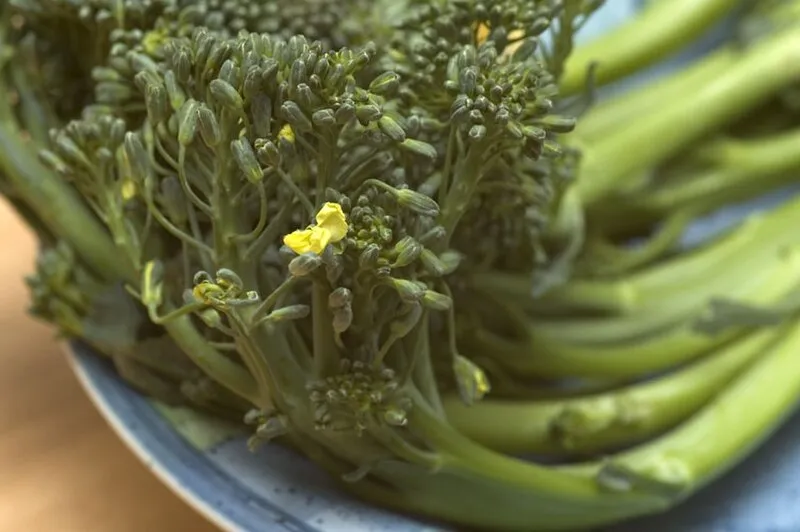
Broccolini
VegetableHybrid of broccoli and Chinese broccoli. Hardy enough to withstand light frosts down to 0°C, broccolini performs best when daytime temperatures stay between 12°C and 22°C. Give it full sun (6-8 hours of direct light daily) and regular watering to keep soil consistently moist, and expect to harvest in roughly 50-65 days. A staple of kitchen gardens and allotments, it rewards even first-time growers with a generous harvest.
Harvest main stem first, then side shoots. More heat-tolerant than broccoli. Can be planted 2-3 weeks before the last expected frost, giving it a head start on the growing season. Aim for about 2.5 cm of water per week, adjusting for rainfall. Organic mulch around the base helps maintain even moisture.
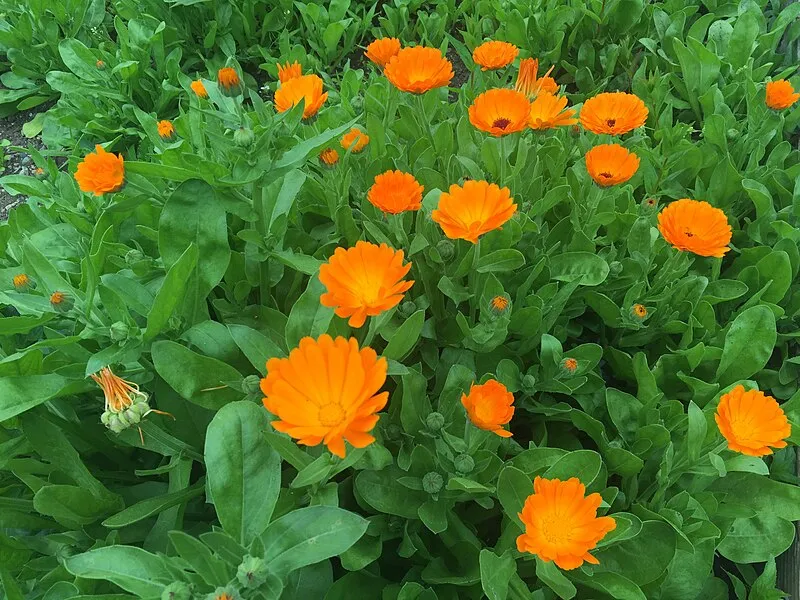
Calendula
FlowerBright orange/yellow medicinal flower. Hardy enough to withstand light frosts down to -5°C, calendula performs best when daytime temperatures stay between 10°C and 22°C. Plant in a spot with full sun (6-8 hours of direct light daily) and provide moderate, even watering throughout the growing season. Expect blooms in approximately 45-65 days. Works beautifully in mixed borders, cottage gardens, or standalone containers on patios and balconies.
Deadhead for continuous blooms. Self-seeds readily. Can be planted 2-3 weeks before the last expected frost, giving it a head start on the growing season. Water steadily but avoid soggy soil. A 5-cm layer of organic mulch helps balance moisture and suppress weeds.
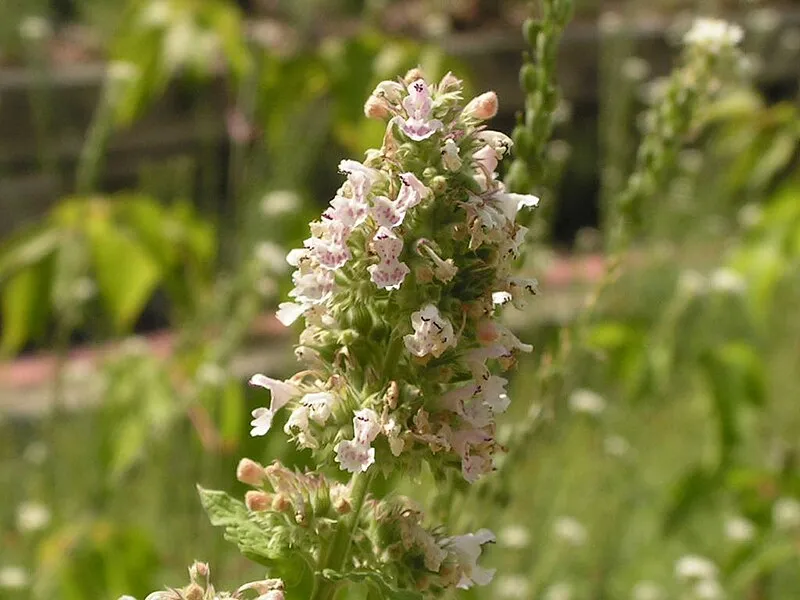
Catnip
HerbMint-family herb that drives cats wild. Hardy enough to withstand light frosts down to -15°C, catnip performs best when daytime temperatures stay between 12°C and 24°C. It needs full sun to partial shade and moderate, even watering throughout the growing season — leaves are ready for picking in about 60-80 days. An aromatic addition to any garden, it dries and freezes well for year-round use in the kitchen.
Very vigorous -- contain or it spreads. Cats will roll in it. Can be planted 2-3 weeks before the last expected frost, giving it a head start on the growing season. Water steadily but avoid soggy soil. A 5-cm layer of organic mulch helps balance moisture and suppress weeds.
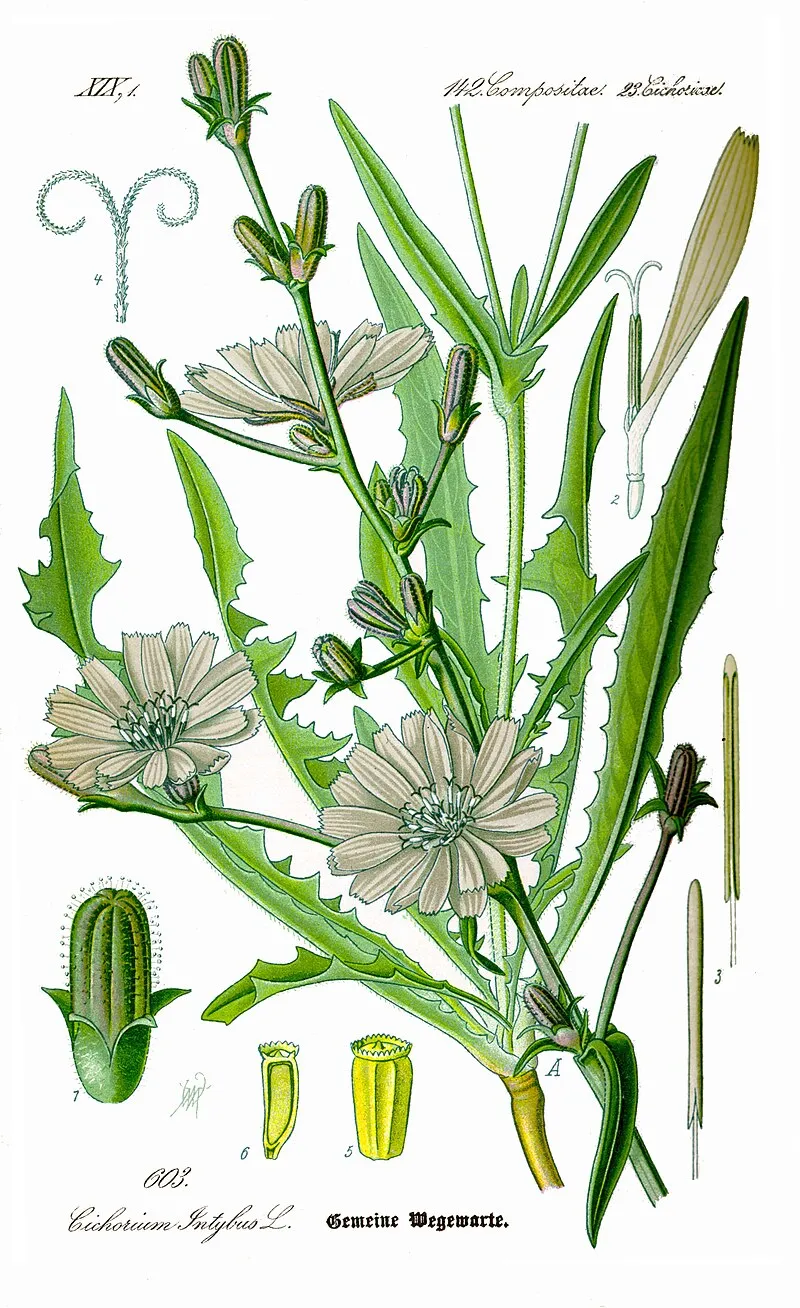
Chicory
VegetableBitter green used in salads. Hardy enough to withstand light frosts down to -5°C, chicory performs best when daytime temperatures stay between 10°C and 22°C. Give it full sun (6-8 hours of direct light daily) and regular watering to keep soil consistently moist, and expect to harvest in roughly 60-120 days. Popular with home gardeners for its reliable yields and straightforward growing requirements.
Force roots in dark for Belgian endive. Blue flowers attract pollinators. Can be planted 2-3 weeks before the last expected frost, giving it a head start on the growing season. Aim for about 2.5 cm of water per week, adjusting for rainfall. Organic mulch around the base helps maintain even moisture.
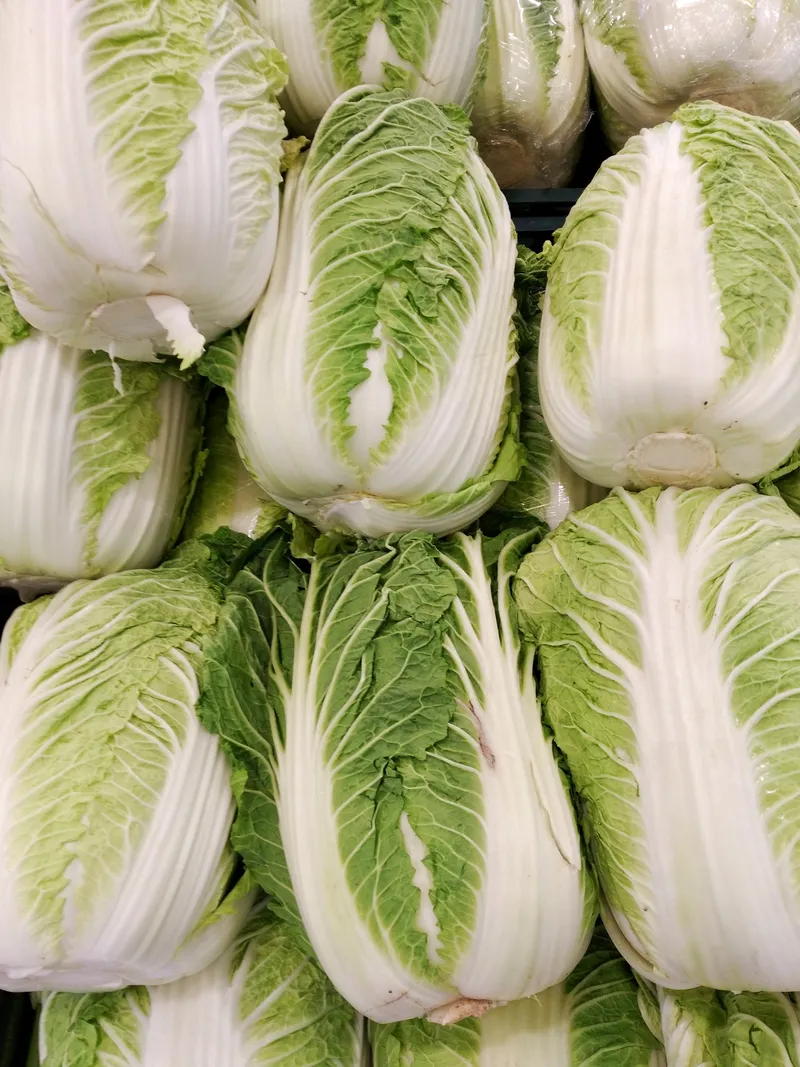
Chinese Cabbage
VegetableNapa cabbage with mild, sweet flavor. Hardy enough to withstand light frosts down to 0°C, chinese cabbage performs best when daytime temperatures stay between 12°C and 20°C. Give it full sun to partial shade and regular watering to keep soil consistently moist, and expect to harvest in roughly 50-70 days. Whether grown in raised beds, containers, or traditional plots, it produces well across a range of climates.
Bolts quickly in heat -- grow in spring or fall. Needs consistent moisture. Can be planted 2-3 weeks before the last expected frost, giving it a head start on the growing season. Aim for about 2.5 cm of water per week, adjusting for rainfall. Organic mulch around the base helps maintain even moisture.
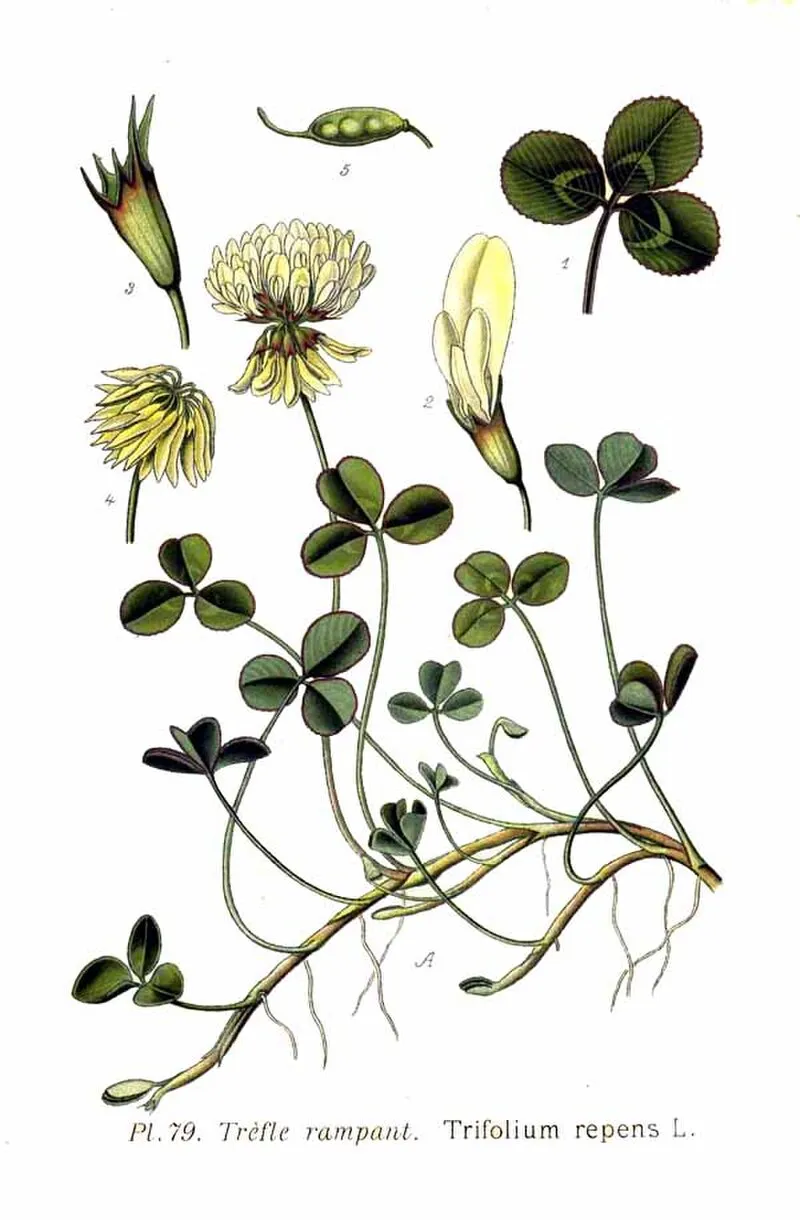
Clover
HerbNitrogen-fixing cover crop and lawn alternative. Hardy enough to withstand light frosts down to -15°C, clover performs best when daytime temperatures stay between 10°C and 22°C. It needs full sun (6-8 hours of direct light daily) and moderate, even watering throughout the growing season — leaves are ready for picking in about 60-90 days. An aromatic addition to any garden, it dries and freezes well for year-round use in the kitchen.
Excellent green manure. Attracts pollinators. Can be planted 2-3 weeks before the last expected frost, giving it a head start on the growing season. Water steadily but avoid soggy soil. A 5-cm layer of organic mulch helps balance moisture and suppress weeds.
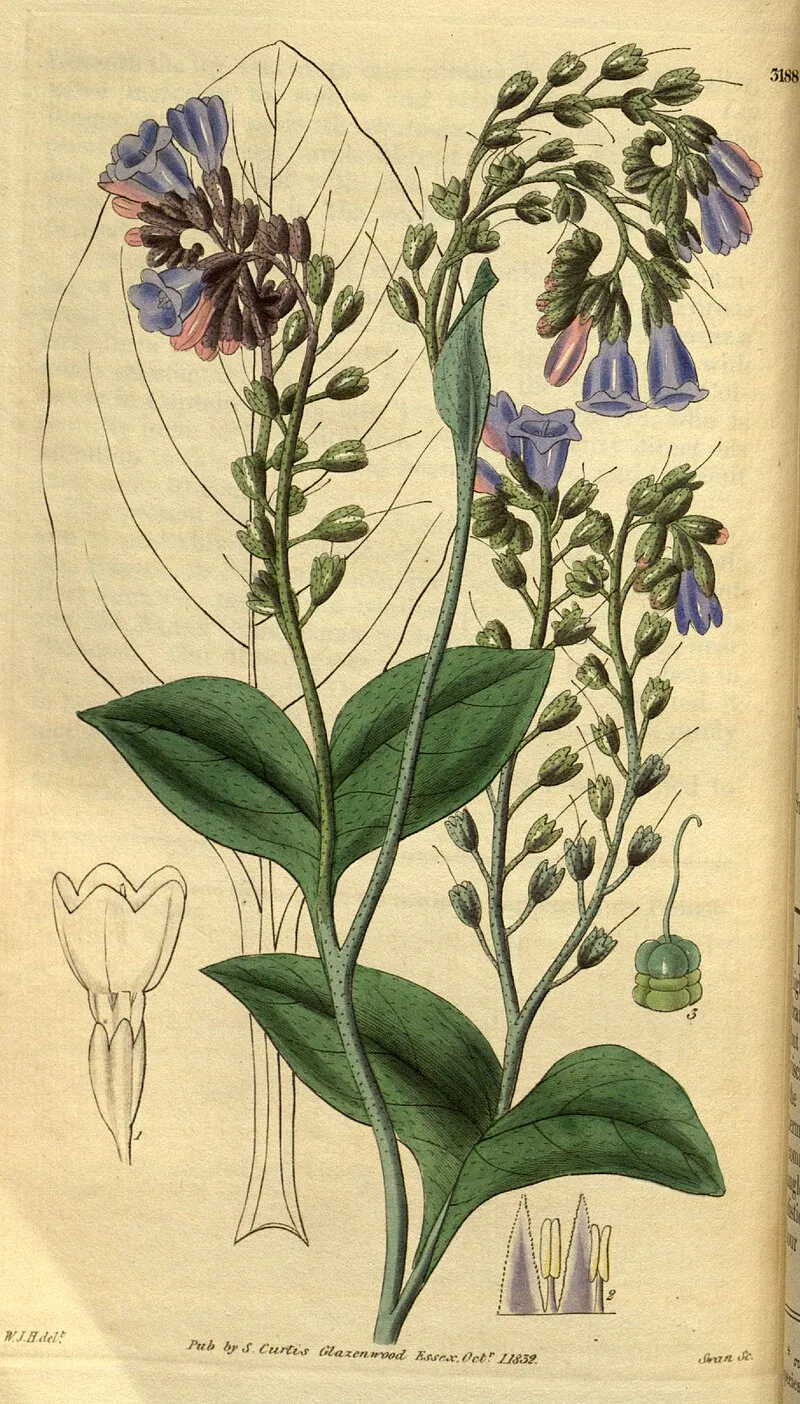
Comfrey
HerbDeep-rooted herb used as compost activator and mulch. Hardy enough to withstand light frosts down to -15°C, comfrey performs best when daytime temperatures stay between 12°C and 24°C. It needs full sun to partial shade and regular watering to keep soil consistently moist — leaves are ready for picking in about 60-90 days. A kitchen essential that grows equally well on a sunny windowsill, a balcony pot, or a dedicated herb bed.
Plant Bocking 14 variety (non-spreading). Chop and drop as mulch 4-5 times per season. Can be planted 2-3 weeks before the last expected frost, giving it a head start on the growing season. Aim for about 2.5 cm of water per week, adjusting for rainfall. Organic mulch around the base helps maintain even moisture.
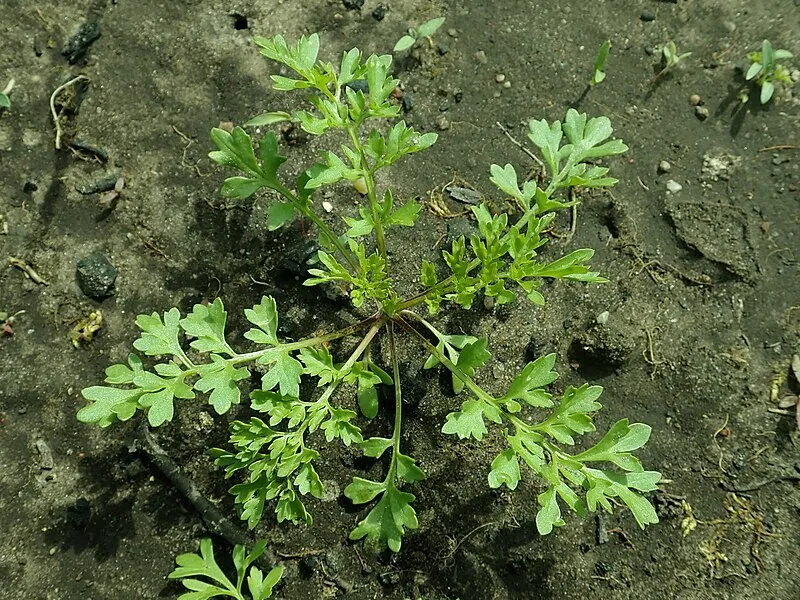
Cress
VegetableFastest food crop -- ready in a week. Hardy enough to withstand light frosts down to 0°C, cress performs best when daytime temperatures stay between 8°C and 18°C. Give it partial shade, though it appreciates some direct light and frequent watering — it is a thirsty plant that dislikes dry soil, and expect to harvest in roughly 7-14 days. Popular with home gardeners for its reliable yields and straightforward growing requirements.
Grow on damp paper towels or soil. Succession sow weekly. Can be planted 2-3 weeks before the last expected frost, giving it a head start on the growing season. Consistent moisture is critical. Mulch with straw or compost to retain soil moisture and keep roots cool during hot weather.
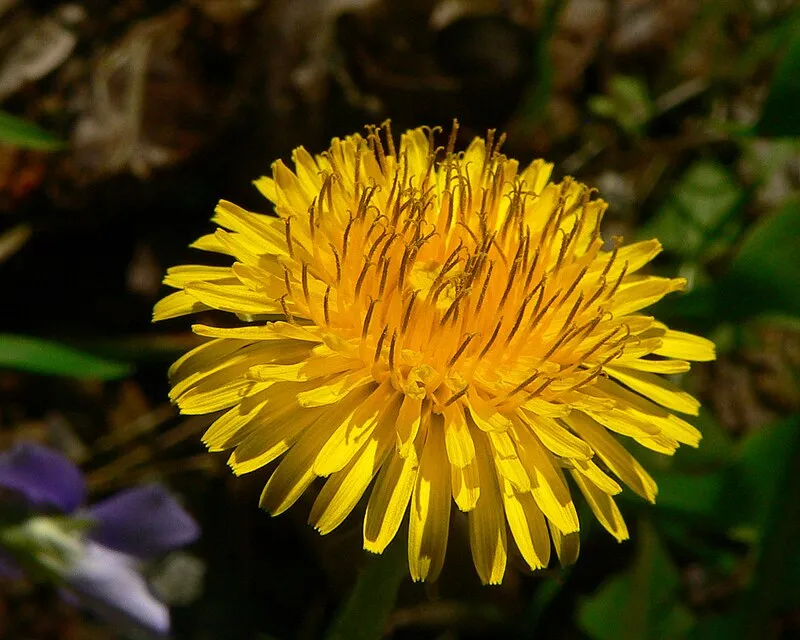
Dandelion
VegetableUnderrated superfood green. Hardy enough to withstand light frosts down to -15°C, dandelion performs best when daytime temperatures stay between 10°C and 22°C. Give it full sun to partial shade and moderate, even watering throughout the growing season, and expect to harvest in roughly 45-60 days. An excellent choice for beginner and experienced gardeners alike, thanks to its forgiving growing habits.
Cultivated varieties are less bitter. Blanch by covering to sweeten leaves. Can be planted 2-3 weeks before the last expected frost, giving it a head start on the growing season. Water steadily but avoid soggy soil. A 5-cm layer of organic mulch helps balance moisture and suppress weeds.
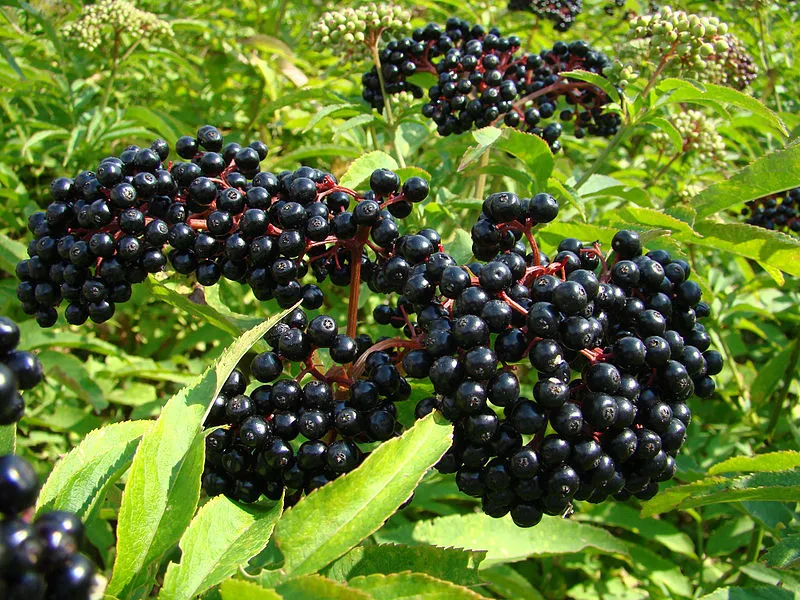
Elderberry
FruitHardy shrub with immune-boosting berries for syrups, jams, and wine. Hardy enough to withstand light frosts down to -20°C, elderberry performs best when daytime temperatures stay between 15°C and 25°C. Give it full sun to partial shade and regular watering to keep soil consistently moist, and expect to harvest in roughly 365-730 days. Patience pays off — once established, it produces reliably season after season with proper care.
Plant 2 varieties for cross-pollination. Cook berries before eating. Can be planted 2-3 weeks before the last expected frost, giving it a head start on the growing season. Aim for about 2.5 cm of water per week, adjusting for rainfall. Organic mulch around the base helps maintain even moisture.
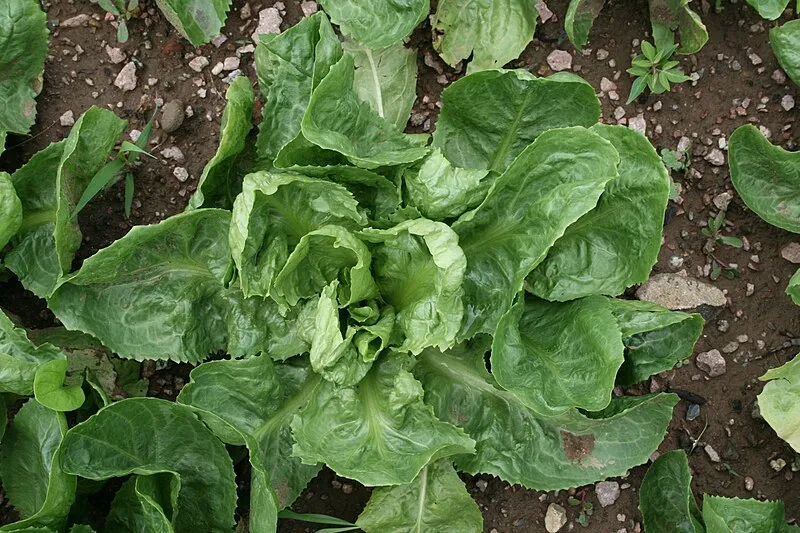
Endive
VegetableBitter salad green with curly leaves. Hardy enough to withstand light frosts down to -2°C, endive performs best when daytime temperatures stay between 10°C and 20°C. Give it full sun to partial shade and regular watering to keep soil consistently moist, and expect to harvest in roughly 45-85 days. Whether grown in raised beds, containers, or traditional plots, it produces well across a range of climates.
Cover center with plate or pot to blanch. Cool-season crop like lettuce. Can be planted 2-3 weeks before the last expected frost, giving it a head start on the growing season. Aim for about 2.5 cm of water per week, adjusting for rainfall. Organic mulch around the base helps maintain even moisture.
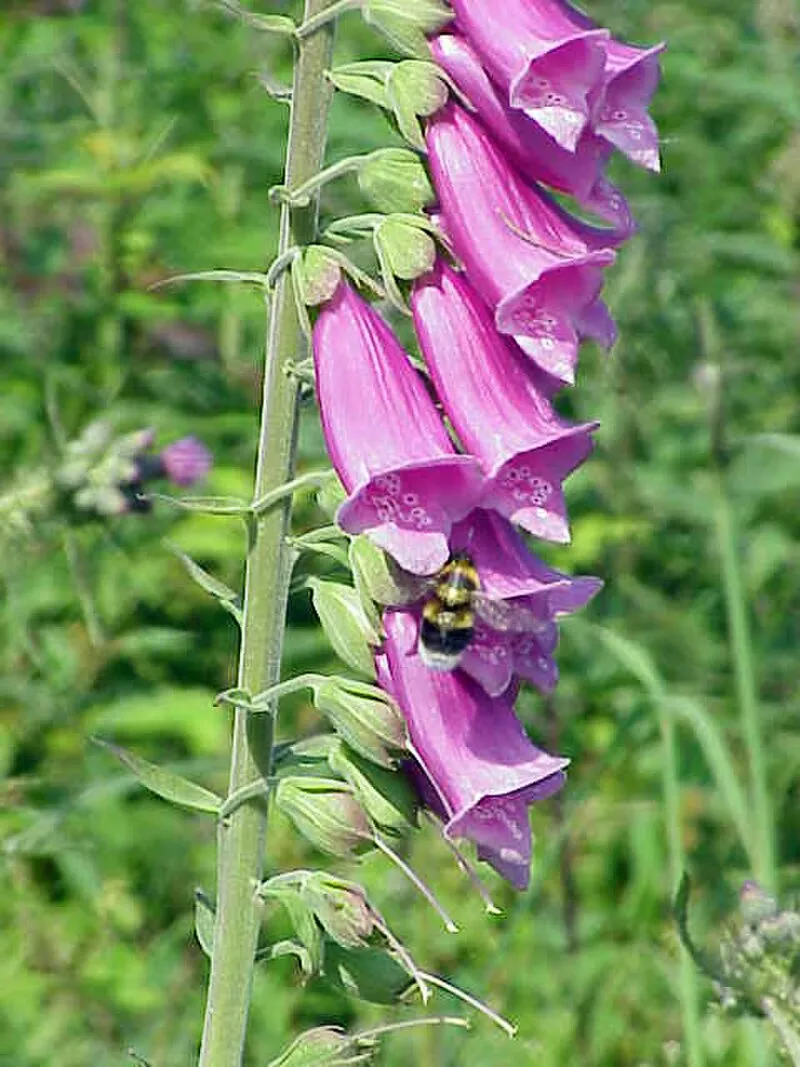
Foxglove
FlowerTall, stately biennial with tubular flowers. Hardy enough to withstand light frosts down to -15°C, foxglove performs best when daytime temperatures stay between 10°C and 22°C. Plant in a spot with partial shade, though it appreciates some direct light and provide regular watering to keep soil consistently moist. Expect blooms in approximately 365-545 days. An easy way to add dramatic colour to any garden, with minimal maintenance once established.
WARNING: All parts are toxic if ingested. Beautiful but keep away from children and pets. Can be planted 2-3 weeks before the last expected frost, giving it a head start on the growing season. Aim for about 2.5 cm of water per week, adjusting for rainfall. Organic mulch around the base helps maintain even moisture.
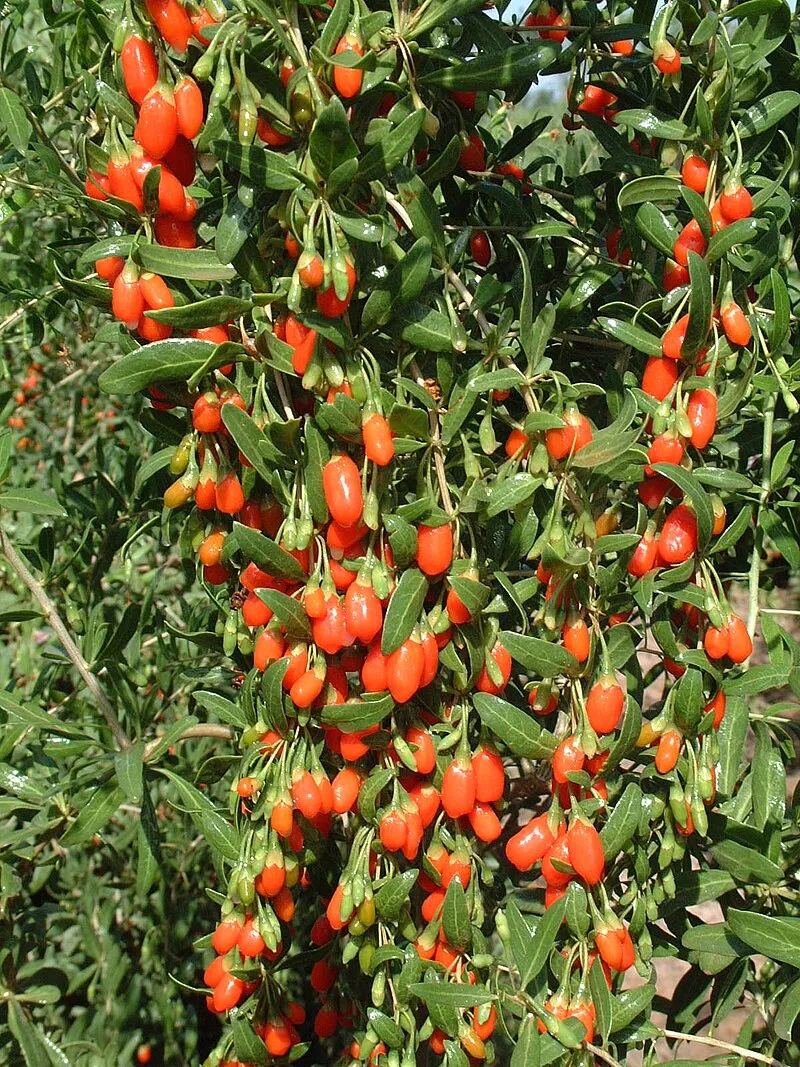
Goji Berry
FruitSuperfruit shrub producing small red berries packed with antioxidants. Hardy enough to withstand light frosts down to -15°C, goji berry performs best when daytime temperatures stay between 15°C and 28°C. Give it full sun (6-8 hours of direct light daily) and moderate, even watering throughout the growing season, and expect to harvest in roughly 365-730 days. Patience pays off — once established, it produces reliably season after season with proper care.
Very hardy once established. Prune to control size. Can be planted 2-3 weeks before the last expected frost, giving it a head start on the growing season. Water steadily but avoid soggy soil. A 5-cm layer of organic mulch helps balance moisture and suppress weeds.
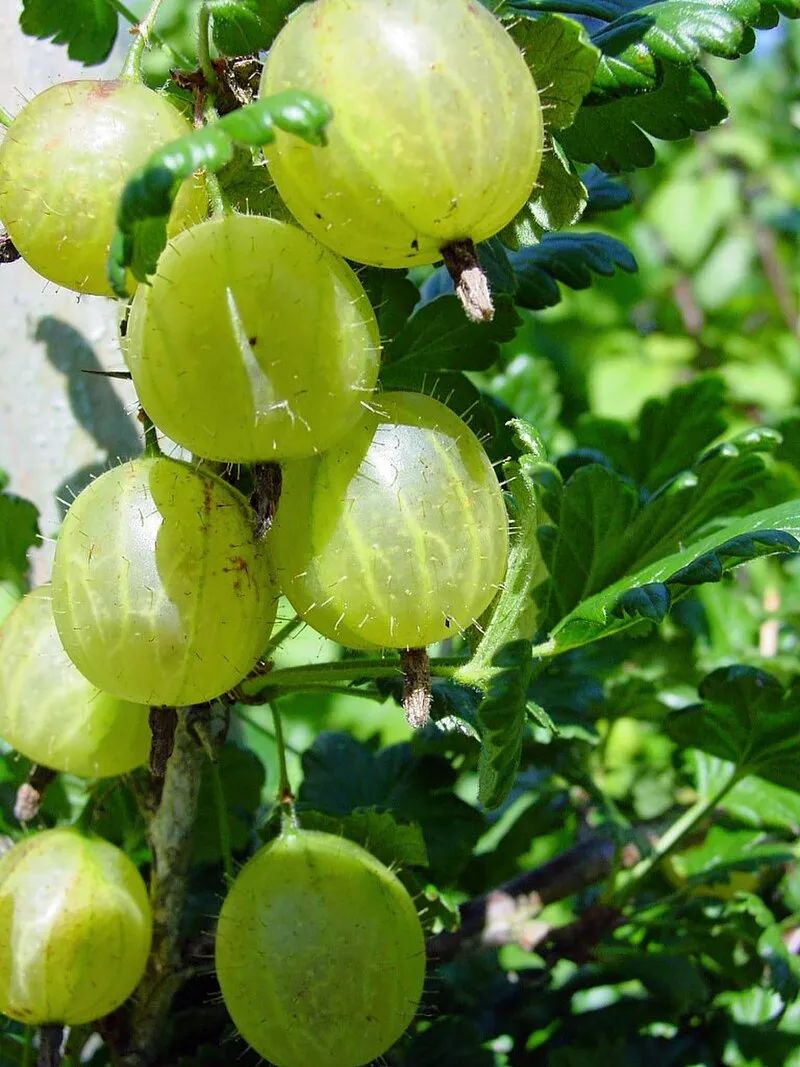
Gooseberry
FruitTart berry bush perfect for jams and pies. Hardy enough to withstand light frosts down to -20°C, gooseberry performs best when daytime temperatures stay between 12°C and 22°C. Give it full sun to partial shade and regular watering to keep soil consistently moist, and expect to harvest in roughly 365-730 days. A favourite of home orchardists and fruit gardeners, it can be trained, pruned, and shaped to fit most spaces.
Prune to open center for air circulation. Excellent for cold climates. Can be planted 2-3 weeks before the last expected frost, giving it a head start on the growing season. Aim for about 2.5 cm of water per week, adjusting for rainfall. Organic mulch around the base helps maintain even moisture.
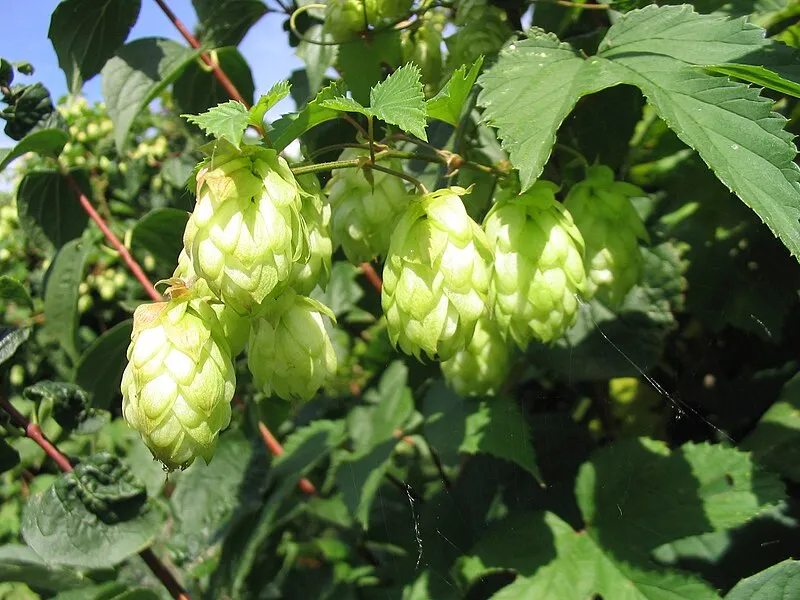
Hops
HerbVigorous climbing vine essential for brewing beer. Hardy enough to withstand light frosts down to -20°C, hops performs best when daytime temperatures stay between 15°C and 25°C. It needs full sun (6-8 hours of direct light daily) and regular watering to keep soil consistently moist — leaves are ready for picking in about 120-150 days. Fresh leaves from your own garden taste noticeably better than store-bought — and the plant practically grows itself.
Needs tall trellis (5m+). Cut to ground in fall. Can be planted 2-3 weeks before the last expected frost, giving it a head start on the growing season. Aim for about 2.5 cm of water per week, adjusting for rainfall. Organic mulch around the base helps maintain even moisture.
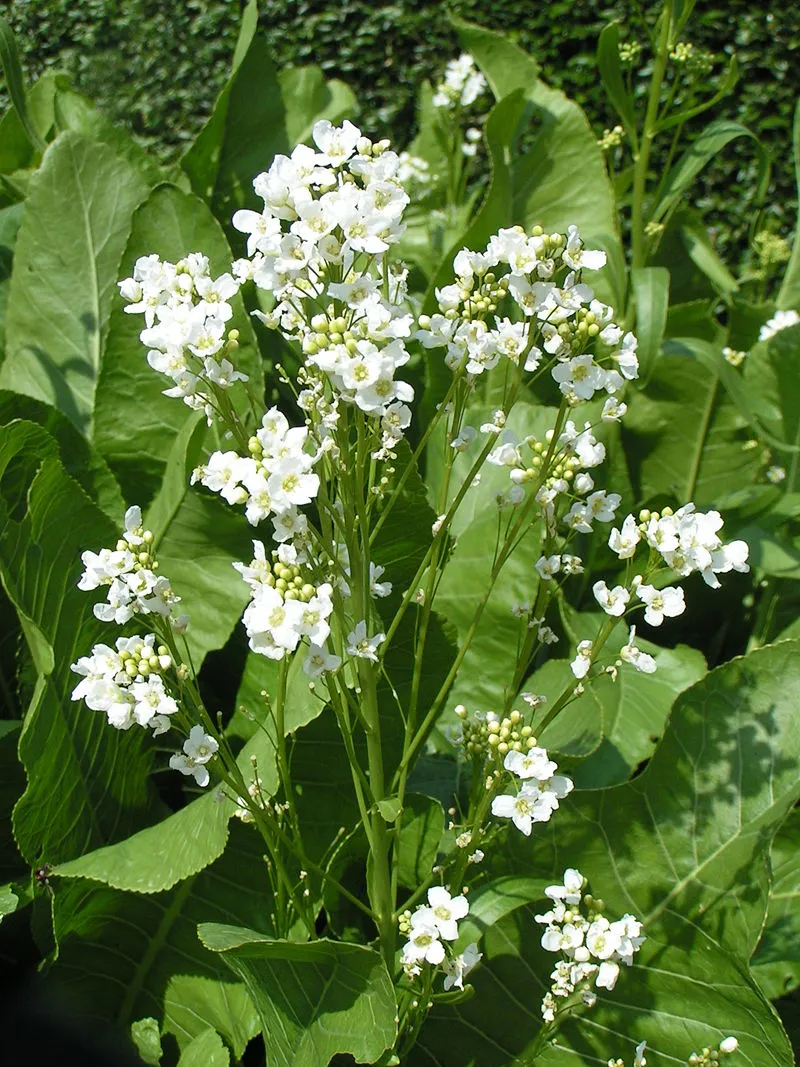
Horseradish
VegetablePungent root condiment. Hardy enough to withstand light frosts down to -20°C, horseradish performs best when daytime temperatures stay between 10°C and 22°C. Give it full sun to partial shade and regular watering to keep soil consistently moist, and expect to harvest in roughly 140-160 days. A staple of kitchen gardens and allotments, it rewards even first-time growers with a generous harvest.
Plant root cuttings at 45-degree angle. Contain in bottomless bucket. Can be planted 2-3 weeks before the last expected frost, giving it a head start on the growing season. Aim for about 2.5 cm of water per week, adjusting for rainfall. Organic mulch around the base helps maintain even moisture.
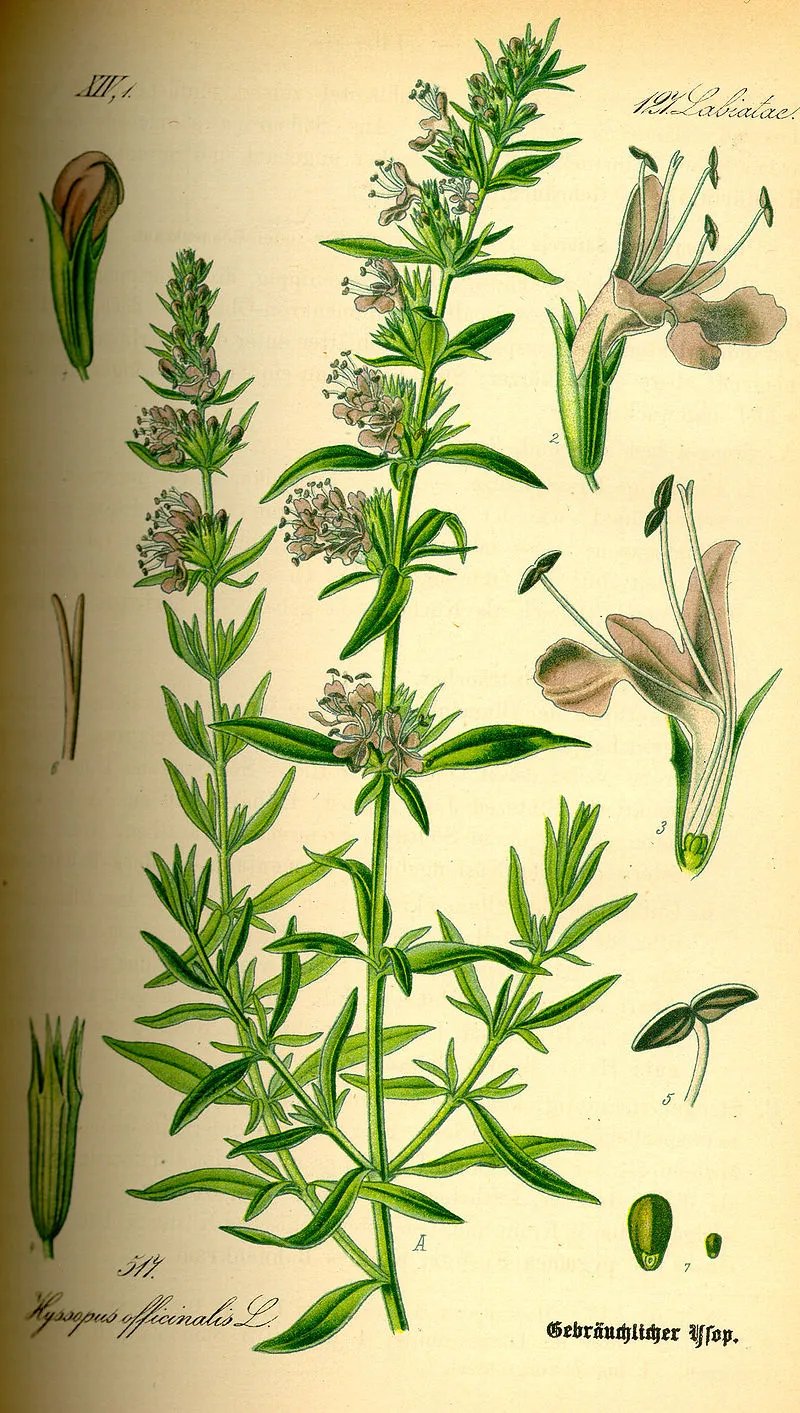
Hyssop
HerbAncient medicinal herb with blue flower spikes. Hardy enough to withstand light frosts down to -15°C, hyssop performs best when daytime temperatures stay between 12°C and 24°C. It needs full sun (6-8 hours of direct light daily) and minimal watering — it prefers dry conditions between drinks — leaves are ready for picking in about 60-90 days. Valued in cuisines worldwide, it is easy to grow and rewards regular harvesting with bushier, more productive plants.
Drought-tolerant once established. Cut back in spring. Can be planted 2-3 weeks before the last expected frost, giving it a head start on the growing season. Overwatering is the most common mistake. Let soil dry out between waterings and ensure drainage is excellent.
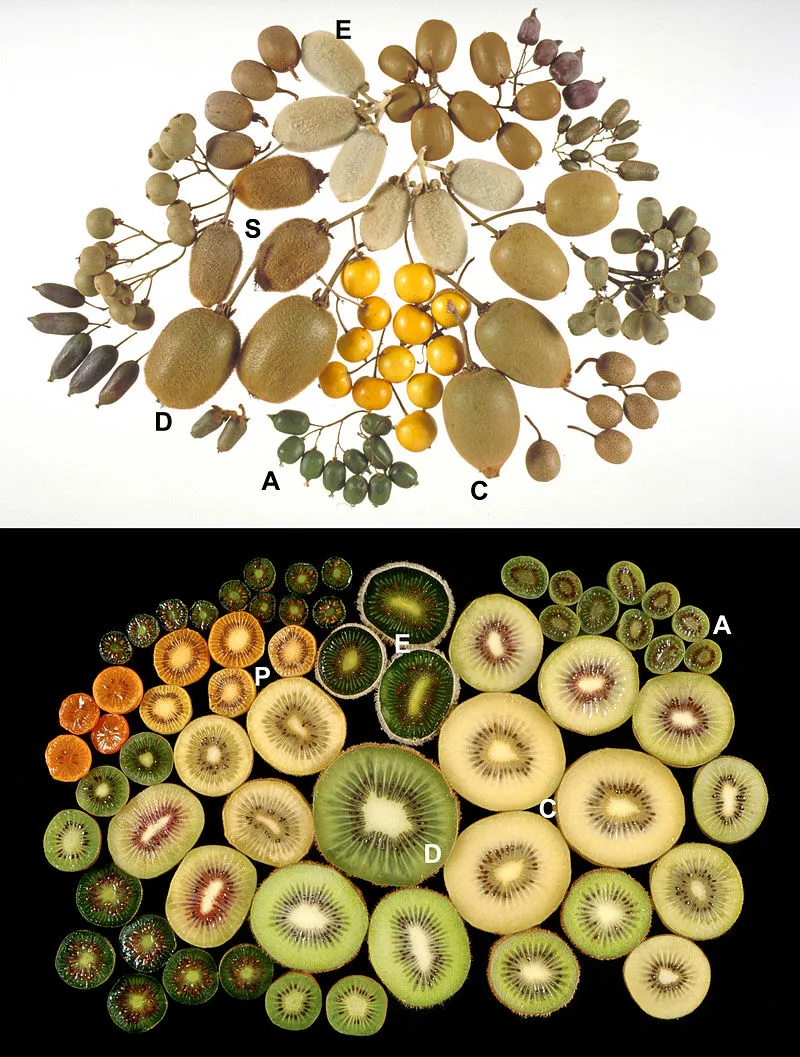
Kiwi
FruitVigorous vine producing fuzzy brown fruit. Hardy enough to withstand light frosts down to -10°C, kiwi performs best when daytime temperatures stay between 15°C and 25°C. Give it full sun (6-8 hours of direct light daily) and regular watering to keep soil consistently moist, and expect to harvest in roughly 730-1460 days. Well worth the space it takes — a single productive plant can supply a household through the season.
Need male and female plants. Strong trellis required. Can be planted 2-3 weeks before the last expected frost, giving it a head start on the growing season. Aim for about 2.5 cm of water per week, adjusting for rainfall. Organic mulch around the base helps maintain even moisture.
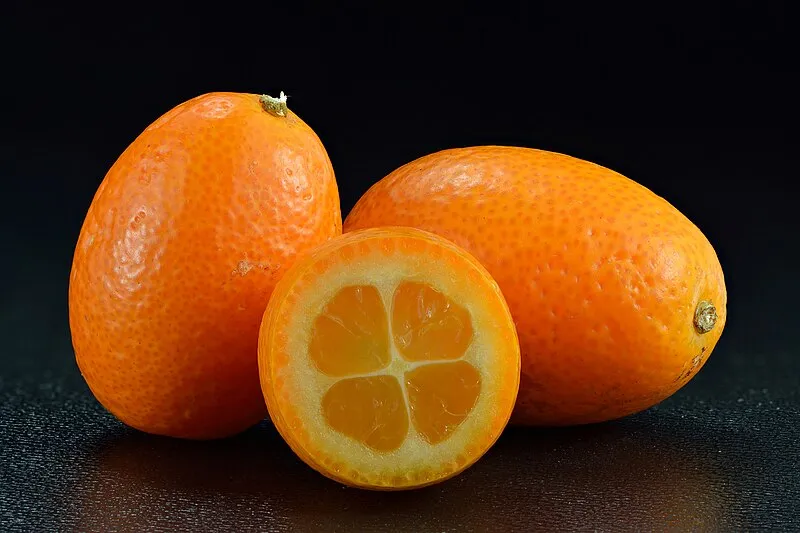
Kumquat
FruitTiny citrus eaten whole -- sweet skin with tart flesh. Remarkably adaptable, kumquat tolerates temperatures from -5°C to 35°C and thrives in both cool-temperate and tropical gardens. Give it full sun (6-8 hours of direct light daily) and regular watering to keep soil consistently moist, and expect to harvest in roughly 365-730 days. The flavour of home-grown fruit, picked at peak ripeness, is incomparably better than anything from a supermarket.
Hardiest citrus -- tolerates brief frost. Excellent container plant. Can be planted 2-3 weeks before the last expected frost, giving it a head start on the growing season. Aim for about 2.5 cm of water per week, adjusting for rainfall. Organic mulch around the base helps maintain even moisture.
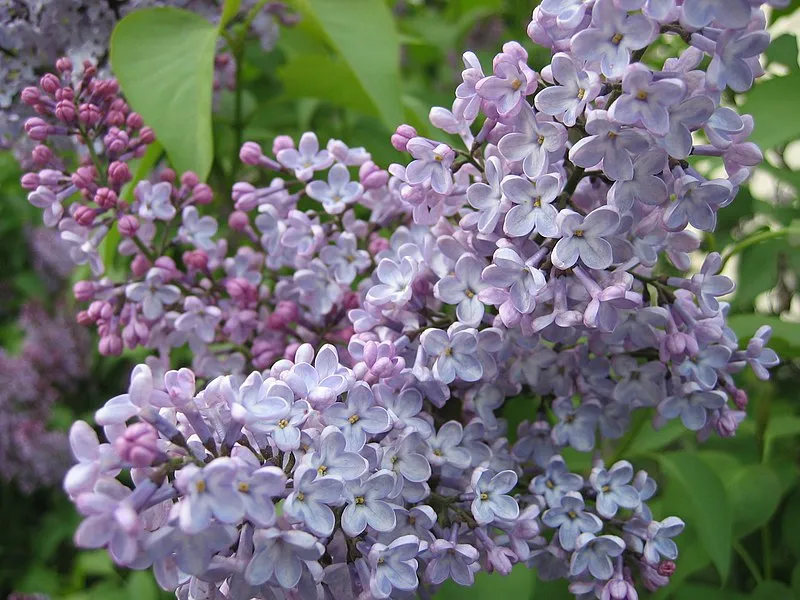
Lilac
FlowerBeloved spring-blooming shrub with intensely fragrant flower clusters. Hardy enough to withstand light frosts down to -30°C, lilac performs best when daytime temperatures stay between 10°C and 22°C. Plant in a spot with full sun (6-8 hours of direct light daily) and provide moderate, even watering throughout the growing season. Expect blooms in approximately 365-1095 days. Works beautifully in mixed borders, cottage gardens, or standalone containers on patios and balconies.
Needs cold winter for blooms. Prune right after flowering. Can be planted 2-3 weeks before the last expected frost, giving it a head start on the growing season. Water steadily but avoid soggy soil. A 5-cm layer of organic mulch helps balance moisture and suppress weeds.
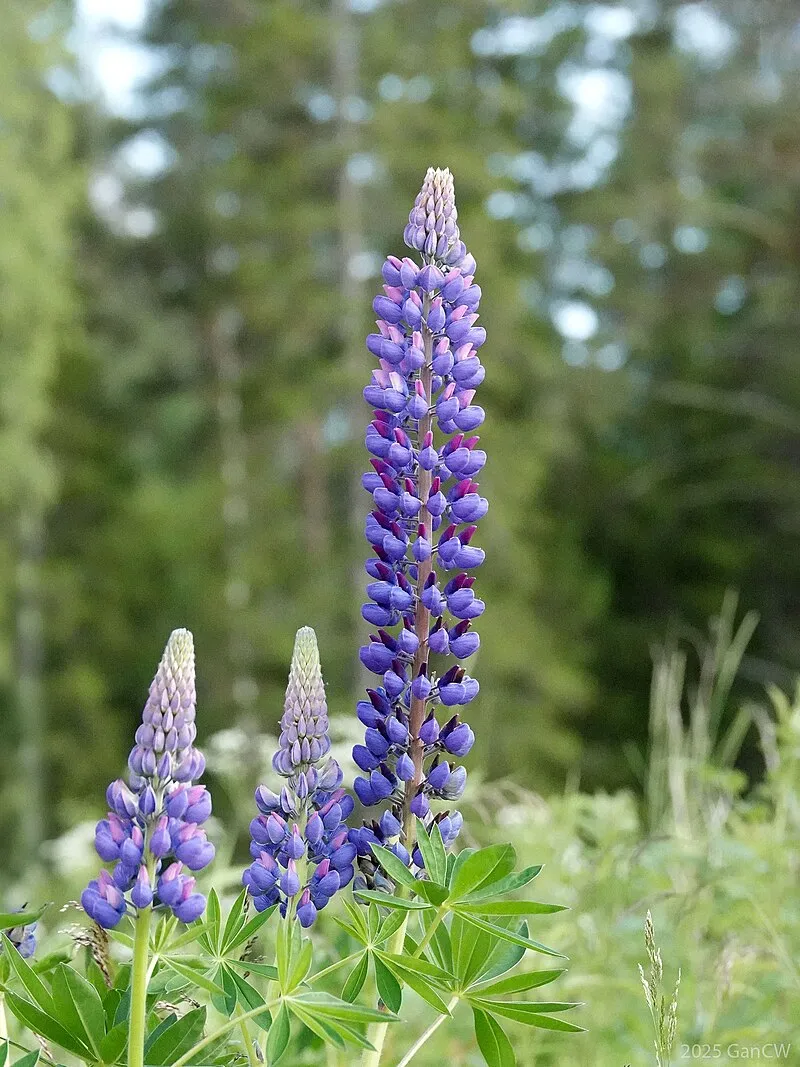
Lupine
FlowerTall spikes of pea-like flowers in stunning colors. Hardy enough to withstand light frosts down to -20°C, lupine performs best when daytime temperatures stay between 10°C and 20°C. Plant in a spot with full sun (6-8 hours of direct light daily) and provide moderate, even watering throughout the growing season. Expect blooms in approximately 60-90 days. An easy way to add dramatic colour to any garden, with minimal maintenance once established.
Nick seeds or soak overnight. Prefers cool climates. Can be planted 2-3 weeks before the last expected frost, giving it a head start on the growing season. Water steadily but avoid soggy soil. A 5-cm layer of organic mulch helps balance moisture and suppress weeds.
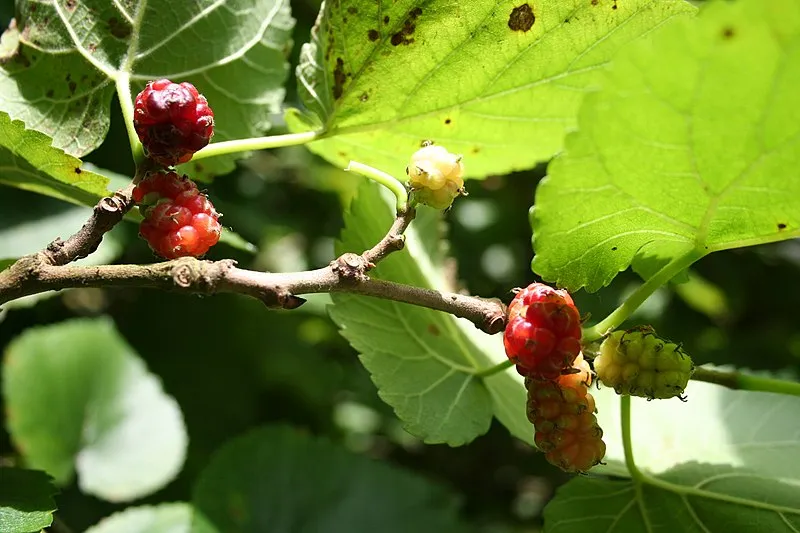
Mulberry
FruitHardy fruit tree with sweet-tart berries. Remarkably adaptable, mulberry tolerates temperatures from -20°C to 35°C and thrives in both cool-temperate and tropical gardens. Give it full sun (6-8 hours of direct light daily) and moderate, even watering throughout the growing season, and expect to harvest in roughly 365-1095 days. Growing your own means harvesting at perfect ripeness, something commercial growers simply cannot match.
Fast-growing. Fruit stains everything -- don't plant near paths. Can be planted 2-3 weeks before the last expected frost, giving it a head start on the growing season. Water steadily but avoid soggy soil. A 5-cm layer of organic mulch helps balance moisture and suppress weeds.
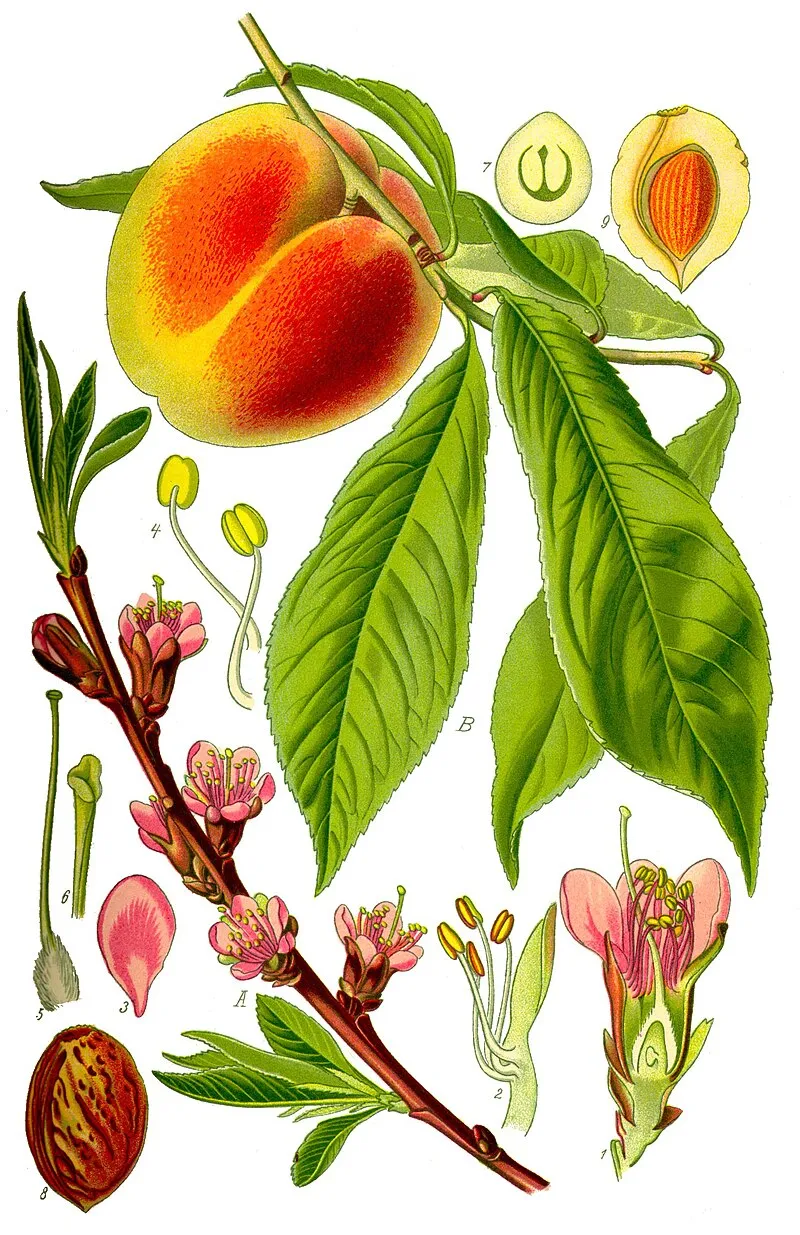
Nectarine
FruitSmooth-skinned peach relative. Hardy enough to withstand light frosts down to -15°C, nectarine performs best when daytime temperatures stay between 18°C and 28°C. Give it full sun (6-8 hours of direct light daily) and regular watering to keep soil consistently moist, and expect to harvest in roughly 365-1095 days. The flavour of home-grown fruit, picked at peak ripeness, is incomparably better than anything from a supermarket.
Needs 400-800 chill hours. Thin fruit for larger yields. Can be planted 2-3 weeks before the last expected frost, giving it a head start on the growing season. Aim for about 2.5 cm of water per week, adjusting for rainfall. Organic mulch around the base helps maintain even moisture.
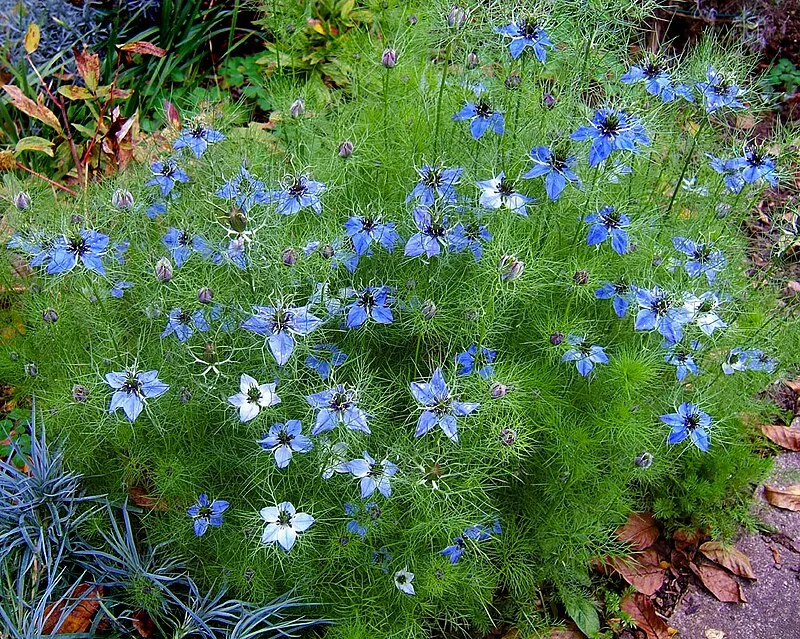
Nigella
FlowerLove-in-a-mist -- delicate blue flowers with feathery foliage and ornamental seed pods. Hardy enough to withstand light frosts down to -5°C, nigella performs best when daytime temperatures stay between 12°C and 22°C. Plant in a spot with full sun (6-8 hours of direct light daily) and provide minimal watering — it prefers dry conditions between drinks. Expect blooms in approximately 60-75 days. A magnet for pollinators, it supports bees, butterflies, and beneficial insects while brightening your garden.
Direct sow in fall or early spring. Self-seeds freely. Can be planted 2-3 weeks before the last expected frost, giving it a head start on the growing season. Overwatering is the most common mistake. Let soil dry out between waterings and ensure drainage is excellent.
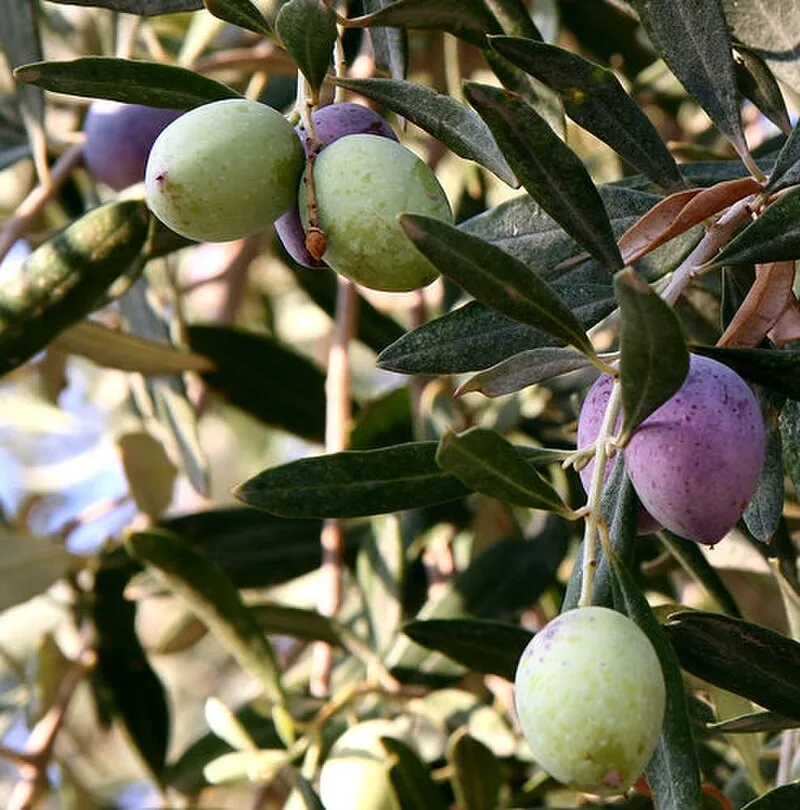
Olive
FruitAncient Mediterranean tree. Hardy enough to withstand light frosts down to -8°C, olive performs best when daytime temperatures stay between 18°C and 30°C. Give it full sun (6-8 hours of direct light daily) and minimal watering — it prefers dry conditions between drinks, and expect to harvest in roughly 1095-1825 days. A favourite of home orchardists and fruit gardeners, it can be trained, pruned, and shaped to fit most spaces.
Needs hot dry summers and mild winters. Must cure olives before eating. Can be planted 2-3 weeks before the last expected frost, giving it a head start on the growing season. Overwatering is the most common mistake. Let soil dry out between waterings and ensure drainage is excellent.
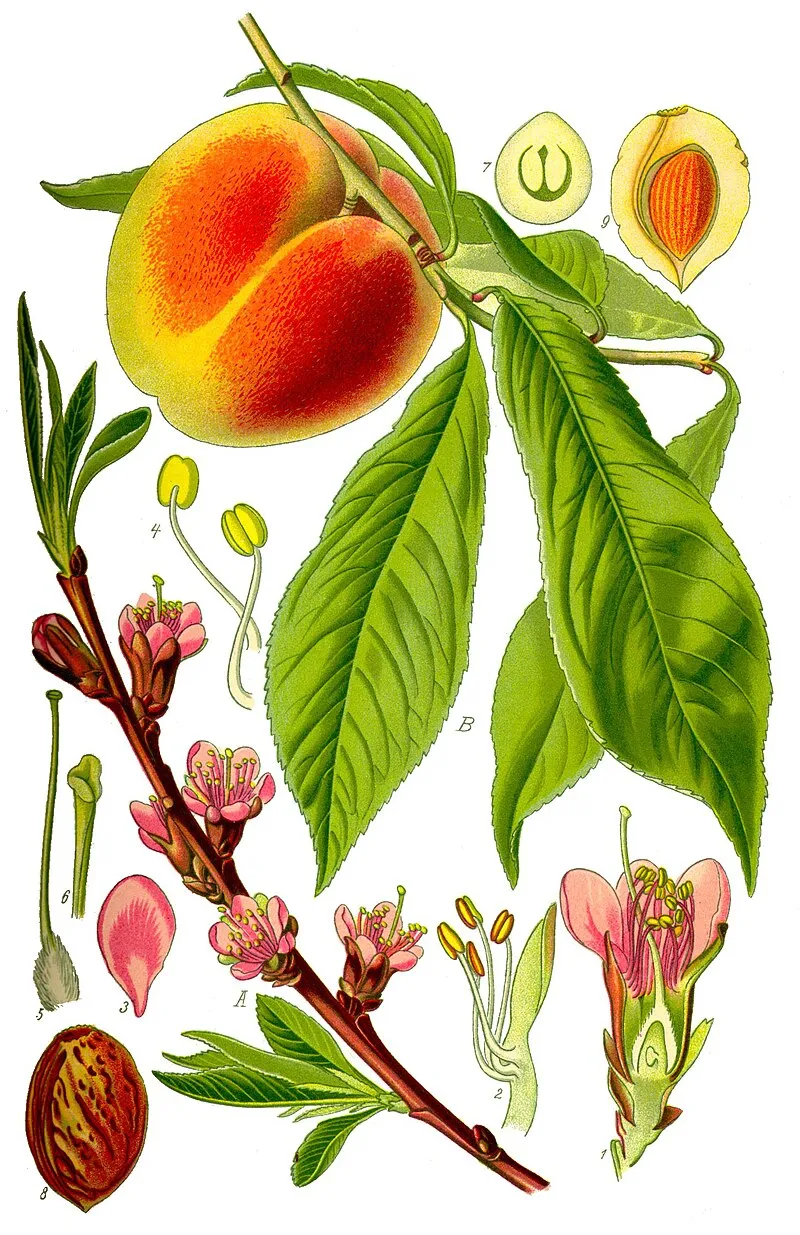
Peach
FruitBeloved stone fruit with fuzzy skin and sweet juicy flesh. Hardy enough to withstand light frosts down to -15°C, peach performs best when daytime temperatures stay between 18°C and 28°C. Give it full sun (6-8 hours of direct light daily) and regular watering to keep soil consistently moist, and expect to harvest in roughly 365-1095 days. Growing your own means harvesting at perfect ripeness, something commercial growers simply cannot match.
Requires 400-1000 chill hours depending on variety. Thin fruit for larger peaches. Can be planted 2-3 weeks before the last expected frost, giving it a head start on the growing season. Aim for about 2.5 cm of water per week, adjusting for rainfall. Organic mulch around the base helps maintain even moisture.
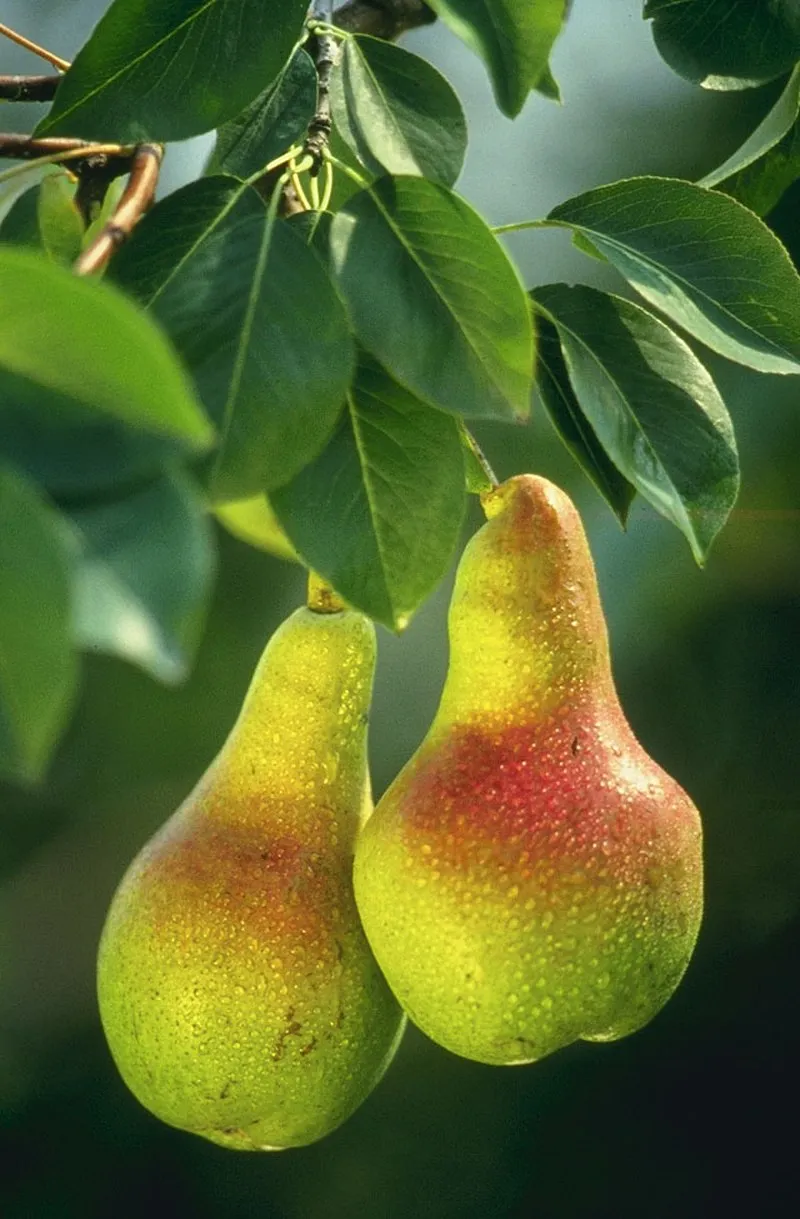
Pear
FruitLong-lived fruit tree. Hardy enough to withstand light frosts down to -20°C, pear performs best when daytime temperatures stay between 15°C and 25°C. Give it full sun (6-8 hours of direct light daily) and regular watering to keep soil consistently moist, and expect to harvest in roughly 730-1460 days. Well worth the space it takes — a single productive plant can supply a household through the season.
Plant 2 varieties for cross-pollination. Fire blight resistant varieties recommended. Can be planted 2-3 weeks before the last expected frost, giving it a head start on the growing season. Aim for about 2.5 cm of water per week, adjusting for rainfall. Organic mulch around the base helps maintain even moisture.
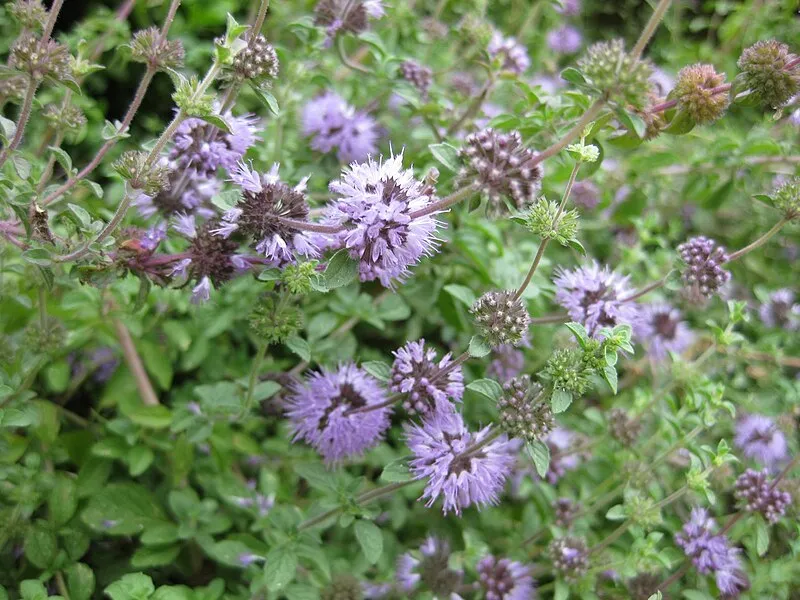
Pennyroyal
HerbCreeping mint-family herb used as natural insect repellent. Hardy enough to withstand light frosts down to -10°C, pennyroyal performs best when daytime temperatures stay between 12°C and 22°C. It needs full sun to partial shade and regular watering to keep soil consistently moist — leaves are ready for picking in about 60-90 days. A kitchen essential that grows equally well on a sunny windowsill, a balcony pot, or a dedicated herb bed.
Repels fleas and mosquitoes. Ground cover between pavers. Can be planted 2-3 weeks before the last expected frost, giving it a head start on the growing season. Aim for about 2.5 cm of water per week, adjusting for rainfall. Organic mulch around the base helps maintain even moisture.
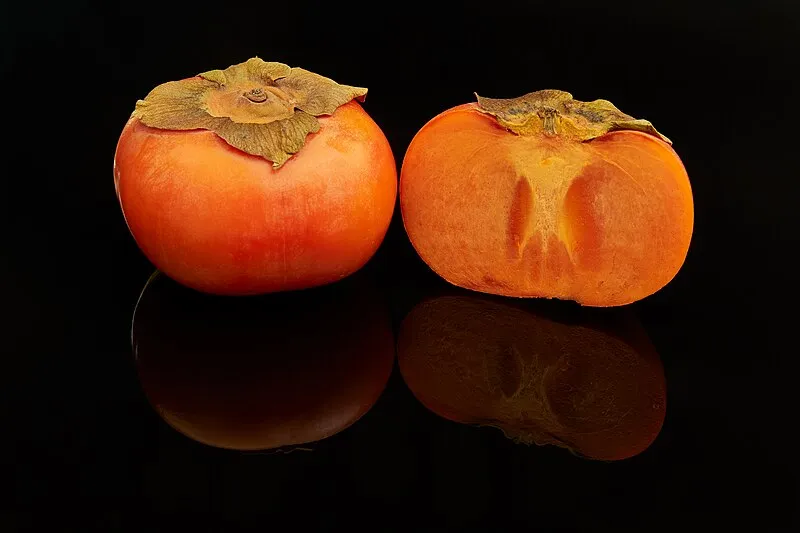
Persimmon
FruitBeautiful ornamental fruit tree. Hardy enough to withstand light frosts down to -15°C, persimmon performs best when daytime temperatures stay between 18°C and 28°C. Give it full sun (6-8 hours of direct light daily) and moderate, even watering throughout the growing season, and expect to harvest in roughly 730-1460 days. Patience pays off — once established, it produces reliably season after season with proper care.
American types need frost to ripen. Asian types ripen on tree. Can be planted 2-3 weeks before the last expected frost, giving it a head start on the growing season. Water steadily but avoid soggy soil. A 5-cm layer of organic mulch helps balance moisture and suppress weeds.
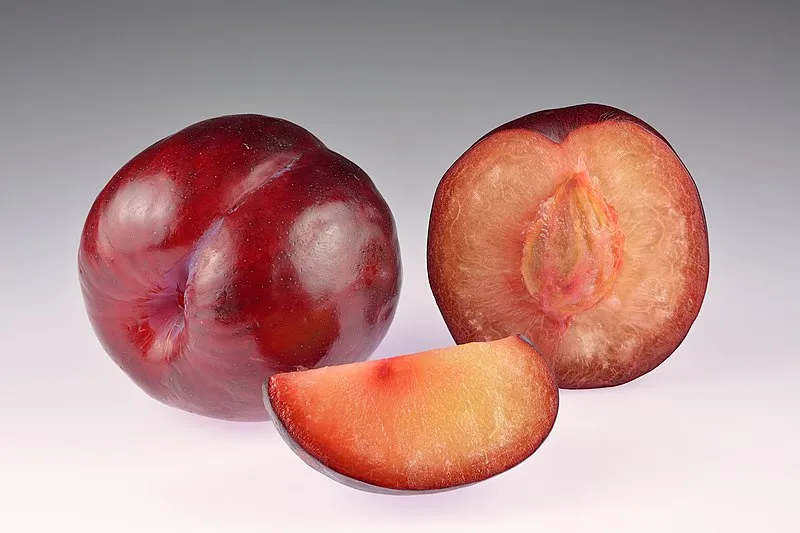
Plum
FruitAdaptable stone fruit. Hardy enough to withstand light frosts down to -20°C, plum performs best when daytime temperatures stay between 15°C and 25°C. Give it full sun (6-8 hours of direct light daily) and regular watering to keep soil consistently moist, and expect to harvest in roughly 730-1460 days. A favourite of home orchardists and fruit gardeners, it can be trained, pruned, and shaped to fit most spaces.
Most need cross-pollination. Thin fruit for larger plums. Can be planted 2-3 weeks before the last expected frost, giving it a head start on the growing season. Aim for about 2.5 cm of water per week, adjusting for rainfall. Organic mulch around the base helps maintain even moisture.
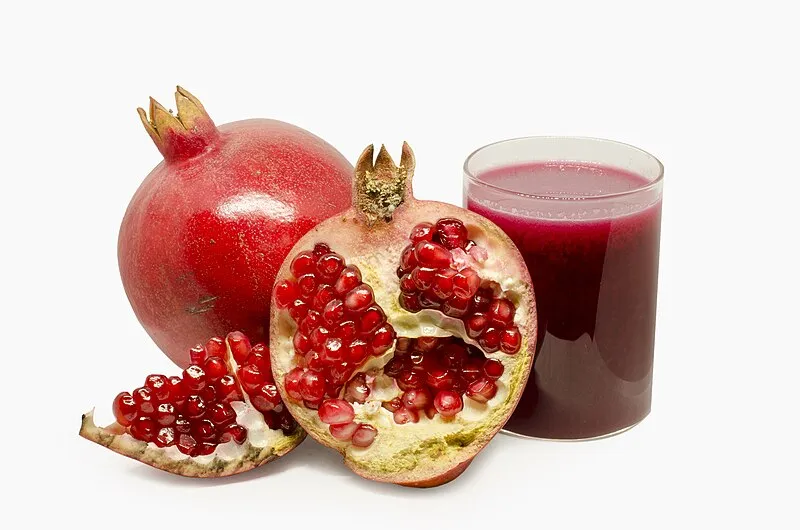
Pomegranate
FruitAncient fruit with ruby seeds (arils). Remarkably adaptable, pomegranate tolerates temperatures from -5°C to 40°C and thrives in both cool-temperate and tropical gardens. Give it full sun (6-8 hours of direct light daily) and minimal watering — it prefers dry conditions between drinks, and expect to harvest in roughly 730-1095 days. Growing your own means harvesting at perfect ripeness, something commercial growers simply cannot match.
Tolerates heat and drought well. Fruit splits if watered unevenly. Can be planted 2-3 weeks before the last expected frost, giving it a head start on the growing season. Overwatering is the most common mistake. Let soil dry out between waterings and ensure drainage is excellent.
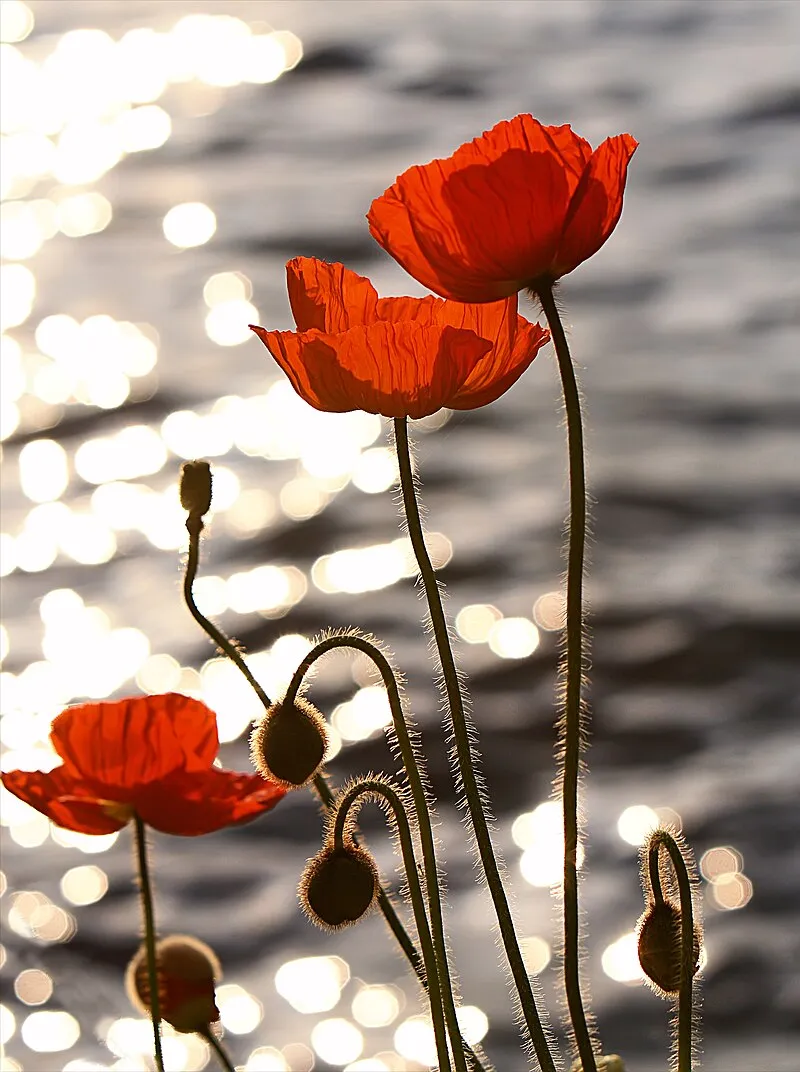
Poppy
FlowerDelicate crepe-paper flowers. Hardy enough to withstand light frosts down to -15°C, poppy performs best when daytime temperatures stay between 10°C and 20°C. Plant in a spot with full sun (6-8 hours of direct light daily) and provide minimal watering — it prefers dry conditions between drinks. Expect blooms in approximately 55-80 days. An easy way to add dramatic colour to any garden, with minimal maintenance once established.
Direct sow -- hates transplanting. Scatter seeds on surface (needs light). Can be planted 2-3 weeks before the last expected frost, giving it a head start on the growing season. Overwatering is the most common mistake. Let soil dry out between waterings and ensure drainage is excellent.
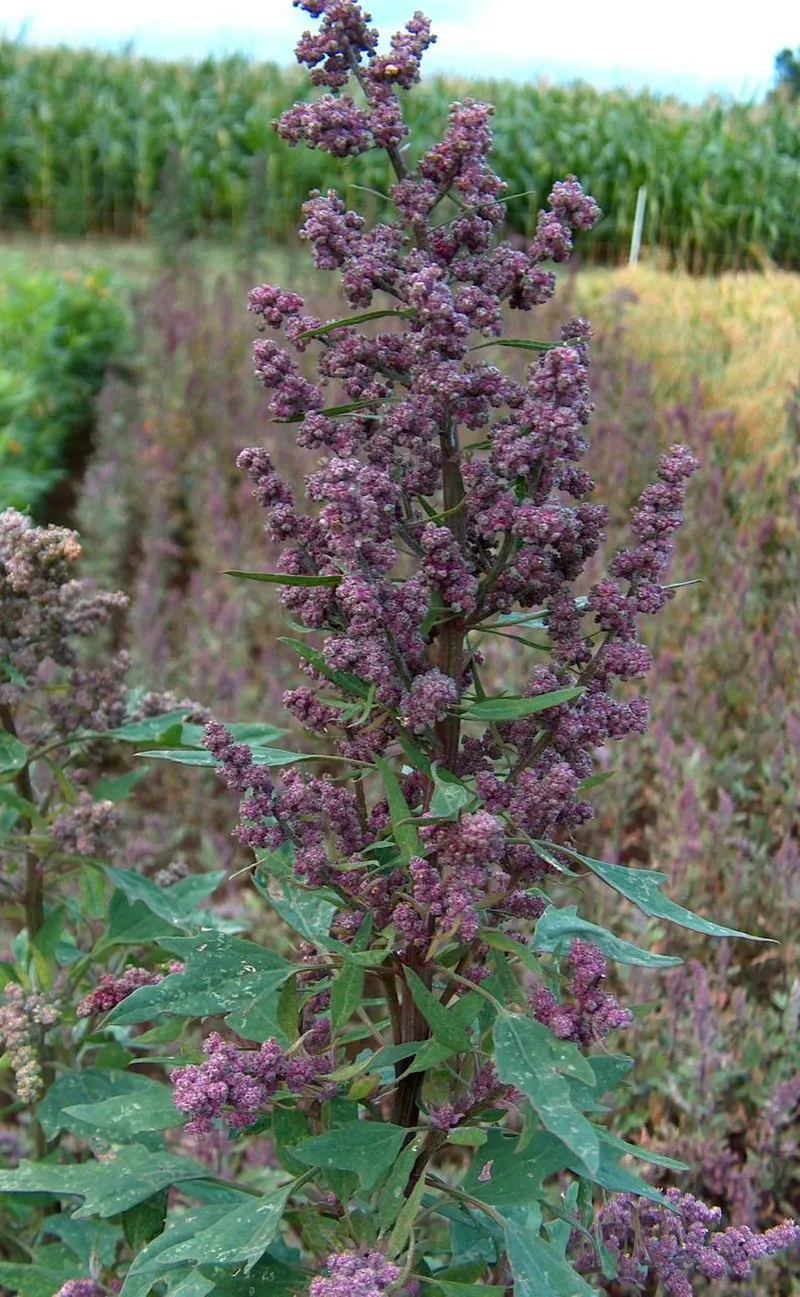
Quinoa
GrainAndean pseudocereal -- complete protein grain. Hardy enough to withstand light frosts down to -2°C, quinoa performs best when daytime temperatures stay between 12°C and 22°C. Requires full sun (6-8 hours of direct light daily) with minimal watering — it prefers dry conditions between drinks. Plan for about 90-120 days from planting to maturity. An adaptable plant that performs well across a wide range of garden settings and growing conditions.
Cool-season crop. Rinse seeds to remove bitter saponins. Can be planted 2-3 weeks before the last expected frost, giving it a head start on the growing season. Overwatering is the most common mistake. Let soil dry out between waterings and ensure drainage is excellent.
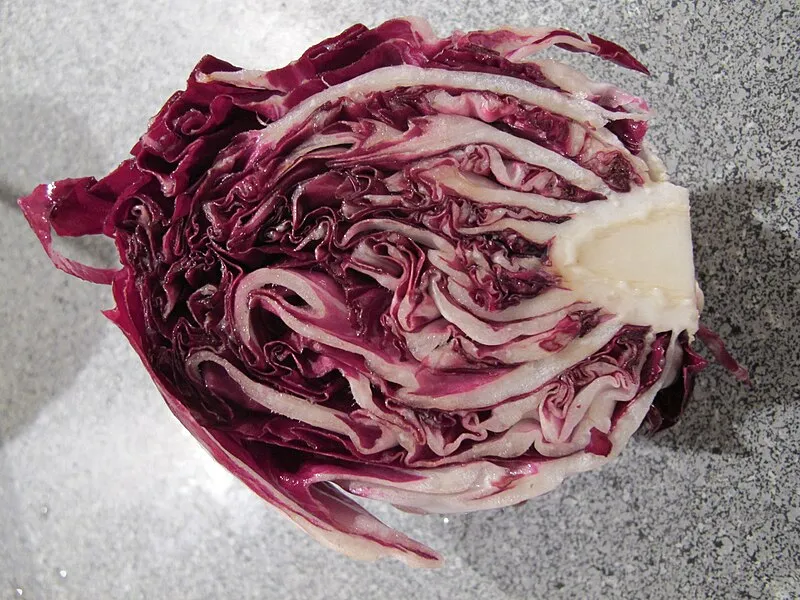
Radicchio
VegetableBitter Italian chicory with stunning red leaves and white ribs. Hardy enough to withstand light frosts down to -5°C, radicchio performs best when daytime temperatures stay between 10°C and 18°C. Give it full sun to partial shade and regular watering to keep soil consistently moist, and expect to harvest in roughly 60-80 days. Popular with home gardeners for its reliable yields and straightforward growing requirements.
Fall-planted heads are best. Cold brings out red color. Can be planted 2-3 weeks before the last expected frost, giving it a head start on the growing season. Aim for about 2.5 cm of water per week, adjusting for rainfall. Organic mulch around the base helps maintain even moisture.
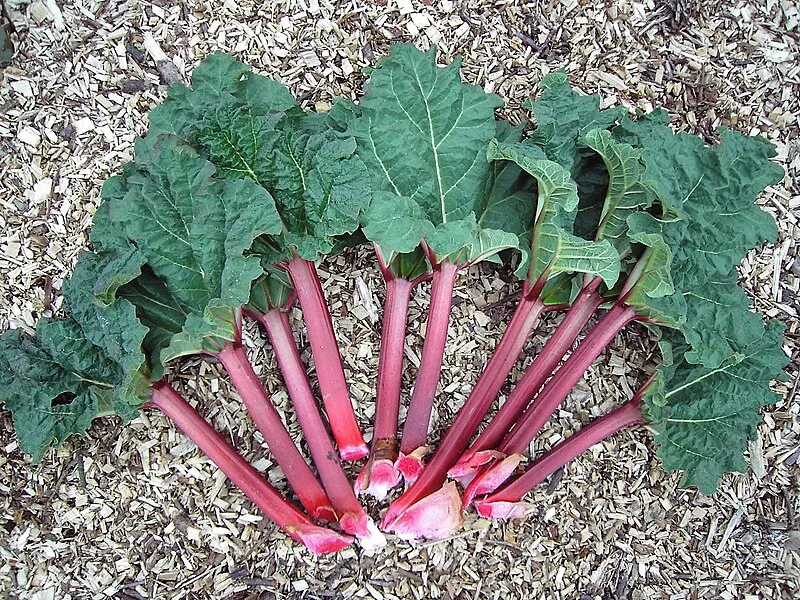
Rhubarb
VegetablePerennial with tart edible stalks for pies and jams. Hardy enough to withstand light frosts down to -20°C, rhubarb performs best when daytime temperatures stay between 10°C and 20°C. Give it full sun to partial shade and regular watering to keep soil consistently moist, and expect to harvest in roughly 365-730 days. Whether grown in raised beds, containers, or traditional plots, it produces well across a range of climates.
Don't harvest first year. Only eat stalks -- leaves are poisonous. Can be planted 2-3 weeks before the last expected frost, giving it a head start on the growing season. Aim for about 2.5 cm of water per week, adjusting for rainfall. Organic mulch around the base helps maintain even moisture.
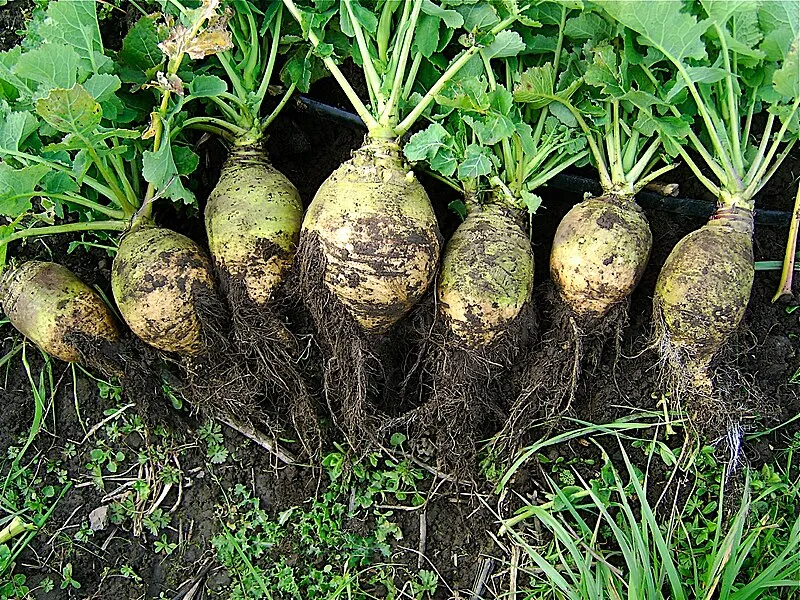
Rutabaga
VegetableSweet root vegetable -- cross between cabbage and turnip. Hardy enough to withstand light frosts down to -10°C, rutabaga performs best when daytime temperatures stay between 10°C and 20°C. Give it full sun (6-8 hours of direct light daily) and regular watering to keep soil consistently moist, and expect to harvest in roughly 80-100 days. An excellent choice for beginner and experienced gardeners alike, thanks to its forgiving growing habits.
Sow midsummer for fall harvest. Sweeter after frost. Can be planted 2-3 weeks before the last expected frost, giving it a head start on the growing season. Aim for about 2.5 cm of water per week, adjusting for rainfall. Organic mulch around the base helps maintain even moisture.
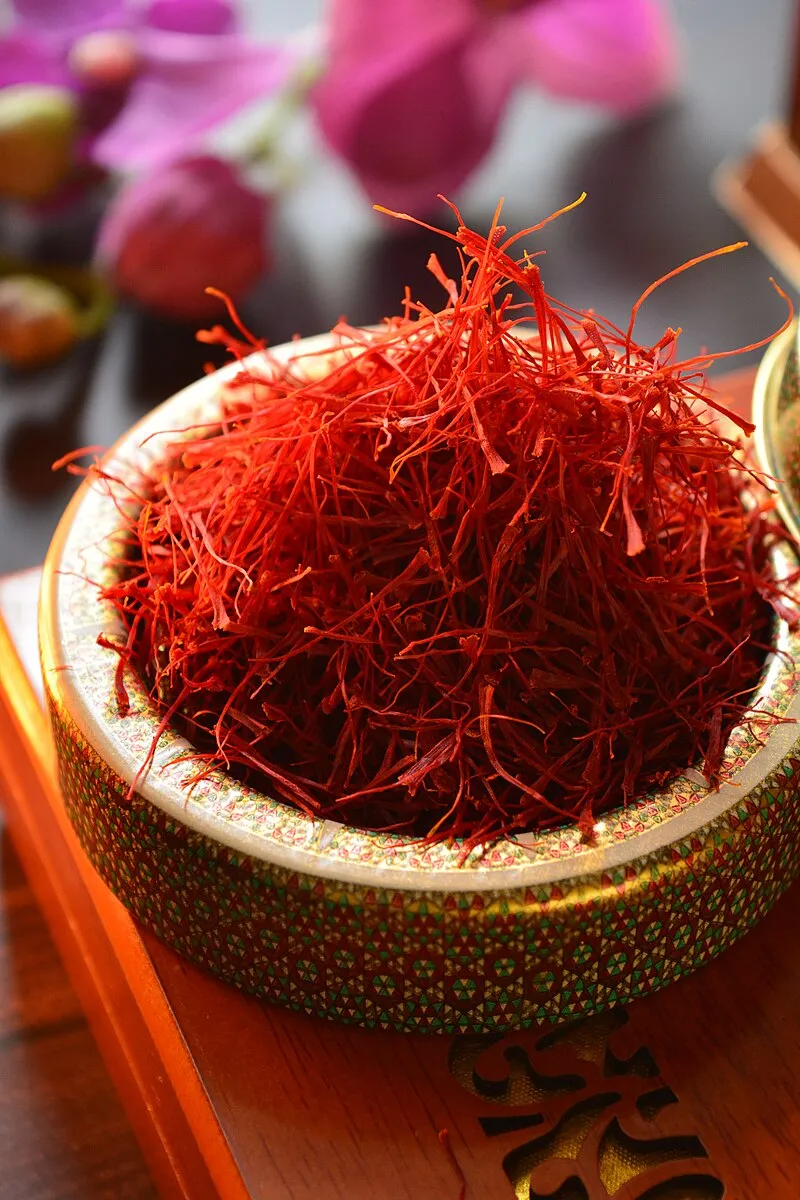
Saffron
SpiceWorld's most expensive spice. Hardy enough to withstand light frosts down to -10°C, saffron performs best when daytime temperatures stay between 12°C and 22°C. It needs full sun (6-8 hours of direct light daily) and minimal watering — it prefers dry conditions between drinks — leaves are ready for picking in about 45-60 days. Fresh leaves from your own garden taste noticeably better than store-bought — and the plant practically grows itself.
Plant corms in late summer. Blooms in fall. Can be planted 2-3 weeks before the last expected frost, giving it a head start on the growing season. Overwatering is the most common mistake. Let soil dry out between waterings and ensure drainage is excellent.
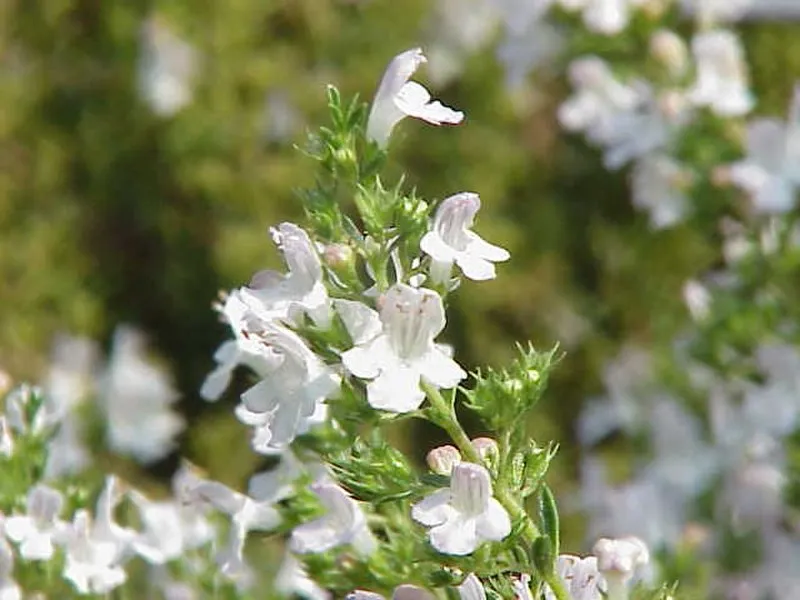
Savory
HerbPeppery herb in two forms: summer savory (annual) and winter savory (perennial). Hardy enough to withstand light frosts down to -10°C, savory performs best when daytime temperatures stay between 12°C and 24°C. It needs full sun (6-8 hours of direct light daily) and minimal watering — it prefers dry conditions between drinks — leaves are ready for picking in about 60-80 days. A kitchen essential that grows equally well on a sunny windowsill, a balcony pot, or a dedicated herb bed.
Summer savory is more delicate. Winter savory is woody and hardier. Can be planted 2-3 weeks before the last expected frost, giving it a head start on the growing season. Overwatering is the most common mistake. Let soil dry out between waterings and ensure drainage is excellent.
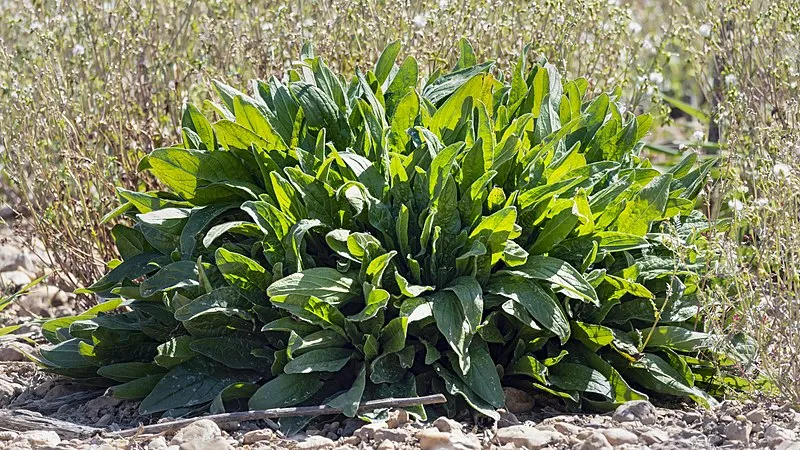
Sorrel
HerbTangy, lemony perennial green. Hardy enough to withstand light frosts down to -15°C, sorrel performs best when daytime temperatures stay between 10°C and 22°C. It needs full sun to partial shade and regular watering to keep soil consistently moist — leaves are ready for picking in about 40-60 days. An aromatic addition to any garden, it dries and freezes well for year-round use in the kitchen.
Perennial that returns yearly. Remove flower stalks to prolong leaf harvest. Can be planted 2-3 weeks before the last expected frost, giving it a head start on the growing season. Aim for about 2.5 cm of water per week, adjusting for rainfall. Organic mulch around the base helps maintain even moisture.
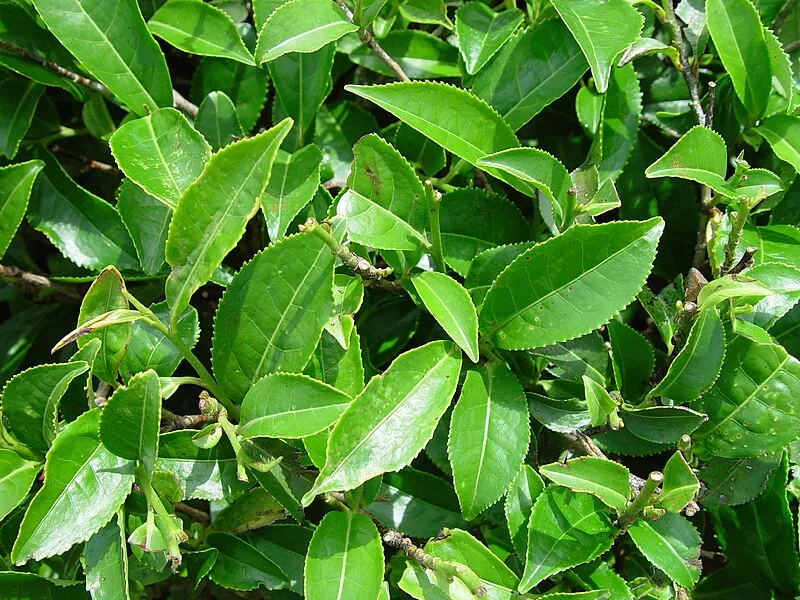
Tea Plant
HerbCamellia sinensis -- source of all true tea (green, black, oolong, white). Remarkably adaptable, tea plant tolerates temperatures from -5°C to 32°C and thrives in both cool-temperate and tropical gardens. It needs partial shade, though it appreciates some direct light and regular watering to keep soil consistently moist — leaves are ready for picking in about 1095-1825 days. Fresh leaves from your own garden taste noticeably better than store-bought — and the plant practically grows itself.
Needs acidic soil. Harvest top 2 leaves and bud. Can be planted 2-3 weeks before the last expected frost, giving it a head start on the growing season. Aim for about 2.5 cm of water per week, adjusting for rainfall. Organic mulch around the base helps maintain even moisture.
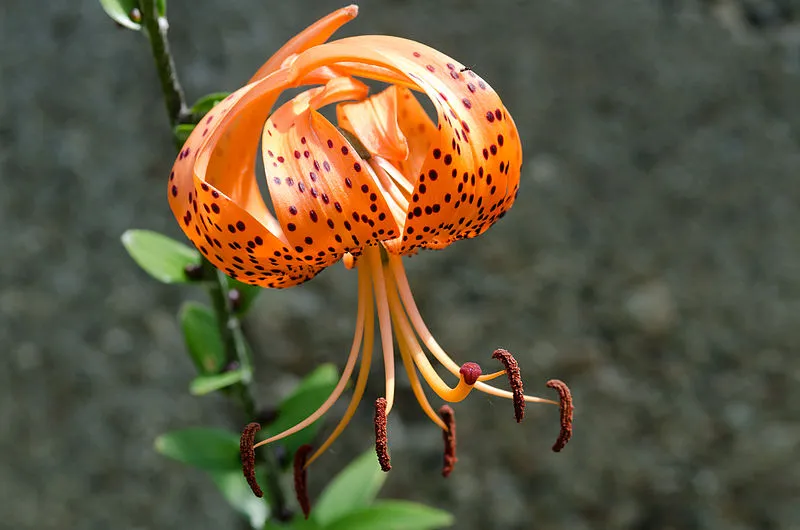
Tiger Lily
FlowerBold orange spotted lily. Hardy enough to withstand light frosts down to -20°C, tiger lily performs best when daytime temperatures stay between 15°C and 25°C. Plant in a spot with full sun to partial shade and provide moderate, even watering throughout the growing season. Expect blooms in approximately 90-120 days. Adds colour and life to borders, beds, and containers from spring through autumn.
Plant bulbs in fall. Multiplies readily. Can be planted 2-3 weeks before the last expected frost, giving it a head start on the growing season. Water steadily but avoid soggy soil. A 5-cm layer of organic mulch helps balance moisture and suppress weeds.
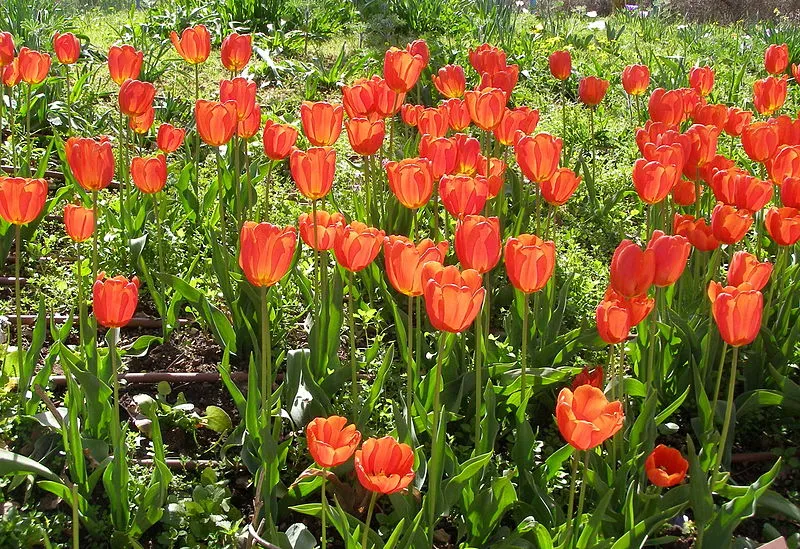
Tulip
FlowerIconic spring bulb in every color. Hardy enough to withstand light frosts down to -20°C, tulip performs best when daytime temperatures stay between 8°C and 18°C. Plant in a spot with full sun (6-8 hours of direct light daily) and provide moderate, even watering throughout the growing season. Expect blooms in approximately 90-150 days. A magnet for pollinators, it supports bees, butterflies, and beneficial insects while brightening your garden.
Plant bulbs in fall for spring bloom. Need cold winter. Can be planted 2-3 weeks before the last expected frost, giving it a head start on the growing season. Water steadily but avoid soggy soil. A 5-cm layer of organic mulch helps balance moisture and suppress weeds.
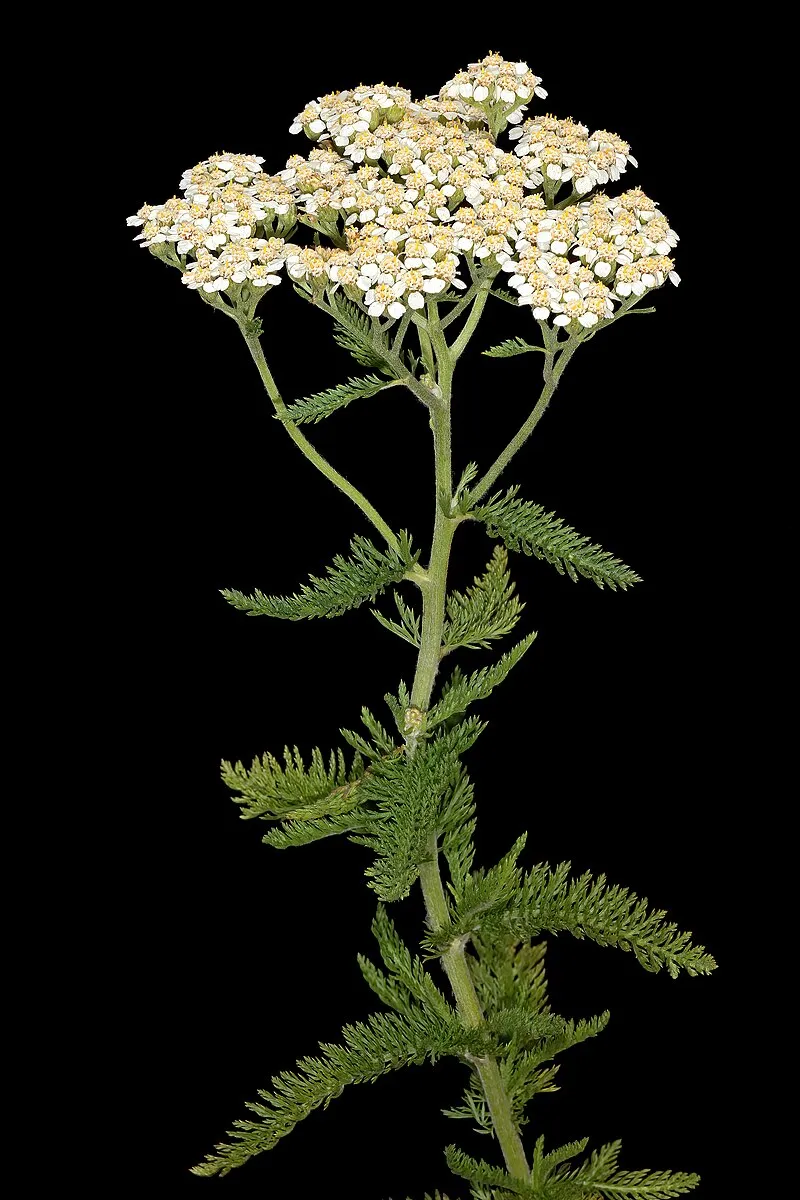
Yarrow
FlowerTough perennial with flat flower clusters. Hardy enough to withstand light frosts down to -25°C, yarrow performs best when daytime temperatures stay between 12°C and 24°C. Plant in a spot with full sun (6-8 hours of direct light daily) and provide minimal watering — it prefers dry conditions between drinks. Expect blooms in approximately 60-90 days. Adds colour and life to borders, beds, and containers from spring through autumn.
Extremely drought-tolerant. Divide every 2-3 years. Can be planted 2-3 weeks before the last expected frost, giving it a head start on the growing season. Overwatering is the most common mistake. Let soil dry out between waterings and ensure drainage is excellent.
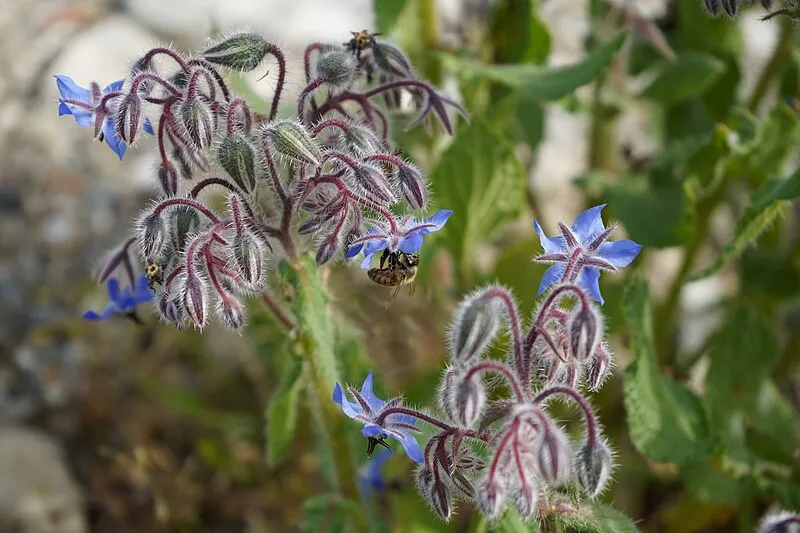
Borage
HerbBlue star flowers taste like cucumber. Hardy enough to withstand light frosts down to -5°C, borage performs best when daytime temperatures stay between 10°C and 22°C. It needs full sun (6-8 hours of direct light daily) and moderate, even watering throughout the growing season — leaves are ready for picking in about 50-60 days. Valued in cuisines worldwide, it is easy to grow and rewards regular harvesting with bushier, more productive plants.
Self-seeds prolifically. Edible flowers for salads and drinks. Can be planted 2-3 weeks before the last expected frost, giving it a head start on the growing season. Water steadily but avoid soggy soil. A 5-cm layer of organic mulch helps balance moisture and suppress weeds.
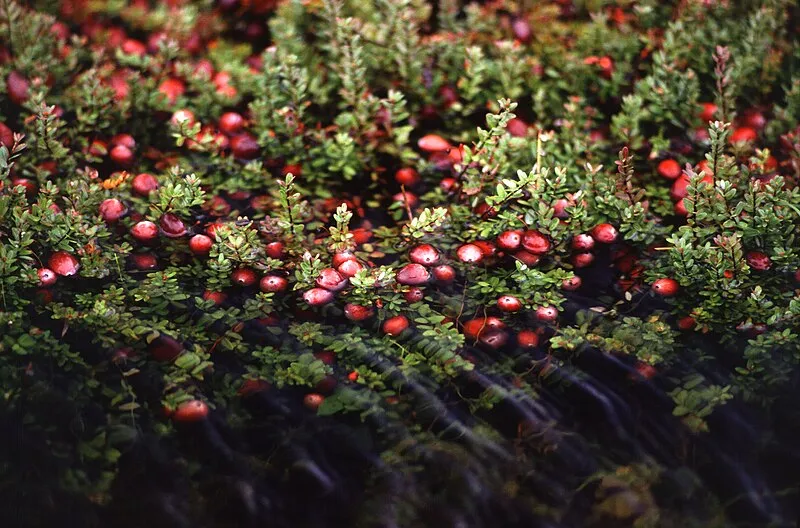
Cranberry
FruitTart bog berry for sauces and juices. Hardy enough to withstand light frosts down to -30°C, cranberry performs best when daytime temperatures stay between 10°C and 20°C. Give it full sun (6-8 hours of direct light daily) and frequent watering — it is a thirsty plant that dislikes dry soil, and expect to harvest in roughly 365-1095 days. Growing your own means harvesting at perfect ripeness, something commercial growers simply cannot match.
Needs acidic, boggy soil. Can grow in containers with peat. Can be planted 2-3 weeks before the last expected frost, giving it a head start on the growing season. Consistent moisture is critical. Mulch with straw or compost to retain soil moisture and keep roots cool during hot weather.
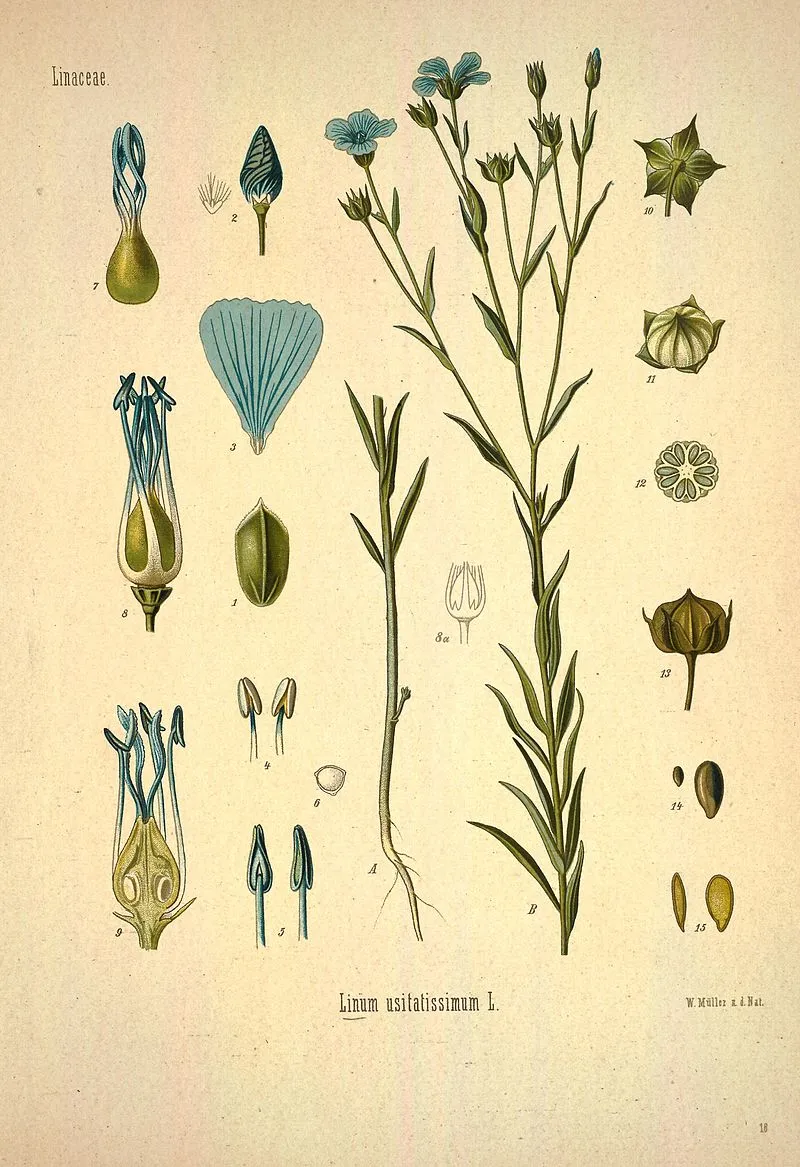
Flax
GrainDual-purpose crop: seeds for omega-3 oil, stems for linen fiber. Hardy enough to withstand light frosts down to -5°C, flax performs best when daytime temperatures stay between 12°C and 22°C. Requires full sun (6-8 hours of direct light daily) with moderate, even watering throughout the growing season. Plan for about 90-110 days from planting to maturity. With straightforward growing requirements, it is accessible to gardeners of all experience levels.
Direct sow. Beautiful blue flowers. Can be planted 2-3 weeks before the last expected frost, giving it a head start on the growing season. Water steadily but avoid soggy soil. A 5-cm layer of organic mulch helps balance moisture and suppress weeds.
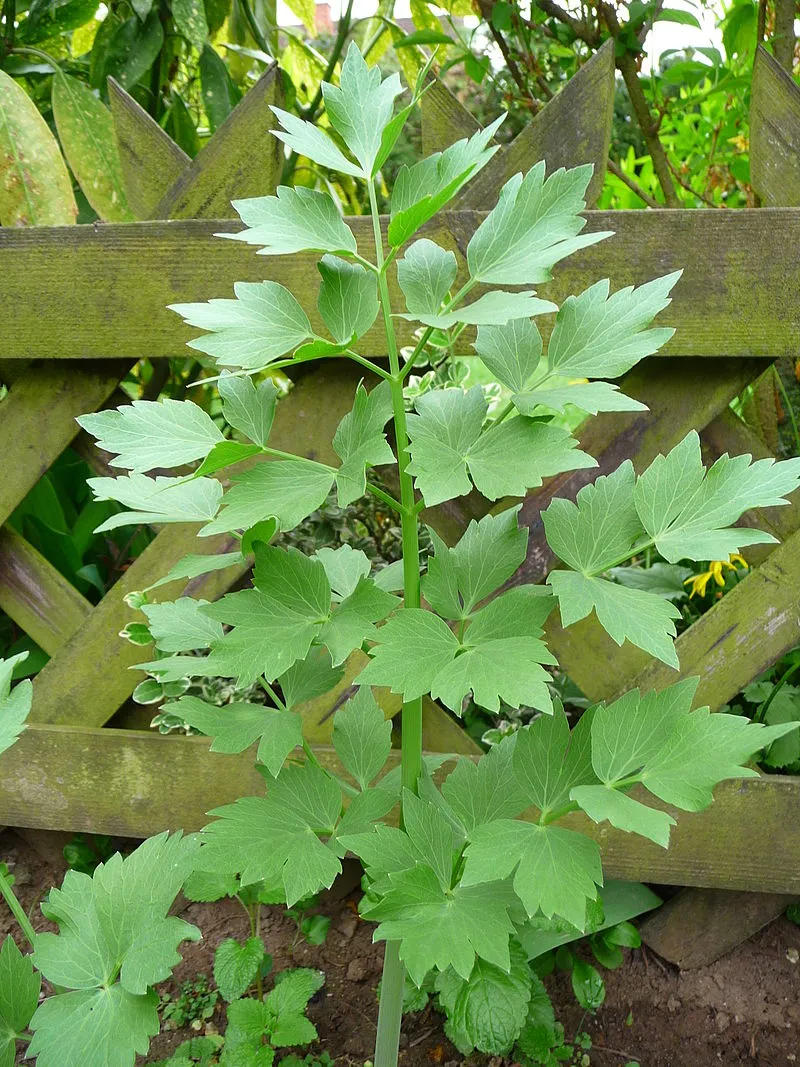
Lovage
HerbTall perennial herb with intense celery flavor. Hardy enough to withstand light frosts down to -15°C, lovage performs best when daytime temperatures stay between 12°C and 22°C. It needs full sun to partial shade and regular watering to keep soil consistently moist — leaves are ready for picking in about 60-90 days. Perfect for container gardens and small spaces — just place it where it gets adequate light and harvest as needed.
Grows very large (2m). Use like celery in cooking. Can be planted 2-3 weeks before the last expected frost, giving it a head start on the growing season. Aim for about 2.5 cm of water per week, adjusting for rainfall. Organic mulch around the base helps maintain even moisture.
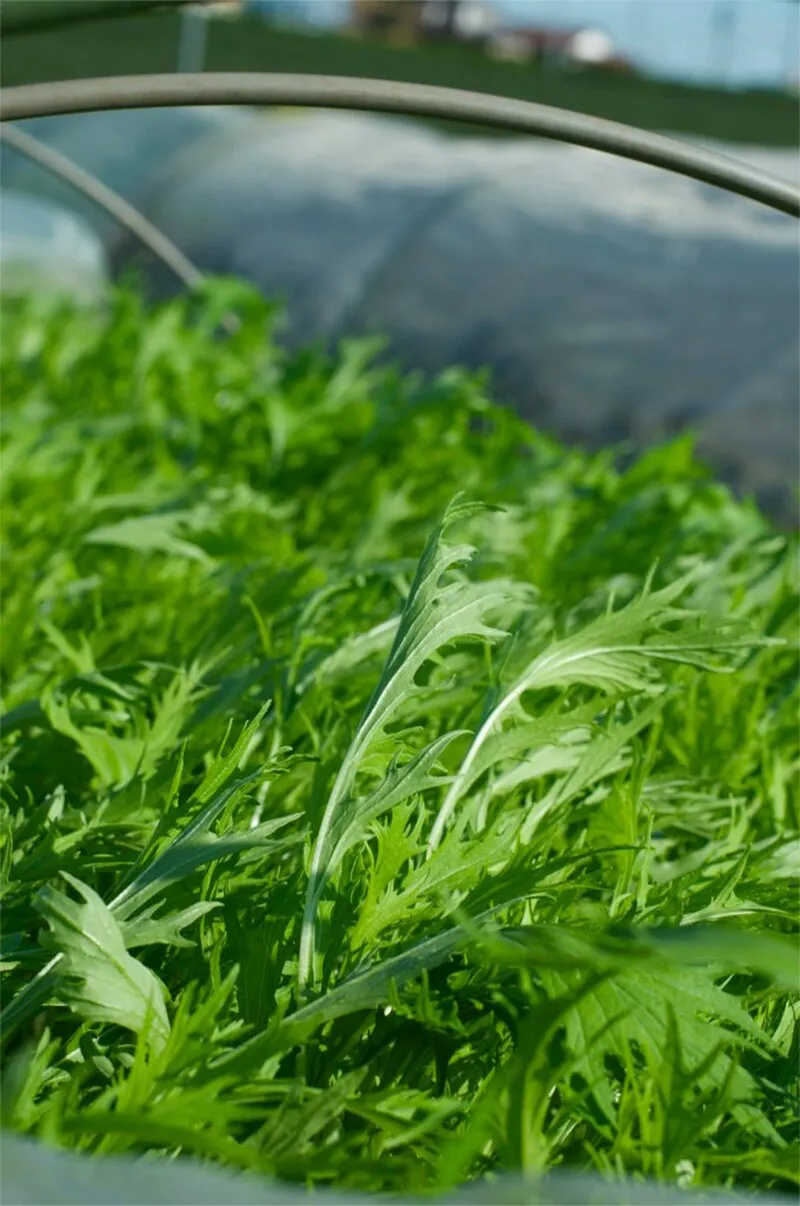
Mizuna
VegetableJapanese mustard green with feathery leaves and mild, peppery flavor. Hardy enough to withstand light frosts down to -5°C, mizuna performs best when daytime temperatures stay between 10°C and 20°C. Give it full sun to partial shade and regular watering to keep soil consistently moist, and expect to harvest in roughly 21-40 days. An excellent choice for beginner and experienced gardeners alike, thanks to its forgiving growing habits.
Very fast-growing. Cut-and-come-again harvesting. Can be planted 2-3 weeks before the last expected frost, giving it a head start on the growing season. Aim for about 2.5 cm of water per week, adjusting for rainfall. Organic mulch around the base helps maintain even moisture.
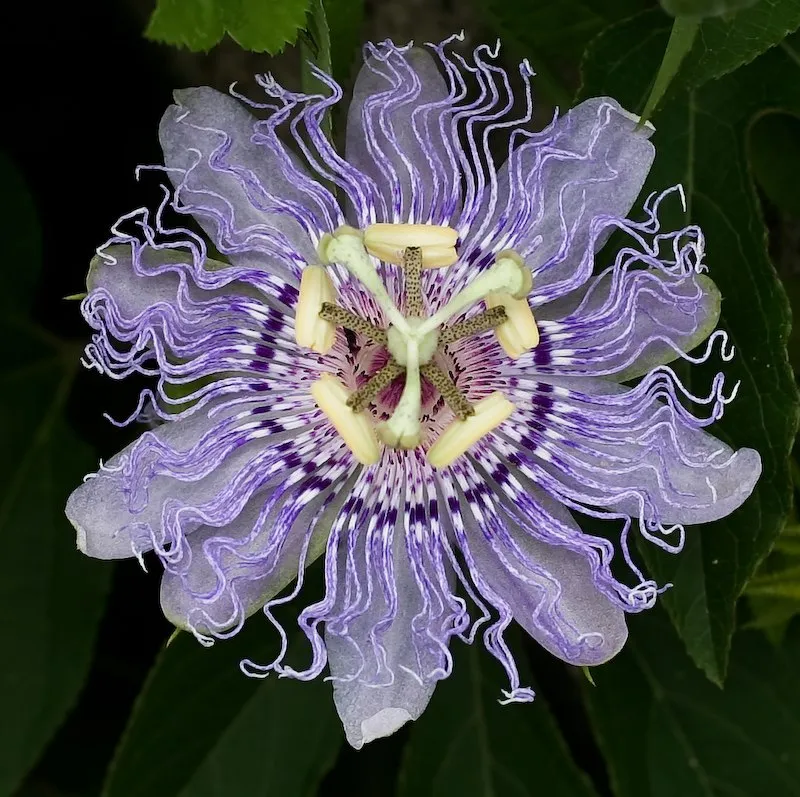
Passion Flower
FlowerExotic, intricate flowers on vigorous vine. Remarkably adaptable, passion flower tolerates temperatures from -5°C to 35°C and thrives in both cool-temperate and tropical gardens. Plant in a spot with full sun (6-8 hours of direct light daily) and provide regular watering to keep soil consistently moist. Expect blooms in approximately 90-180 days. An easy way to add dramatic colour to any garden, with minimal maintenance once established.
Fast-growing vine needs strong support. Hardy varieties survive mild winters. Can be planted 2-3 weeks before the last expected frost, giving it a head start on the growing season. Aim for about 2.5 cm of water per week, adjusting for rainfall. Organic mulch around the base helps maintain even moisture.
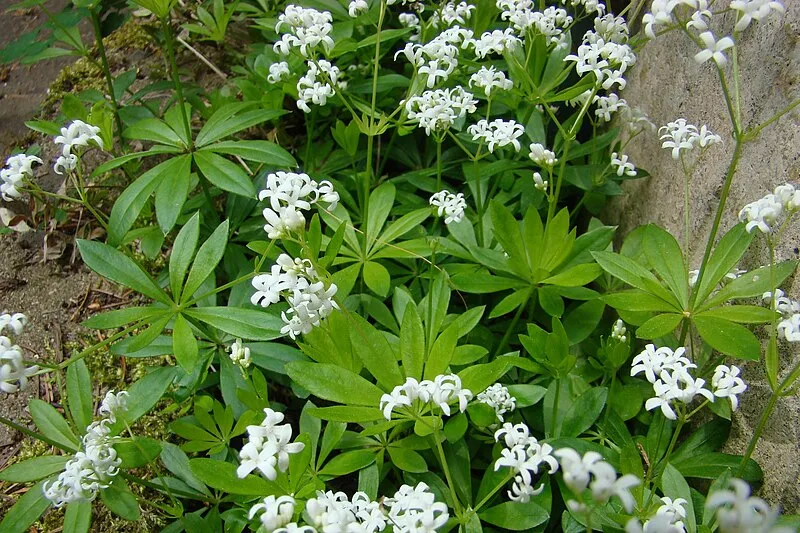
Sweet Woodruff
HerbShade-loving groundcover with vanilla-scented leaves. Hardy enough to withstand light frosts down to -20°C, sweet woodruff performs best when daytime temperatures stay between 10°C and 20°C. It needs partial shade, though it appreciates some direct light and regular watering to keep soil consistently moist — leaves are ready for picking in about 365-545 days. Valued in cuisines worldwide, it is easy to grow and rewards regular harvesting with bushier, more productive plants.
Perfect shade garden groundcover. Spreads by runners. Can be planted 2-3 weeks before the last expected frost, giving it a head start on the growing season. Aim for about 2.5 cm of water per week, adjusting for rainfall. Organic mulch around the base helps maintain even moisture.
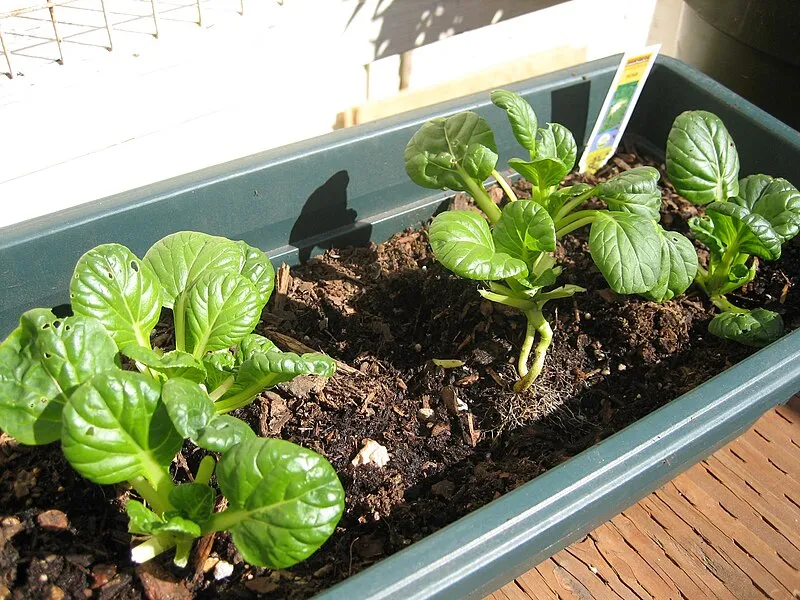
Tatsoi
VegetableAsian rosette green with spoon-shaped leaves. Hardy enough to withstand light frosts down to -10°C, tatsoi performs best when daytime temperatures stay between 10°C and 20°C. Give it full sun to partial shade and regular watering to keep soil consistently moist, and expect to harvest in roughly 21-45 days. Whether grown in raised beds, containers, or traditional plots, it produces well across a range of climates.
Very cold-hardy -- grows under snow. Fast-growing. Can be planted 2-3 weeks before the last expected frost, giving it a head start on the growing season. Aim for about 2.5 cm of water per week, adjusting for rainfall. Organic mulch around the base helps maintain even moisture.
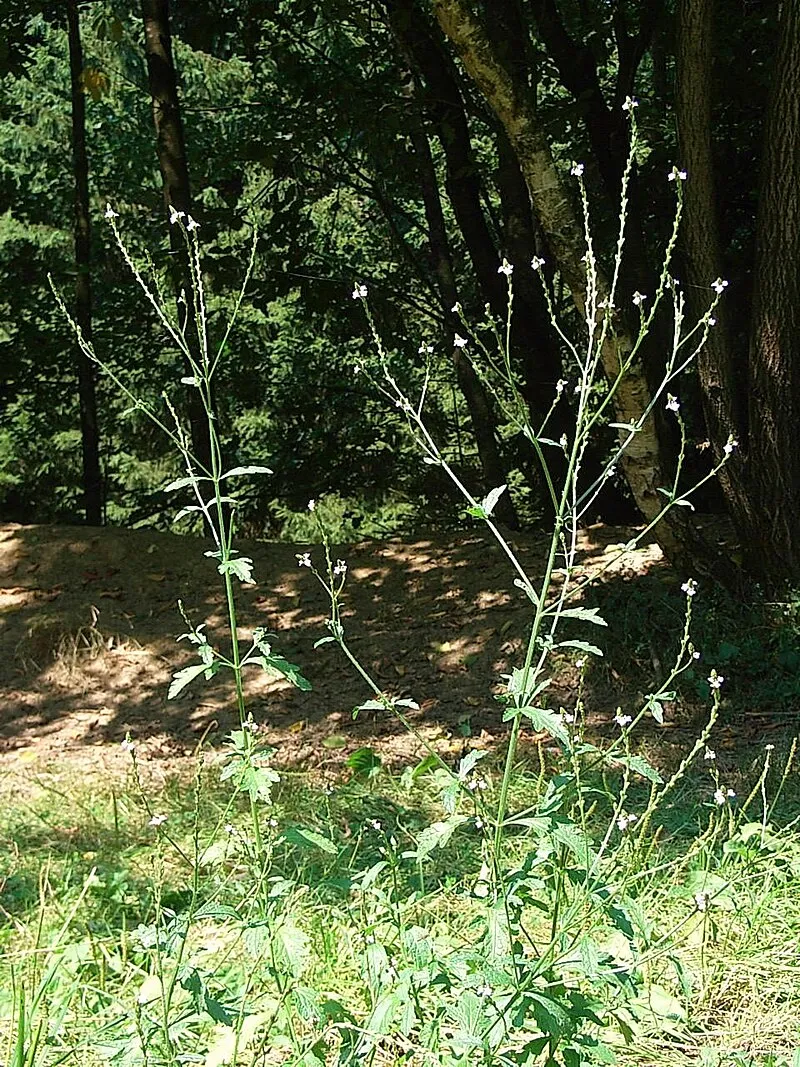
Verbena
FlowerClusters of small flowers in vivid colors. Remarkably adaptable, verbena tolerates temperatures from -5°C to 32°C and thrives in both cool-temperate and tropical gardens. Plant in a spot with full sun (6-8 hours of direct light daily) and provide minimal watering — it prefers dry conditions between drinks. Expect blooms in approximately 60-90 days. Valued as much for its cut-flower potential as for its garden presence — stems last well in a vase.
Deadhead for continuous blooms. Drought-tolerant once established. Can be planted 2-3 weeks before the last expected frost, giving it a head start on the growing season. Overwatering is the most common mistake. Let soil dry out between waterings and ensure drainage is excellent.
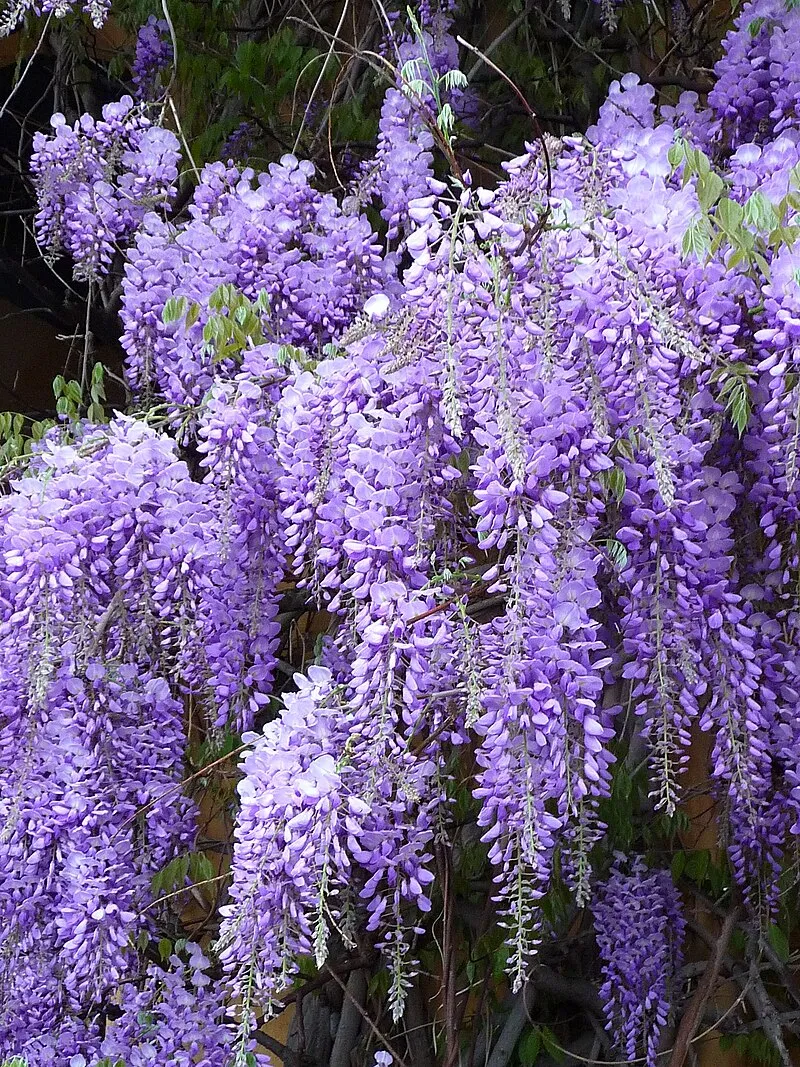
Wisteria
FlowerSpectacular cascading flower clusters on woody vine. Hardy enough to withstand light frosts down to -20°C, wisteria performs best when daytime temperatures stay between 15°C and 28°C. Plant in a spot with full sun (6-8 hours of direct light daily) and provide moderate, even watering throughout the growing season. Expect blooms in approximately 730-1825 days. Adds colour and life to borders, beds, and containers from spring through autumn.
Needs very strong support. Can take years to bloom. Can be planted 2-3 weeks before the last expected frost, giving it a head start on the growing season. Water steadily but avoid soggy soil. A 5-cm layer of organic mulch helps balance moisture and suppress weeds.
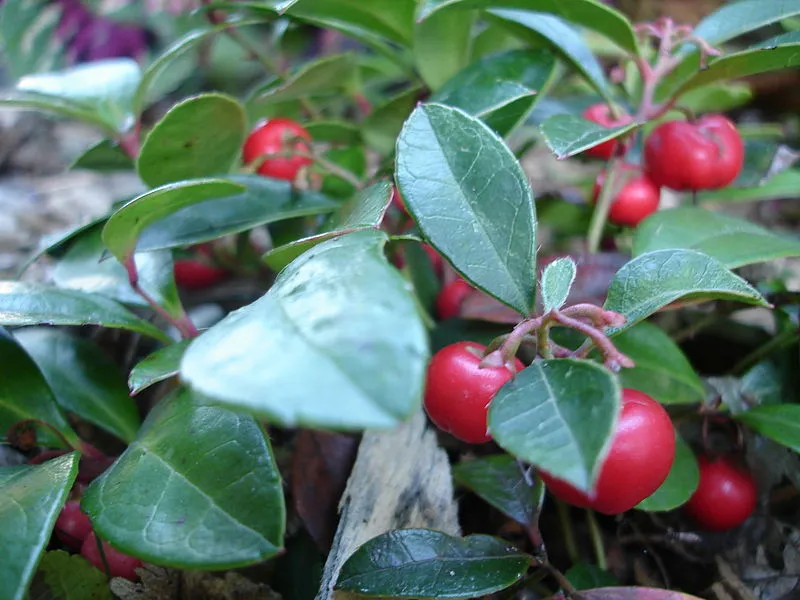
Wintergreen
HerbLow-growing evergreen with minty leaves and red berries. Hardy enough to withstand light frosts down to -30°C, wintergreen performs best when daytime temperatures stay between 10°C and 20°C. It needs partial shade, though it appreciates some direct light and regular watering to keep soil consistently moist — leaves are ready for picking in about 365-730 days. Valued in cuisines worldwide, it is easy to grow and rewards regular harvesting with bushier, more productive plants.
Needs acidic soil. Slow-spreading groundcover. Can be planted 2-3 weeks before the last expected frost, giving it a head start on the growing season. Aim for about 2.5 cm of water per week, adjusting for rainfall. Organic mulch around the base helps maintain even moisture.
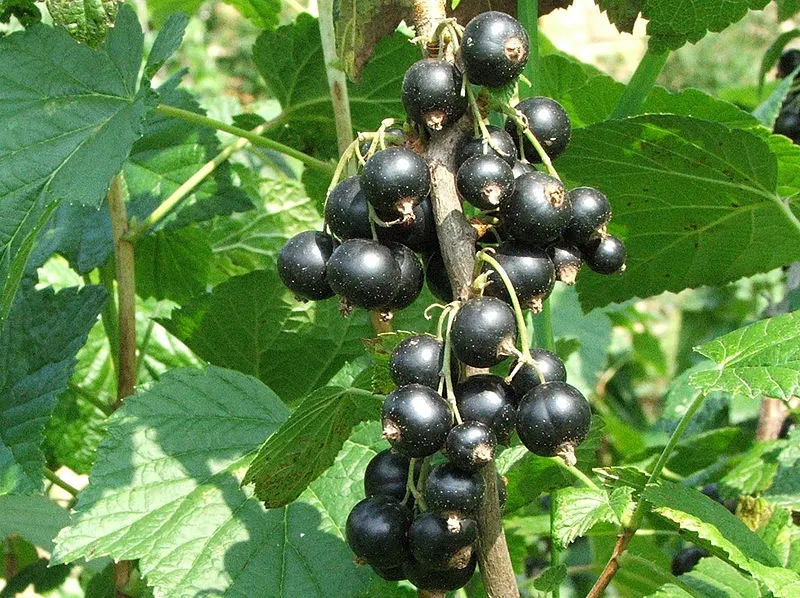
Black Currant
FruitIntensely flavored berry for jams, syrups, and cassis liqueur. Hardy enough to withstand light frosts down to -30°C, black currant performs best when daytime temperatures stay between 12°C and 22°C. Give it full sun to partial shade and regular watering to keep soil consistently moist, and expect to harvest in roughly 365-730 days. Growing your own means harvesting at perfect ripeness, something commercial growers simply cannot match.
Prune out oldest wood annually. Extremely cold-hardy. Can be planted 2-3 weeks before the last expected frost, giving it a head start on the growing season. Aim for about 2.5 cm of water per week, adjusting for rainfall. Organic mulch around the base helps maintain even moisture.
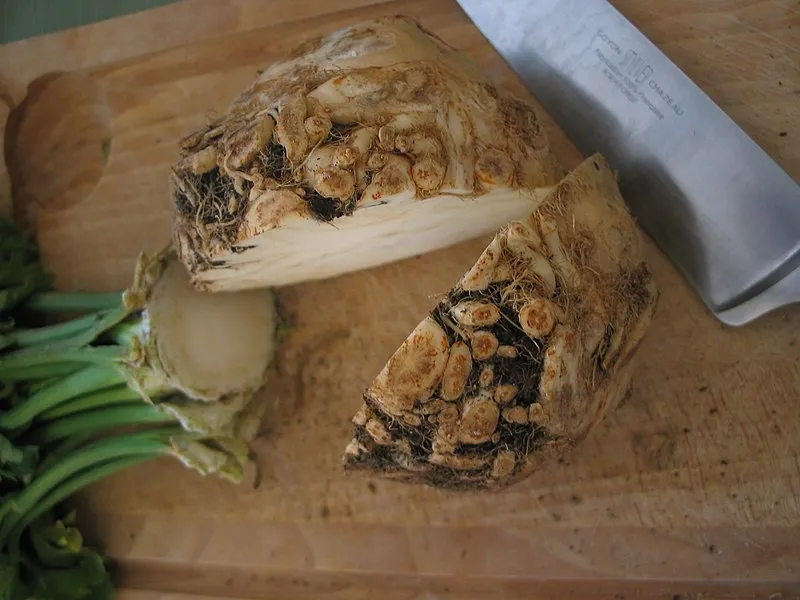
Celeriac
VegetableCelery root -- knobby root with intense celery flavor. Hardy enough to withstand light frosts down to -5°C, celeriac performs best when daytime temperatures stay between 12°C and 22°C. Give it full sun (6-8 hours of direct light daily) and regular watering to keep soil consistently moist, and expect to harvest in roughly 100-120 days. Widely grown in home gardens around the world, it adapts to a range of soil types and growing conditions.
Start indoors very early. Needs long cool season. Can be planted 2-3 weeks before the last expected frost, giving it a head start on the growing season. Aim for about 2.5 cm of water per week, adjusting for rainfall. Organic mulch around the base helps maintain even moisture.
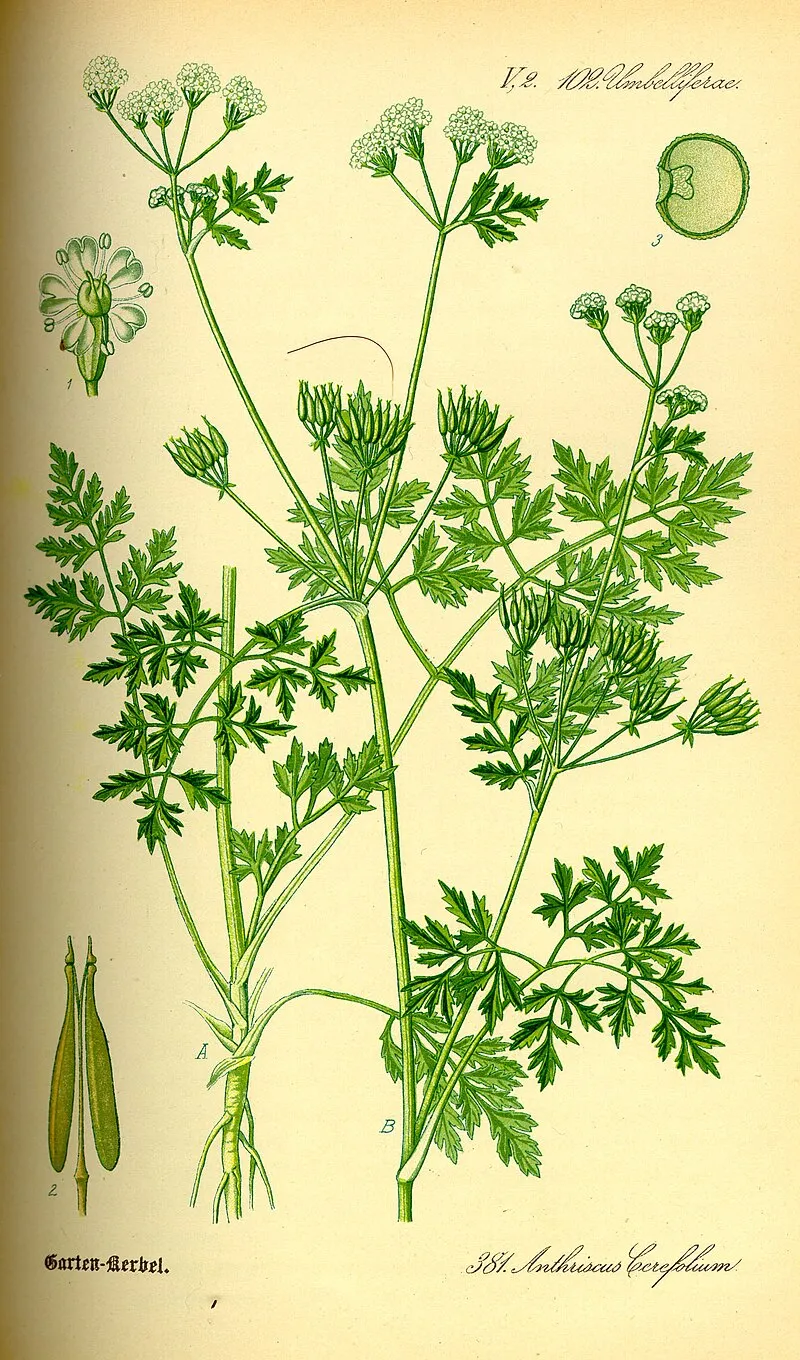
Chervil
HerbDelicate French herb with mild anise flavor. Hardy enough to withstand light frosts down to -5°C, chervil performs best when daytime temperatures stay between 10°C and 18°C. It needs partial shade, though it appreciates some direct light and regular watering to keep soil consistently moist — leaves are ready for picking in about 40-60 days. A kitchen essential that grows equally well on a sunny windowsill, a balcony pot, or a dedicated herb bed.
Bolts in heat -- grow in cool season or shade. Direct sow. Can be planted 2-3 weeks before the last expected frost, giving it a head start on the growing season. Aim for about 2.5 cm of water per week, adjusting for rainfall. Organic mulch around the base helps maintain even moisture.
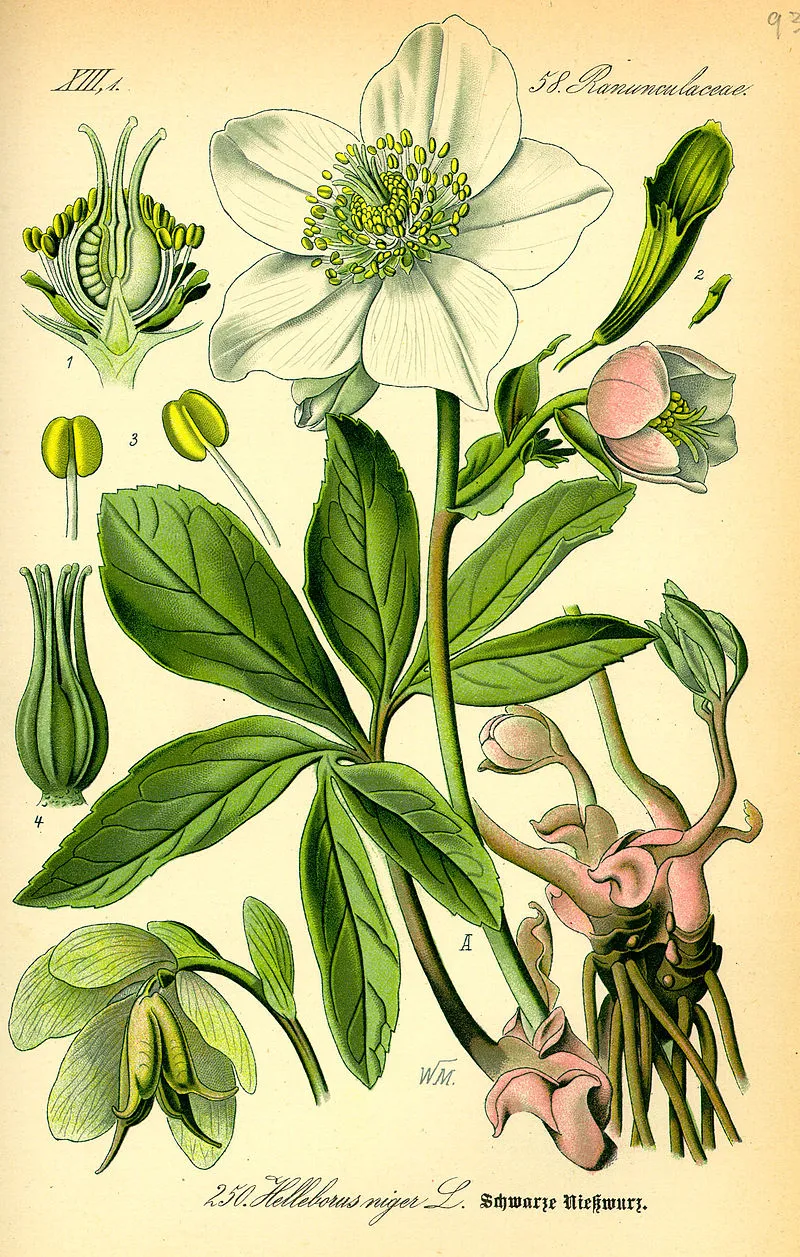
Hellebore
FlowerChristmas/Lenten rose -- blooms in late winter when nothing else does. Hardy enough to withstand light frosts down to -20°C, hellebore performs best when daytime temperatures stay between 8°C and 18°C. Plant in a spot with partial shade, though it appreciates some direct light and provide regular watering to keep soil consistently moist. Expect blooms in approximately 365-730 days. Valued as much for its cut-flower potential as for its garden presence — stems last well in a vase.
Shade-loving perennial. Cut old leaves in late winter. Can be planted 2-3 weeks before the last expected frost, giving it a head start on the growing season. Aim for about 2.5 cm of water per week, adjusting for rainfall. Organic mulch around the base helps maintain even moisture.
Jujube
FruitChinese date -- sweet, date-like fruit on extremely drought-tolerant tree. Remarkably adaptable, jujube tolerates temperatures from -15°C to 40°C and thrives in both cool-temperate and tropical gardens. Give it full sun (6-8 hours of direct light daily) and minimal watering — it prefers dry conditions between drinks, and expect to harvest in roughly 730-1460 days. Well worth the space it takes — a single productive plant can supply a household through the season.
Thrives in heat and drought. Few pest problems. Can be planted 2-3 weeks before the last expected frost, giving it a head start on the growing season. Overwatering is the most common mistake. Let soil dry out between waterings and ensure drainage is excellent.
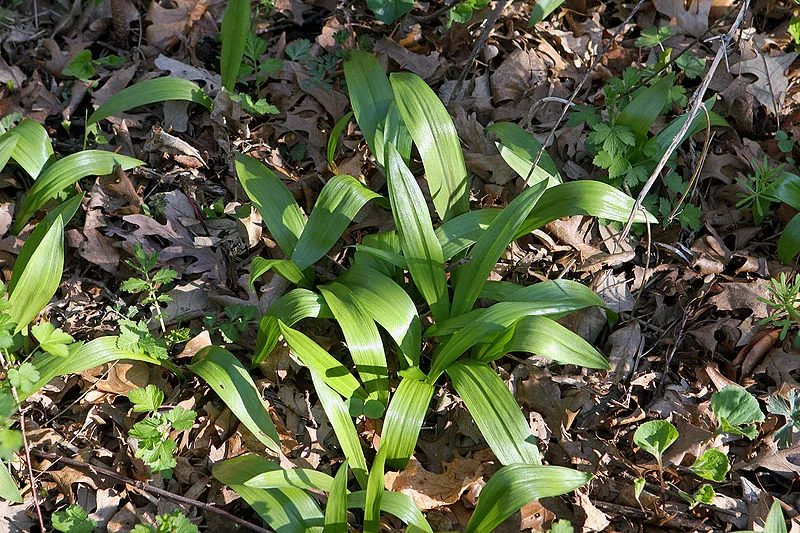
Ramps
VegetableWild leek -- prized spring ephemeral with garlicky flavor. Hardy enough to withstand light frosts down to -20°C, ramps performs best when daytime temperatures stay between 10°C and 18°C. Give it partial shade, though it appreciates some direct light and regular watering to keep soil consistently moist, and expect to harvest in roughly 365-1095 days. An excellent choice for beginner and experienced gardeners alike, thanks to its forgiving growing habits.
Very slow to establish -- be patient. Forest floor conditions. Can be planted 2-3 weeks before the last expected frost, giving it a head start on the growing season. Aim for about 2.5 cm of water per week, adjusting for rainfall. Organic mulch around the base helps maintain even moisture.
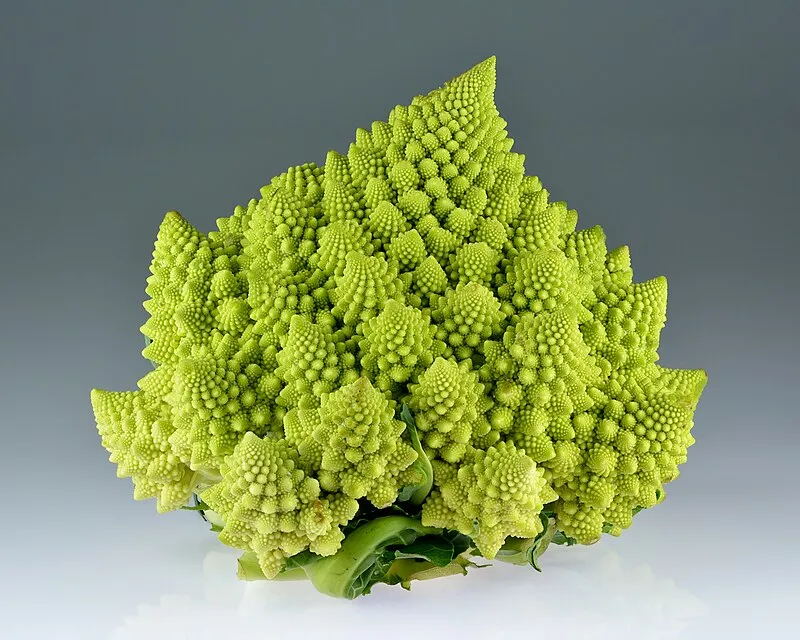
Romanesco
VegetableFractal-patterned brassica -- stunning chartreuse spiraling florets. Hardy enough to withstand light frosts down to 0°C, romanesco performs best when daytime temperatures stay between 12°C and 20°C. Give it full sun (6-8 hours of direct light daily) and regular watering to keep soil consistently moist, and expect to harvest in roughly 75-100 days. Widely grown in home gardens around the world, it adapts to a range of soil types and growing conditions.
Grow like cauliflower. Needs consistent cool temps. Can be planted 2-3 weeks before the last expected frost, giving it a head start on the growing season. Aim for about 2.5 cm of water per week, adjusting for rainfall. Organic mulch around the base helps maintain even moisture.
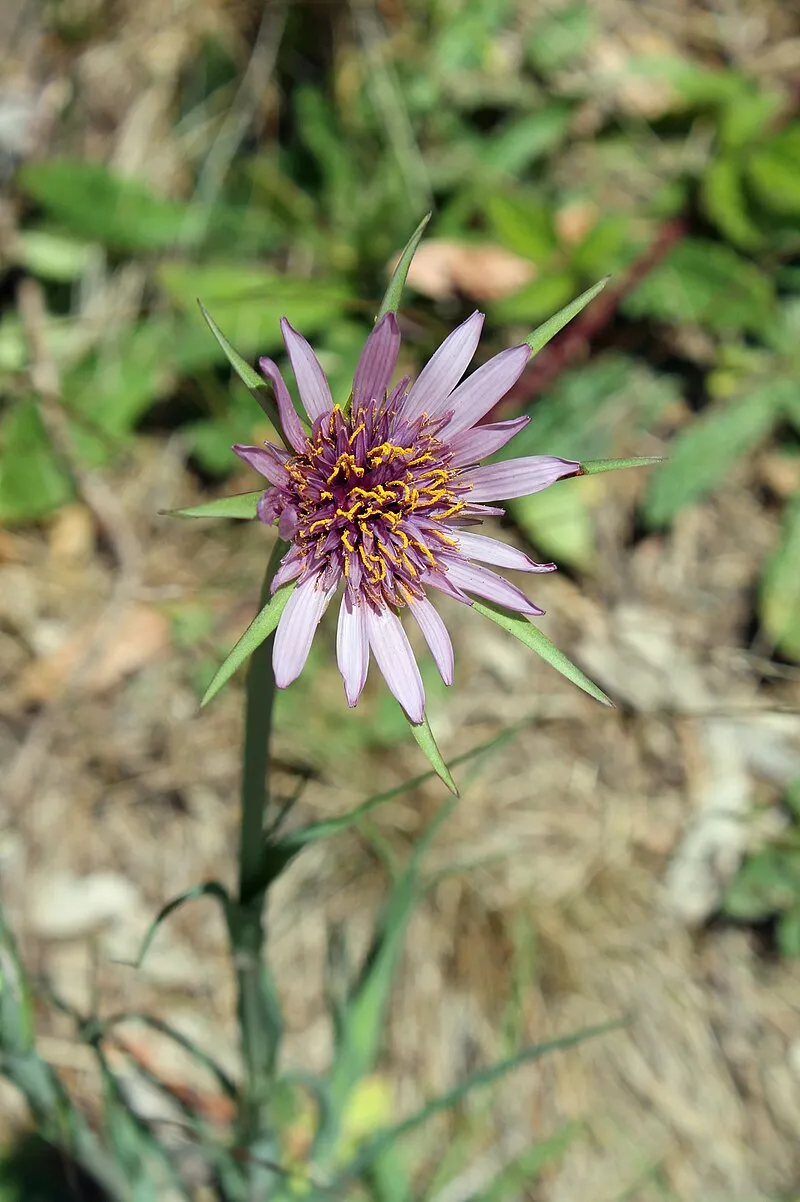
Salsify
VegetableOyster plant -- root tastes like oysters when cooked. Hardy enough to withstand light frosts down to -10°C, salsify performs best when daytime temperatures stay between 10°C and 20°C. Give it full sun (6-8 hours of direct light daily) and regular watering to keep soil consistently moist, and expect to harvest in roughly 100-150 days. A staple of kitchen gardens and allotments, it rewards even first-time growers with a generous harvest.
Long taproot needs deep, loose soil. Flavor improves after frost. Can be planted 2-3 weeks before the last expected frost, giving it a head start on the growing season. Aim for about 2.5 cm of water per week, adjusting for rainfall. Organic mulch around the base helps maintain even moisture.
Frequently Asked Questions
Which vegetables survive frost?
Many leafy greens actually improve in flavor after frost. Kale, Brussels sprouts, and parsnips become sweeter as the cold converts starches to sugars. Other frost survivors include spinach, arugula, lettuce, bok choy, Swiss chard, broccoli, cauliflower, cabbage, carrots, beets, and garlic. Most can handle light frost (28-32°F / -2 to 0°C). Hardy crops like kale and Brussels sprouts survive temperatures well below 20°F (-7°C).
How do I protect plants from frost?
Light frosts: Cover plants with row cover fabric, old bedsheets, or cloches overnight and remove in the morning. Hard frosts: Use cold frames (bottomless boxes with glass or plastic lids) or low tunnels with row cover for sustained protection. Mulch heavily around the base of perennial plants to protect roots. Water plants before an expected frost — moist soil holds heat better than dry soil. Plant tender crops near buildings or walls that radiate heat.
What is the difference between frost-tolerant and cold-hardy?
Frost-tolerant plants can withstand light to moderate frosts (temperatures down to 25-32°F / -4 to 0°C) for short periods. Cold-hardy plants go further — they can survive extended periods of freezing temperatures, often down to 0°F (-18°C) or below. Most vegetables on this list are frost-tolerant. True cold-hardy perennials include asparagus, rhubarb, and many fruit trees that require winter dormancy to thrive.